How to Judge Distance in Montana’s Mountains
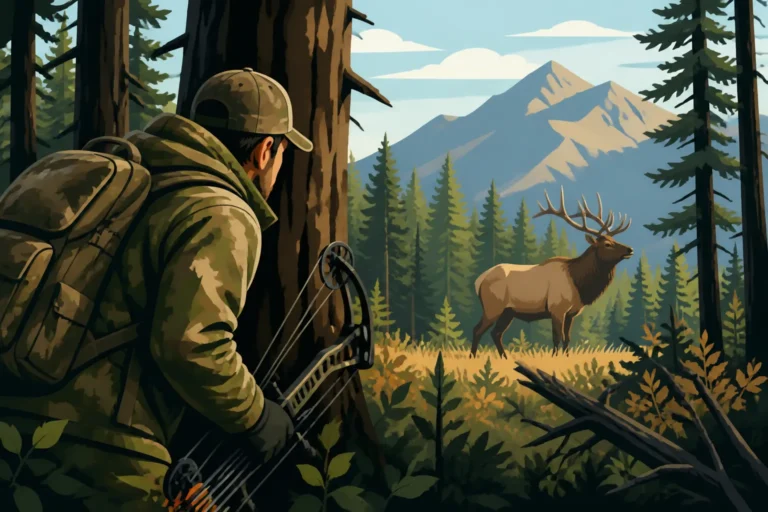
It’s a tale as old as the mountains themselves: you glass a majestic bull elk across a canyon, your heart pounds, and you swear it’s a 300-yard shot. You settle in, squeeze the trigger, and watch your bullet sail harmlessly over its back because, in reality, that bull was closer to 500 yards. Misjudging distance in Montana’s vast, rugged terrain is an incredibly common, and often frustrating, problem for hunters. This guide will help you understand the unique challenges of mountain distance estimation and equip you with practical techniques and tools to make confident, ethical shots.
The Deceptive Landscape: Why Montana's Mountains Make Distance Judging Tough
Hunting in Montana is an experience unlike any other, but the very beauty and grandeur of its mountains can play tricks on your eyes, especially when it comes to judging distance. What looks like a chip shot across a draw can often be significantly farther than you perceive, and this optical illusion is amplified by several factors unique to mountain environments. Understanding these challenges is the first step toward overcoming them.
Understanding Optical Illusions in Mountain Terrain
The sheer scale of Montana’s landscape is difficult for the human eye and brain to process accurately, especially if you’re used to hunting flatter, more familiar terrain. There are often very few, if any, recognizable reference points to help calibrate your perception. In a flat field, you might see a fence post, a tree line, or a vehicle that provides a sense of scale. In the vastness of the backcountry, however, distant mountains, massive timber stands, and deep canyons can all blend together, making a 500-yard shot appear like 200 yards. This is especially true when an animal is standing alone without anything to compare its size against. The clear, dry air common in Montana’s high country can also make distant objects appear closer and sharper than they actually are, further contributing to misjudgment.
Elevation changes also profoundly impact visual perception. When you're looking down into a canyon, objects often appear closer than they are. Conversely, looking up a steep slope can make objects seem further away. These vertical components introduce a whole new layer of complexity that flat-land hunters rarely encounter. When you're trying to calculate an ethical shot, these visual deceptions can lead to misplaced shots, which is the last thing any hunter wants.
The Impact of Steep Angles on Ballistics
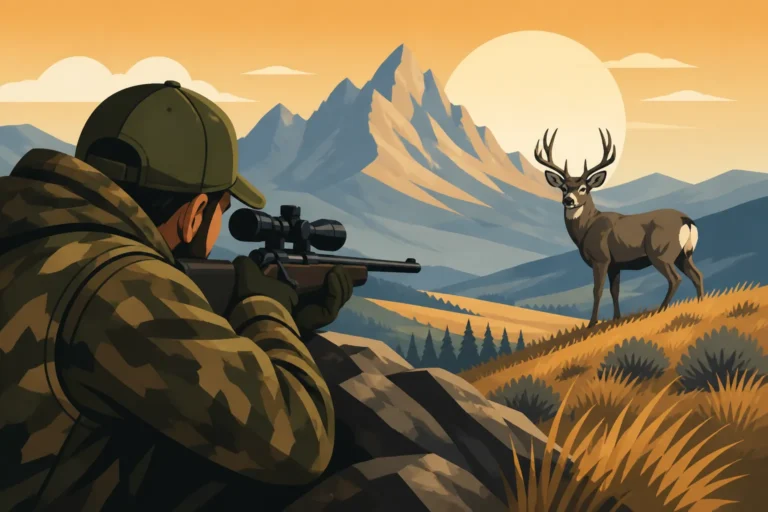
It’s not just about guessing how far away an animal is; it's also about understanding how that distance, combined with steep angles, affects your bullet’s trajectory. Gravity acts on your bullet the same way whether you're shooting flat or at an angle. However, when shooting uphill or downhill, the effective horizontal distance your bullet travels is actually less than the actual line-of-sight distance. This means your bullet will impact higher than it would on a flat shot if you aim for the full line-of-sight distance. For example, a 400-yard shot at a steep downhill angle might only have the effective horizontal drop of a 350-yard shot.
Many experienced hunters have stories of missing high on an animal in steep country because they didn't account for this phenomenon. Modern rangefinders with angle-compensating features are designed to mitigate this, but it’s crucial to understand the underlying ballistic principle. Without this knowledge, even with a precise distance, you could still miss your target. The impact of these steep angles becomes more pronounced the steeper the angle and the longer the distance. Knowing how to adjust your hold or turret for these scenarios is critical for success and ensures ethical shot placement. If you're planning a trip, consider reviewing "Montana Long-Range Shooting Considerations" to deepen your understanding of these ballistic challenges.
Mastering Manual Distance Estimation Techniques
Before the advent of advanced electronics, hunters relied solely on their eyes, experience, and simple tools to estimate distances. While modern rangefinders are invaluable, understanding these traditional methods remains a vital skill, especially when electronics fail or when you need a quick, rough estimate to confirm a rangefinder reading. These techniques build fundamental fieldcraft that every Montana hunter should possess.
Using Reticle Ranging for Quick Estimates
Many rifle scopes come equipped with reticles that can be used for distance estimation, often called mil-dot or MOA (Minute of Angle) reticles. The principle is simple: if you know the approximate size of your target (e.g., an elk’s shoulder height or body length), you can use the subtensions (the markings on your reticle) to “measure” the animal and then calculate the distance. For instance, a mature bull elk might have a shoulder height of about 55-60 inches. If your mil-dot reticle shows the elk is 2 mils tall, and you know 1 mil covers 3.6 inches at 100 yards, you can work backward to find the distance.
This method requires practice and a solid understanding of your specific reticle’s subtensions. It’s not as precise as a laser rangefinder, but it’s incredibly fast and requires no additional equipment once you’re looking through your scope. It’s particularly useful for confirming a rangefinder reading that seems off, or for getting a quick, approximate range if an animal appears suddenly and you don't have time to pull out your rangefinder. You can also use it to confirm the size of a bull elk in the field before making a move, which ties into important skills like "How to Field Judge a Montana Bull Elk."
Estimating by Known Reference Points
This method relies on your ability to visually break down the landscape into manageable chunks and compare unknown distances to known distances. Imagine you're glassing a distant ridge for mule deer. You spot a rock outcrop that you know, from your map or previous experience, is roughly 400 yards away. If you then spot a deer beyond that outcrop that appears to be about half again as far, you can estimate it's around 600 yards.
This technique is greatly aided by pre-scouting and using good topographical maps. When you're doing your "How to E-Scout Montana Hunting Units," you can identify prominent landmarks and get their GPS coordinates and elevations, allowing you to estimate distances between them. Then, when you're actually in the field, you have those mental waypoints to aid your eye. This also works well by estimating in increments. For example, if you know what 100 yards looks like, you can mentally "stack" 100-yard segments between yourself and the target. This isn't foolproof, as the mountains often distort perspective, but it’s a valuable skill to develop through consistent practice, especially for backpack hunts where every tool might count.
Utilizing Terrain Features and Animal Behavior
Montana’s varied terrain offers natural cues if you learn to read them. For instance, if you see an elk walking through chest-high sagebrush, and you know what that sagebrush looks like up close, you can use the perceived height of the sagebrush around the animal as a rough scale. Similarly, the size of trees, rocks, or even changes in vegetation color can provide clues.
Another aspect is understanding animal behavior in relation to distance. Animals that are completely unaware of your presence might indicate they are further away, while those that are twitchy or periodically looking your way are likely closer. The sound an animal makes can also be a distance indicator. A distant bugle echoing across a canyon sounds very different from a bull screaming just over the next ridge. Pay attention to how clearly you can discern details like antler tines, ear twitching, or even the texture of their hide. The more detail you can see, generally, the closer the animal. Combining these visual and auditory cues with other estimation methods significantly increases your accuracy. When you're trying to "How to Call Elk in Montana," understanding how sound carries and fades over distance is as important as the call itself.
Leveraging Modern Technology for Pinpoint Accuracy
While traditional methods are foundational, modern technology has revolutionized distance judging, making it faster, more precise, and more reliable. For serious Montana hunters, these tools aren't just luxuries; they're essential components of an ethical and effective hunting kit. Embracing these advancements can dramatically increase your chances of success and ensure clean kills.
The Indispensable Role of Laser Rangefinders
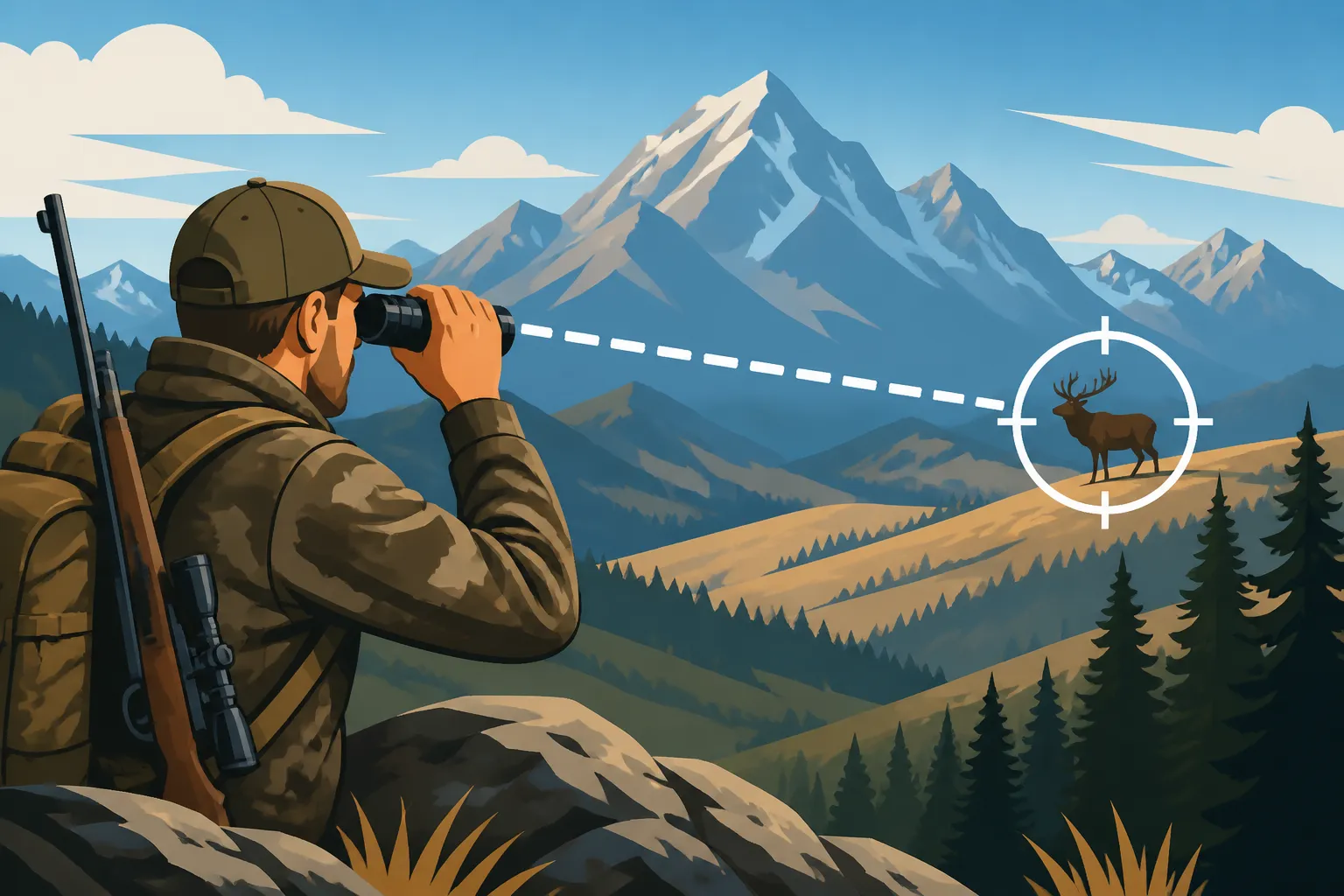
If there’s one piece of gear that has become non-negotiable for mountain hunting, it’s the laser rangefinder. These devices shoot a laser beam at your target and measure the time it takes for the beam to return, calculating the exact distance. For mountain hunters, an angle-compensating rangefinder is paramount. These devices don’t just give you the line-of-sight distance; they also calculate the effective horizontal distance, which is the true ballistic range your bullet needs to account for when shooting up or downhill. Brands like Vortex, Leupold, and Sig Sauer offer excellent angle-compensating models that are rugged enough for backcountry abuse.
When shopping for a rangefinder, consider its maximum reflective range (how far it can range bright objects), its effective deer/elk range (how far it can range an animal), and its reticle/display clarity. Some models also integrate ballistic calculators that can provide exact holdovers or turret adjustments for your specific rifle and ammunition. Always carry extra batteries, as cold mountain air can deplete them quickly. Getting a precise range with a laser rangefinder is the most reliable way to judge distance and is often the final confirmation before taking a shot, especially when you're preparing for a "Montana Rifle Elk Hunting Guide."
Using Mapping and E-Scouting Applications
Beyond immediate distance judging, modern mapping applications like onX Hunt, BaseMap, or even GoHunt’s advanced mapping tools, provide an incredible advantage for pre-hunt scouting and in-field navigation. These apps offer detailed topographical maps, satellite imagery, and public/private land ownership layers. You can use them to measure distances between potential vantage points, water sources, or bedding areas from the comfort of your home. This process, often called "How to E-Scout Montana Hunting Units," allows you to develop a mental map of your hunting district and identify known distances.
In the field, these apps can help you orient yourself and confirm ranges to landmarks. For instance, if you’ve marked a prominent saddle or a specific rock formation on your map, you can use the app to get a precise distance to it, which then serves as a known reference point for estimating other ranges. Many apps also feature a "measure distance" tool that can give you a quick line-of-sight range on your phone screen. While not a substitute for a laser rangefinder for shooting, these tools are invaluable for planning, navigation, and building a better understanding of the terrain’s scale.
Ballistic Calculators and Drop Charts
Once you have an accurate distance, whether from a rangefinder or a skilled estimate, the next step is knowing how your bullet will perform at that range. This is where ballistic calculators and drop charts come into play. A ballistic calculator (often available as an app on your phone, or integrated into higher-end rangefinders) takes into account your bullet’s specific characteristics, muzzle velocity, scope height, atmospheric conditions (temperature, altitude, humidity), and angle of shot to provide precise bullet drop and wind drift data.
Before your hunt, create a detailed drop chart for your rifle and ammunition at various distances, ideally in 50-yard increments, accounting for the typical atmospheric conditions of your hunting area in Montana. Laminate this chart and keep it accessible in your pack. Knowing your bullet’s trajectory intimately means that when you range that bull elk at 475 yards, you immediately know how many inches of holdover or how many clicks on your turret are required. This level of precision is critical for ethical long-range shots. Combining accurate rangefinding with precise ballistic data is a cornerstone of modern "Montana Archery Elk Hunting Guide" and rifle hunting success.
Here's a quick comparison of various distance judging methods:
| Method | Best Use Case | Accuracy | Speed | Equipment Needed | Angle Compensation | Notes |
|---|---|---|---|---|---|---|
| Laser Rangefinder | Exact range for shooting | High | Fast | Rangefinder | Yes (most models) | Essential for precise shot placement, battery-dependent. |
| Reticle Ranging | Quick confirmation, rough estimate | Medium | Fast | Scoped Rifle | No | Requires knowledge of animal size and reticle subtensions, practiced skill. |
| Known Reference Points | Pre-scouting, general orientation | Medium | Medium | Maps, GPS, experience | No | Builds mental map, less precise in varied terrain. |
| Terrain/Animal Cues | Situational awareness, supplemental data | Low | Fast | None | No | Subjective, best used in conjunction with other methods. |
| Mapping Apps (GoHunt) | E-scouting, planning, in-field confirmation | Medium | Medium | Smartphone/GPS, app | Yes (elevation) | Great for planning routes and identifying features, not for shot ranging. |
Real-World Practice and Field Application for Confident Shots
Knowing the theory and owning the gear is only half the battle. To truly master distance judging in Montana’s challenging mountains, you need consistent, real-world practice. This means simulating hunting scenarios, understanding your gear intimately, and applying these skills under various conditions. Confidence in your distance judgment directly translates to more ethical shots and more successful hunts.
Simulating Hunting Scenarios in Varied Terrain
The best way to get good at judging distance isn't just to stand on a flat range. You need to get out into terrain that mimics Montana’s mountains as much as possible. Find steep hills, deep draws, and areas with limited clear lines of sight. Practice ranging objects at various distances and angles – uphill, downhill, and across canyons. Set up targets at unknown distances and try to estimate the range before confirming with your rangefinder. Compare your estimates to the actual readings. This immediate feedback loop is crucial for training your eye and your brain.
Don't just practice with your rangefinder; practice your reticle ranging as well. Pick out a tree, a rock, or even a fence post in the distance and try to "range" it with your reticle, then confirm with your laser. Do this in different lighting conditions – bright midday sun, twilight, and overcast skies – as light can dramatically affect perception. The more diverse your practice environments, the better prepared you'll be for whatever Montana throws at you. For more insights on preparedness, consider reading "How to Physically Prepare for a Montana Elk Hunt" which emphasizes field readiness.
Calibrating Your Eye with Your Equipment
Your eyes and your equipment need to work as a team. Spend time comparing what you see through your binoculars or spotting scope to the rangefinder's reading. Notice how a 400-yard object appears versus a 500-yard object through your optics. The quality of your optics, like those discussed in "Best Optics for Montana Big Game," can significantly impact how clearly you can distinguish details at long ranges, which in turn helps in estimation.
When you're out practicing, deliberately choose landmarks that you can verify on your maps, perhaps using a tool like GoHunt. Range them, then cross-reference with the map’s distance tool. This helps build a library in your mind of what various distances actually look and feel like in that specific type of terrain. Pay close attention to how elevation changes affect your perception. Are you consistently underestimating uphill shots or overestimating downhill ones? Identifying these personal biases allows you to consciously compensate for them in the field.
Consistency and Repetition in the Field
The ultimate test for any distance judging technique comes when you're actually hunting. Once you've spotted an animal, the first thing you should do, after assessing the situation, is get a range. If you have time, try to get multiple ranges from slightly different positions to confirm your reading. If you’re hunting with a partner, have them range the animal as well to compare notes. Don't simply rely on one quick range; double-check it.
Even if you have a rangefinder, don't abandon your manual estimation skills. Make a mental estimate, then confirm with the rangefinder. This continuous practice in real hunting scenarios will solidify your skills. As you spend more time "How to Hunt Elk in Montana's Wilderness" or navigating other challenging landscapes, your ability to quickly and accurately judge distance will become second nature. Remember, ethical hunting demands confidence in your shot, and that confidence starts with an accurate distance.
Disclaimer
Hunting is an inherently dangerous activity. This guide provides information for educational purposes only and does not guarantee success or safety. Always prioritize safety, adhere to all local, state, and federal hunting regulations, and ensure you have the necessary licenses and permits. It is your responsibility to understand and comply with all laws and to practice safe firearm and archery handling. The author and publisher are not responsible for any accidents, injuries, or legal issues resulting from the application of this information.