Montana Private Land Antelope Outfitters
Hunting antelope in Montana can be an incredible experience, but for many, especially those traveling from out of state or new to the vast landscapes, simply figuring out where to start can feel like chasing a mirage. Public land opportunities can be incredibly competitive, dauntingly vast, and require significant scouting and luck. This comprehensive guide is designed to shed light on how Montana private land antelope outfitters offer a streamlined, often more successful, and certainly more comfortable path to pursuing these magnificent prairie speedsters, helping you understand what to expect and how to secure a great hunt.
Why Consider a Private Land Antelope Outfitter in Montana?
Montana's plains are legendary for their antelope, often called pronghorn, but accessing prime hunting grounds can be a real headache. Whether you're a nonresident trying to navigate the complex draw system or a resident looking for a less pressured experience, private land outfitters offer a compelling alternative. They essentially unlock access to vast tracts of well-managed land, taking much of the logistical burden off your shoulders.
The Public Land Challenge for Antelope
Let's be real: hunting public land for antelope in Montana can be a grind. First, you're often dealing with significant hunter pressure, especially in easily accessible areas. You might find yourself sharing a small patch of Bureau of Land Management (BLM) land or state trust land with multiple other vehicles, all vying for the same bucks. The sheer scale of Montana also means endless glassing and driving, often for days, without seeing the quality or quantity of animals you hoped for. Drawing a good public land tag for antelope in many coveted units can take years of building Montana Preference Points vs Bonus Points, especially for nonresidents. Even if you draw a general tag, finding high-quality public land that isn't landlocked or surrounded by private holdings can be a puzzle in itself. You might spend more time studying maps and deciphering land ownership than actually hunting. For many, the frustration of these challenges detracts from the pure joy of the hunt.
The Advantages of Private Land
This is where private land outfitters truly shine. When you book a hunt with a reputable outfitter who has exclusive access to private ranches, you're buying into a completely different experience. Firstly, you're almost guaranteed higher success rates. These outfitters manage their properties for wildlife, often limiting the number of hunters and allowing animals to mature. This translates to more opportunities to spot good bucks and make a successful stalk. Secondly, hunter pressure becomes a non-issue; you're often the only hunting party on thousands of acres. This means a more relaxed hunt, less competition, and antelope that haven't been constantly harassed. Thirdly, access is improved. No more worrying about checkerboarded land or frustrating walk-ins; your outfitter will guide you directly to prime areas. These operations often have long-standing relationships with landowners, built on trust and ethical hunting practices, which allows them to offer consistent, high-quality hunts year after year.
Convenience for Non-Residents and Busy Hunters
For many non-residents, the thought of planning a DIY Montana antelope hunt can be overwhelming. There are licenses, draws, travel, accommodations, scouting, and navigating unfamiliar terrain. Private land outfitters simplify this immensely. They handle the permits and landowner permissions, often secure guaranteed tags through their outfitter sponsorship programs (though it's crucial to confirm this detail for each specific outfitter and year), and provide all the local expertise. You just show up, ready to hunt. For folks with demanding jobs or limited vacation time, this convenience is invaluable. Imagine flying into Billings or Great Falls, being picked up, and driven straight to a comfortable lodge, with everything from meals to guiding handled. This kind of seamless experience, offered by many operations listed on platforms like BookYourHunt, means less stress and more time focused on the hunt itself. It removes the guesswork and drastically reduces the planning headache, making it an ideal choice for a memorable trip.
What to Expect from a Montana Private Land Antelope Hunt
Understanding the typical flow and inclusions of a guided private land antelope hunt will help you set realistic expectations and choose the right outfitter for your specific needs. These aren't usually grueling backcountry treks, but they still require preparation and a certain mindset.
Typical Hunt Structure and Duration
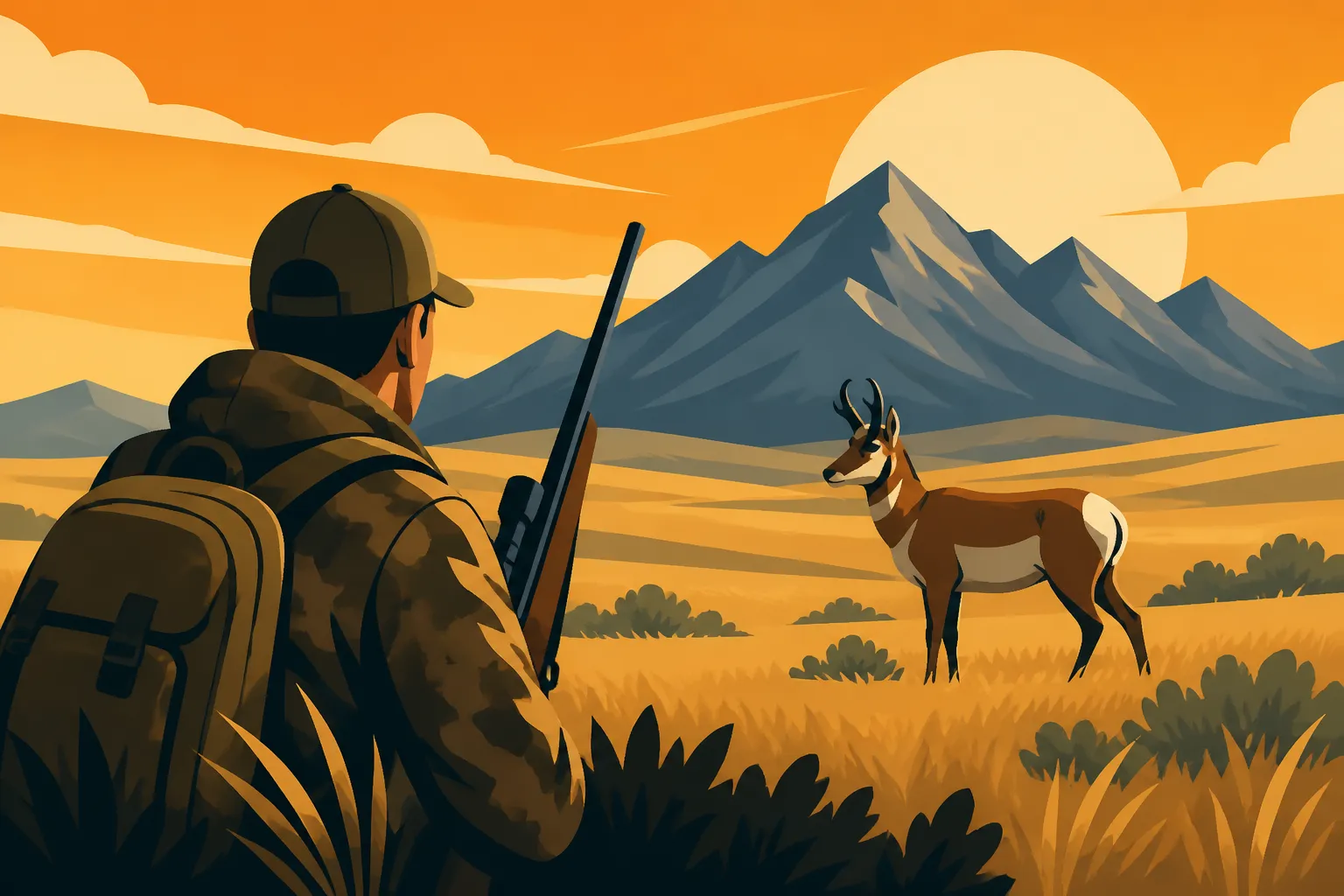
Most private land antelope hunts are relatively short, often spanning 2 to 3 full days of hunting. This is because antelope are highly visible and typically found in open country, making spotting and stalking efficient. A typical day starts early, often before dawn, with guides driving you to prime glassing locations on the ranch. You'll spend a good portion of the morning behind binoculars and spotting scopes, picking apart the vast landscape for herds and identifying mature bucks. Once a suitable buck is spotted, the real fun begins: planning and executing a stalk. This usually involves using topography (coulees, small rises, brush) to close the distance, often covering significant ground on foot.
Midday might involve a break for lunch back at camp or a field lunch, followed by more glassing and stalking in the afternoon as antelope become active again. Many outfitters utilize vehicles to cover large areas of ground quickly, making it less physically demanding than a mountain elk hunt, but still requiring the ability to walk several miles and crawl to get within range. The focus is on precision and patience, using the land's features to your advantage.
Accommodations and Services
The type of accommodations on a private land antelope hunt can vary widely, from rustic bunkhouses on a working ranch to comfortable lodge settings, or even local motels in nearby towns. When researching outfitters, be sure to clarify what's included. Many offer all-inclusive packages that cover lodging, home-cooked meals, and non-alcoholic beverages. Some might arrange for you to stay in a comfortable local motel with meals at restaurants, while others provide full-service lodge experiences right on the property.
Beyond lodging and food, the core service is professional guiding. Most hunts are either 1-on-1 (one hunter per guide) or 2-on-1 (two hunters per guide). A good guide will know the property like the back of their hand, understand antelope behavior, and be skilled at spotting, judging, and stalking. They'll assist with field dressing, caping, and often getting your animal back to a designated pickup point or game processor. Services like initial meat cooling, caping for taxidermy, and transportation during the hunt are typically included. It's always best to get a detailed list of what's provided to avoid any surprises.
Equipment and Physical Demands
While a private land antelope hunt isn't usually as physically taxing as a Montana Backcountry Hunting Guide, it's not a cakewalk either. You'll still be walking miles over uneven prairie terrain, sometimes crawling through sagebrush or dirt to get into a shooting position. The sun can be intense, and the wind relentless, so being in reasonably good shape will enhance your experience. Focus on cardiovascular fitness and lower body strength.
Essential gear includes good quality optics – a solid pair of 10x binoculars and a high-power spotting scope (many guides carry excellent ones, but having your own is a plus) are crucial for locating and evaluating bucks across vast distances. Comfortable, broken-in hunting boots are non-negotiable. Layered clothing suitable for fluctuating temperatures and strong winds is also key, as are a good hat, sunglasses, and sunscreen. A flat-shooting rifle chambered in a caliber like .25-06, .270, or 6.5 Creedmoor, sighted in accurately for longer shots, is ideal. Practice shooting from various field positions, including prone, as shots can often be stretched beyond 200 yards in the open country. Don't forget a rangefinder! Best Optics for Montana Big Game will give you some excellent ideas for what to pack.
Finding and Booking the Right Outfitter
Finding the right outfitter is paramount to a successful and enjoyable private land antelope hunt. It's not just about the biggest buck, but about the overall experience, safety, and ethical standards. Taking the time to do your homework will pay dividends.
Researching Reputable Outfitters
Start your research early. Many top outfitters book out a year or more in advance. Begin by looking at established outfitter listing services and review sites. Websites like BookYourHunt and GoHunt can be excellent resources, providing listings, detailed hunt descriptions, and often reviews from past clients. Don't just pick the first one you see; delve into their history, look at their photo galleries, and pay attention to how they communicate their services. Word-of-mouth recommendations are also golden, so ask around in hunting forums or among friends who have hunted Montana.
Once you have a shortlist, check if the outfitters are properly licensed and insured in Montana. This is a non-negotiable. Look for transparent information about their hunting areas, success rates (and how they define "success"), and what their hunts truly entail. A reputable outfitter will be open about their operations. Don't hesitate to contact the Montana Outfitter & Guide Association for verification or to browse their member directory. For further guidance, read our article on How to Choose a Montana Hunting Outfitter.
Key Questions to Ask
When you contact potential outfitters, have a list of questions ready. This isn't just a casual chat; it's an interview to ensure they're a good fit for your expectations. Here are some crucial questions:
- What are your typical success rates for antelope? Clarify if this means opportunity or actual harvest.
- How many hunters do you take per year for antelope? This gives you an idea of pressure on the ranch.
- What is your guide-to-hunter ratio? 1-on-1 or 2-on-1 are common for antelope.
- What are your specific hunt dates for the upcoming season? Antelope season dates can vary, so confirm. Montana Antelope Season Dates
- Do you offer outfitter-sponsored tags, or do I need to apply through the draw? This is critical for non-residents. If you apply, what are the draw odds for your area?
- What land do you have access to? Is it exclusive private land, or a mix of private and public?
- What exactly is included in the hunt price? (e.g., lodging, meals, guide, field dressing, transportation during the hunt, caping, initial meat care)
- What is NOT included? (e.g., license fees, travel to Montana, taxidermy, meat processing, gratuities, alcoholic beverages)
- Can you provide references from recent clients? A good outfitter will happily provide these.
- What is your policy on wounded animals?
- What are the average shot distances you expect on antelope?
- What is your cancellation or postponement policy?
Understanding Costs and Inclusions
The cost of a guided private land antelope hunt in Montana can range significantly based on the outfitter's reputation, the quality of animals, the services offered, and the duration of the hunt. Generally, you can expect to pay a deposit upfront, with the remaining balance due closer to the hunt date.
As mentioned, clarity on inclusions is vital. A "fully guided" hunt usually means your guide, lodging, meals, and transportation during the hunt are covered. However, it’s rare for your actual hunting license or permit fees to be included in the outfitter's price. You will almost certainly be responsible for these separately. Other common exclusions include airfare or travel to Montana, any required rental car outside of the hunt, alcoholic beverages, the cost of professional meat processing or taxidermy, and, of course, gratuities for your guide and camp staff.
Budgeting for a hunt means looking beyond the base price. Consider travel expenses, potential processing costs if you harvest an animal, and tips (typically 15-20% of the hunt cost for a guide who works hard for you). While these hunts are an investment, they often provide unparalleled access and a much higher chance of success than a purely DIY public land venture. For a deeper dive into financial planning, check out How Much Does a Montana Antelope Hunt Cost.
Maximizing Your Private Land Antelope Hunting Experience
Booking a private land hunt is a fantastic step, but the experience is truly yours to make. Thoughtful preparation and proactive engagement can elevate a good hunt to an unforgettable one.
Preparing for Your Hunt
Even if you've hired a guide, your preparation matters. Your physical conditioning should be appropriate for walking distances in often uneven terrain, and potentially crawling during stalks. While not a grueling mountain climb, the prairie can be deceptively demanding. Consider light cardio and strengthening your legs and core. A general fitness plan, like what's outlined in Montana Elk Hunt Fitness Plan, can be adapted for antelope by focusing less on extreme endurance and more on steady walking and agility.
Crucially, practice your shooting. Antelope hunting often presents opportunities for longer shots due to the open country. You need to be comfortable and proficient out to 300 yards, and ideally beyond. Practice shooting from prone, kneeling, and sitting positions, as you'll rarely have a bench rest in the field. Know your rifle and ammunition intimately, and understand your ballistic drop at various ranges. This confidence in your shooting abilities will directly impact your success and ethical hunting practices. Don't wait until the week before your hunt to sight in your rifle.
Finally, familiarize yourself with Montana's hunting regulations for antelope, even if your outfitter will handle most of the details. Knowing bag limits, legal shooting hours, and tag validation procedures will make you a more informed and responsible hunter.
Effective Communication with Your Guide
Your guide is your partner in this endeavor, and clear communication is key to a successful hunt. Before the hunt even begins, articulate your expectations. Are you primarily looking for meat, or are you holding out for a trophy-class buck? Be honest about your physical limitations, shooting abilities, and any specific preferences you might have. If you have concerns about walking distances, let them know.
During the hunt, listen intently to your guide's advice. They spend countless hours on that specific land and know the animals' habits, the terrain, and the best approaches. Don't be afraid to ask questions, but also trust their judgment. If they tell you to crawl, crawl. If they advise against a shot, respect that. Good guides are invested in your success, and a strong hunter-guide relationship makes for a much more enjoyable and effective experience. Remember, they're there to help you, not simply to carry your gear.
Respecting the Land and the Outfitter
Hunting on private land is a privilege, not a right. Always treat the landowner's property, and the outfitter's operation, with the utmost respect. This includes following all instructions, closing gates, not littering, and driving only on designated trails. Ethical hunting practices are paramount: ensure clean kills, retrieve all animals, and properly field dress and care for your game. Even for antelope, knowing How to Quarter an Elk in the Montana Backcountry gives you a good foundation for ethical field care, as the principles of cleanliness and quick cooling apply universally.
A positive attitude, gratitude, and respect for the rules will ensure you're a welcome guest, and it reflects well on all hunters. Remember that many outfitters rely on good relationships with landowners to provide these opportunities, and your behavior directly impacts those relationships. Leave the land better than you found it, and you'll not only have a great hunt but potentially open doors for future opportunities.
Comparison: DIY Public Land vs. Guided Private Land Antelope Hunts
| Feature | DIY Public Land Hunt (Antelope) | Guided Private Land Hunt (Antelope) |
|---|---|---|
| Access | Open to all, but often fragmented, landlocked, or high pressure | Exclusive access to large, managed private ranches |
| Hunter Pressure | Can be very high, especially in accessible areas | Very low, often your party is the only one on the property |
| Success Rates | Variable, often lower without extensive scouting & specific tags | Generally higher due to managed herds and exclusive access |
| Logistics | All planning (maps, scouting, lodging, food) is on you | Largely handled by outfitter (guide, often lodging, meals, transport) |
| Local Expertise | Requires extensive personal research and experience | Provided by experienced guides who know the land and animals |
| Physical Demand | Can be high if covering vast areas on foot; less intense than mountains | Moderate, involves walking and crawling, less extreme than mountains |
| Tag Acquisition | Often requires building preference points in a draw (non-residents) | May include outfitter-sponsored tags or guidance on draw process |
| Cost | Generally lower base cost (licenses, travel, DIY supplies) | Higher upfront cost, but includes extensive services and expertise |
| Animal Quality | Hit or miss, often requires deep scouting for mature animals | Generally higher potential for mature animals due to management |
Disclaimer
This article is for general informational purposes only and does not constitute professional advice. Laws, prices and regulations vary by location and change over time. Consult a qualified professional for guidance on your specific situation.