How to Decoy Antelope in Montana
The frustration of watching a herd of antelope disappear over the horizon, seemingly aware of your presence even when you're half a mile away, is a feeling most Montana hunters know all too well. Spot-and-stalk tactics for these prairie speedsters can often feel like a game of cat and mouse where the mouse always wins. But what if there was a way to turn the tables, to exploit their natural curiosity and territorial instincts? This comprehensive guide dives deep into the art of decoying antelope in Montana, offering practical strategies to bring those wary bucks into shooting range.
Why Antelope Decoying is a Game Changer in Montana
For many hunters, the image of antelope hunting conjures up endless miles of walking and crawling through sagebrush, often ending in a blown stalk or a shot too far for comfort. Montana's vast plains, with their wide-open spaces and limited cover, make traditional spot-and-stalk incredibly challenging. This is precisely where antelope decoying steps in as a powerful, often overlooked, strategy.
The Spot-and-Stalk Challenge on Montana's Plains
Picture this: You’ve just spent an hour slowly closing the distance on a nice buck and his does, belly-crawling through prickly pear and hoping that meager clump of grass offers enough concealment. You finally get to what you think is shooting range, slowly peek over a rise, and boom – they’re gone. Antelope possess incredible eyesight, estimated to be equivalent to an 8-power binocular for humans, covering a wide field of view. Their ability to detect movement from astonishing distances, coupled with their phenomenal speed, means that even a slight miscalculation in terrain or wind can send them bolting. The treeless expanses of eastern Montana, where antelope thrive, offer precious little cover to aid a close approach, making every stalk a test of patience, endurance, and often, futility.
When Decoying Shines as a Tactic
Decoying antelope transforms the hunt from a desperate chase into a calculated ambush. Instead of trying to get to them, you convince them to come to you. This tactic excels in areas with limited natural cover, where stalks are difficult. It's particularly effective during the rut, when bucks are highly territorial and eager to defend their breeding grounds or investigate rival bucks. A well-placed decoy can tap into their innate curiosity or aggressive tendencies, drawing them in from hundreds of yards away. Imagine being able to set up discreetly, knowing that your "bait" is doing the heavy lifting, pulling a buck directly into your lap while you remain hidden and ready. It's a strategic shift that can significantly increase your success rate, especially when you're hunting public land that might see a fair bit of pressure.
Understanding Antelope Behavior for Effective Decoying
To successfully decoy antelope, you need to think like an antelope. Their reactions to decoys are deeply rooted in their biology and social structures. Understanding these behaviors is key to knowing when and how to deploy your decoy.
Antelope Vision and Their Innate Curiosity
As mentioned, antelope have legendary eyesight. They are constantly scanning their surroundings for danger, and anything out of place or moving suspiciously will immediately catch their attention. However, this incredible vision also feeds into their curiosity. They can be incredibly inquisitive animals. If they see something new or unusual in their territory that doesn't immediately appear threatening, they will often approach to investigate. This curiosity is what makes a still, natural-looking decoy so effective. When a lone buck or doe decoy appears, an antelope might initially be wary, but its curiosity often overrides its fear, especially if it doesn't detect human scent or movement. This is a critical psychological lever we pull as hunters.
Dominance, Territoriality, and the Rut
The peak effectiveness of decoying often aligns with the antelope rut, typically from mid-September into early October in Montana. During this period, mature bucks establish and fiercely defend territories, gathering harems of does. A buck decoy, especially one appearing to be in a challenging posture, acts as an intruder. No self-respecting dominant buck is going to let another male encroach on his turf without a confrontation. He'll often come charging in, intent on running off the perceived rival. Even outside the rut, a lone doe decoy can draw in a curious buck looking for companionship, or an entire herd might approach a "new" antelope to see what's up. Understanding these social dynamics – the buck's desire to dominate and breed – is paramount to orchestrating a successful decoy setup.
Choosing the Right Decoy for Montana Pronghorns
Just like choosing the right call for elk, selecting the correct antelope decoy can make or break your hunt. There's a surprising variety out there, and each has its strengths and weaknesses, particularly when considering the diverse hunting conditions across Montana.
Buck vs. Doe Decoys and Their Purpose
The choice between a buck or doe decoy largely depends on the time of season and the specific behavior you want to exploit.
- Buck Decoys: These are your go-to during the rut. A buck decoy is designed to provoke an aggressive, territorial response from a dominant buck. When a breeding buck sees another buck in his territory, he often approaches directly and aggressively, giving you a shot opportunity. Some buck decoys even feature aggressive postures, like a head-down challenge, to further stoke that competitive fire. However, a buck decoy can also deter smaller, subordinate bucks or spike bucks who want to avoid confrontation, or it might make does nervous if there isn't a dominant buck around to 'protect' them.
- Doe Decoys: A doe decoy is more universally appealing. It can draw in lonely bucks outside the peak rut, or even during the rut if a buck is looking to expand his harem. Doe decoys can also attract other does, which in turn might bring a buck into range who is tending those does. They tend to be less intimidating and can work on bucks who are a bit more cautious or don't feel like fighting. For early season hunts or when targeting a general license antlerless tag, a doe decoy can be highly effective.
Many experienced hunters will carry both or a versatile two-in-one model, allowing them to adapt to the situation once they've glassed the target animals. If you see a lone buck patrolling, a challenging buck decoy might be best. If it's a herd with a dominant buck and a few satellites, a doe decoy might sneak you in without raising too much alarm.
Full-Body vs. Silhouette Decoys and Mobility
The physical form of your decoy plays a huge role in its realism and your ability to carry it across miles of prairie.
- Full-Body Decoys: These offer the most realistic profile, often complete with textured fur patterns and lifelike dimensions. Brands like Primos or Montana Decoy offer excellent full-body options. Their realism can be fantastic, especially in bright sunlight or open terrain where antelope have plenty of time to scrutinize. The downside is that they are generally bulkier and heavier, making them less ideal for hunters who plan to cover extensive ground on foot, like when you're executing a long spot-and-stalk approach on the plains. However, for a stationary setup or a short move, their impact can be undeniable.
- Silhouette Decoys: These are flat, two-dimensional decoys, usually made of a durable fabric or cardboard material. The biggest advantage of silhouette decoys is their portability. They fold up incredibly small and are exceptionally lightweight, easily stowed in a backpack. This makes them perfect for the run-and-gun hunter who might need to quickly deploy and redeploy a decoy. When an antelope is looking at it from a distance, or when the light is flat, a good quality silhouette can be surprisingly convincing. They rely on the antelope's visual processing to fill in the missing dimension. Montana Decoy's full lineup, particularly their "Fresh Tracks" series, is renowned for its packability and effectiveness, collapsing down to fit easily in a pack, allowing you to move quickly across the vast expanses you'll encounter when you're out hunting the Montana plains.
The choice often comes down to your hunting style. If you're setting up for a long wait, a full-body might be worth the extra bulk. If you're constantly on the move, trying to get ahead of a herd, a lightweight silhouette is invaluable.
Considering Mobility and Packability
When hunting antelope in Montana, where distances are immense and cover is scarce, the ability to quickly deploy, move, and redeploy your decoy is paramount. Think about how you’ll be hunting. Are you driving to a good vantage point, spotting antelope, and then moving a relatively short distance to set up? Or are you hoofing it for miles across vast, open country, trying to intercept herds that are constantly on the move?
A heavy, cumbersome decoy might offer unparalleled realism but could become a liability if it prevents you from getting into position quickly or forces you to leave it behind. Lightweight, collapsible decoys, like those offered by Montana Decoy, are often favored by serious antelope hunters because they allow for rapid deployment and easy transport. You can carry one, or even two, without feeling like you’re hauling a small car across the prairie. This means you can react faster to changing antelope movements or stalk more effectively when a decoying opportunity arises unexpectedly. Having a decoy that can be quickly stowed and deployed, perhaps even carried attached to your pack, means you’re always ready to capitalize on a curious buck. This also ties into how you physically prepare for a Montana elk hunt, as the ability to move quickly and efficiently is a universal skill.
| Decoy Type | Pros | Cons | Ideal Use Case |
|---|---|---|---|
| Buck | Aggressively draws in dominant bucks (rut) | Can intimidate smaller bucks/does, limited seasonal use | Rut, targeting mature, territorial bucks |
| Doe | Universally appealing, less intimidating | May not provoke aggressive charge from dominant bucks | Early season, non-rut, general curiosity, antlerless tags |
| Full-Body | Highest realism, convincing from all angles | Bulky, heavy, less mobile, harder to pack | Stationary setups, short moves from vehicle, high realism needed |
| Silhouette | Extremely lightweight, compact, portable | 2D appearance can be less convincing up close, less realistic | Mobile hunting, long stalks, packing far, quick deployment |
Decoy Placement and Setup Strategies
So, you've picked your decoy. Now comes the critical part: putting it in the right place. An antelope decoy isn't a magic wand; its effectiveness hinges on strategic placement, accounting for wind, terrain, and the antelope's expected approach.
Wind Direction is King
Just like with any big game hunting, wind direction is absolutely non-negotiable when decoying antelope. Antelope might have incredible eyesight, but their nose is still their primary defense against predators they can't see. If a buck comes charging in to confront your decoy, only to catch your scent from 50 yards out, he'll slam on the brakes and be gone in a flash.
Always set up your decoy directly downwind of your hidden position, ensuring that any approaching antelope will pass between the decoy and your shooting lane without catching your scent. The ideal scenario is for the antelope to approach the decoy from an upwind or crosswind direction relative to the decoy, but importantly, from an upwind direction relative to your hidden position. This forces them to commit to the decoy, giving you time for a shot, without ever winding you. If you're trying to figure out how to use the wind hunting Montana elk, the same principles apply to antelope – scent control is paramount. Always monitor wind shifts, as a change can quickly ruin your setup.
Terrain and Cover Considerations
Montana's antelope country is largely wide-open, but even subtle changes in terrain can offer critical advantages. Look for low rises, shallow depressions, or sparse clumps of sagebrush that can provide just enough concealment for you. Your goal is to be completely hidden from the moment the antelope spots the decoy until it's within shooting range.
- Elevated Decoy: Sometimes, placing the decoy on a slight rise can help it stand out, making it more visible to antelope far off.
- Concealment for You: Never set your decoy up without first ensuring you have adequate cover. A large patch of sagebrush, a small gully, or even a vehicle (if legal and appropriate for the area) can work. The antelope's attention should be solely on the decoy, not on you.
- Shot Lanes: Ensure that once the antelope commits to the decoy, there are clear shooting lanes between you and the decoy, and between you and the path the antelope will take. Pre-range several spots where you expect the antelope to stop or slow down. If you're hunting with a bow, this is even more critical; you need those clear lanes and a close shot. For hunters learning how to hunt antelope with a bow, this setup is absolutely vital.
Think about the sun's position too. If possible, set up so the sun is in the antelope's eyes as they approach, further reducing their ability to spot you.
Setting Up for the Shot
Your decoy setup isn't just about attracting the antelope; it's about getting a clean shot. The distance between your decoy and your hidden position is crucial.
- Optimal Distance: For archery hunting, 20-40 yards is often ideal. This creates an inviting "fight" distance for a buck and ensures a high-percentage shot for you. For rifle hunting, you might place the decoy further out, say 50-100 yards, and position yourself accordingly.
- The Angle: Position your decoy so that an approaching antelope will present a broadside or quartering-away shot as it confronts the decoy. Often, bucks will circle the decoy, trying to get a better look or to position themselves for a "challenge." Anticipate this movement.
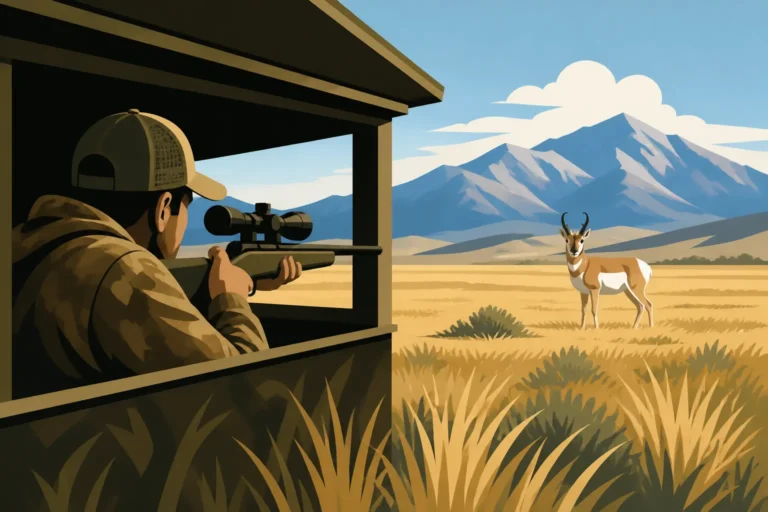
- Your Position: You should be completely set up – bow drawn, rifle shouldered, or binoculars steady – well before the antelope gets into range. Any last-minute adjustments could blow your cover. Use a rangefinder to mark distances to key landmarks around your decoy and your position. Having your gear ready, especially your optics, is vital. Knowing how to use optics for Montana mule deer applies equally to antelope, as clear vision is paramount in open country.
This methodical approach to placement and setup is what transforms decoying from a novelty into a highly effective hunting method for Montana's challenging antelope.
Executing the Decoy Hunt
Once your decoy is perfectly placed and you're settled in your ambush, the real test of patience and precision begins. Executing the decoy hunt effectively means understanding how to initiate the interaction, interpret the antelope's response, and ultimately, capitalize on the shot opportunity.
The Approach and Initial Sighting
The hunt begins long before you deploy your decoy. You'll typically be glassing a large area, often for miles, trying to locate a target buck or herd. When you spot a promising group, especially a territorial buck with does, you need to assess the situation. Is the wind right? Is there sufficient cover for your approach and subsequent hide?
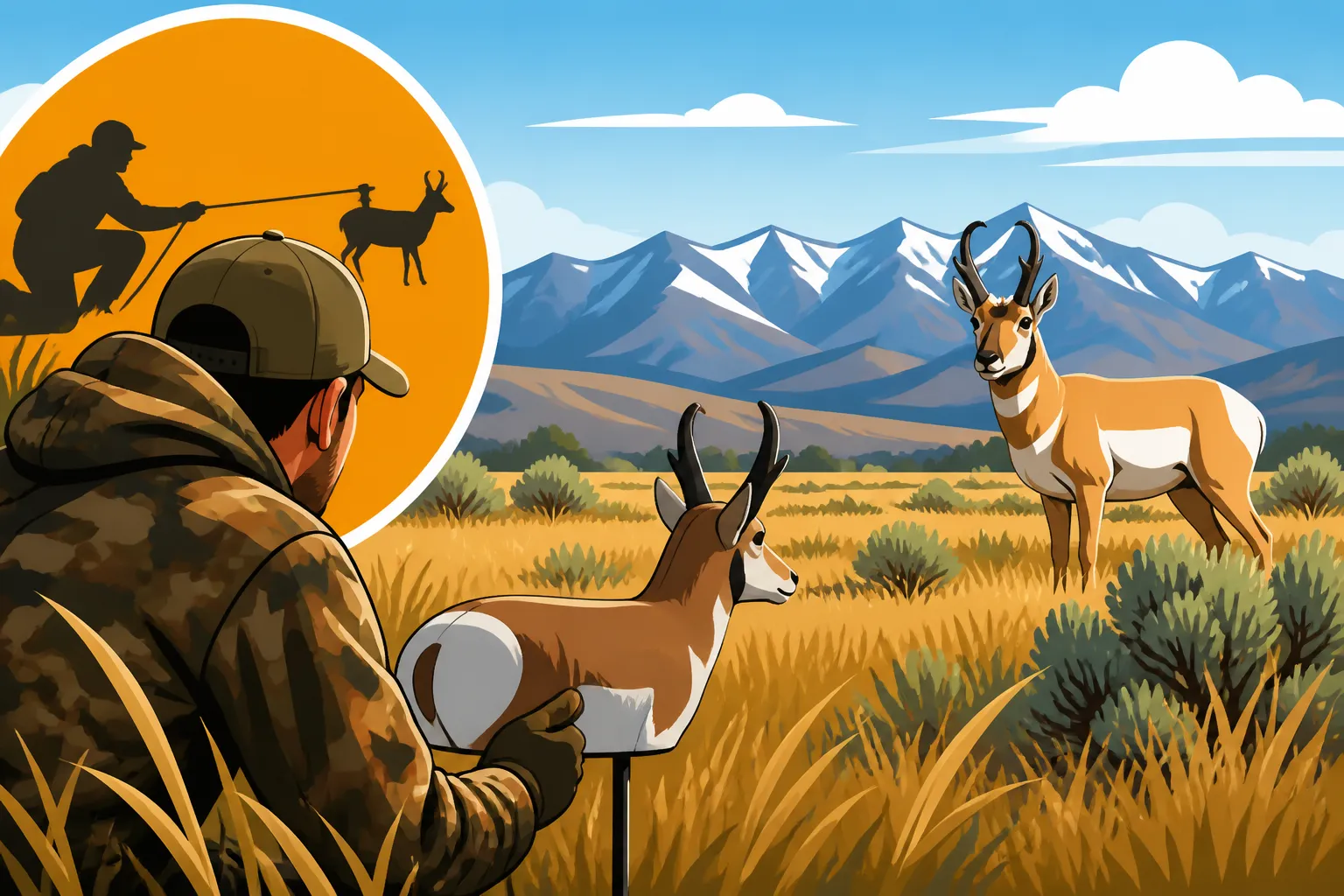
Once you've decided on a target, the challenge is getting into a position to deploy your decoy without being seen. This might involve a long, careful stalk around the back of a ridge, or using a vehicle as a mobile hide (if scouting and driving are permitted in that area). The goal is to set up your decoy, get into your concealed position, and settle in without the antelope ever knowing you're there. Some hunters use a "run-and-gun" approach, where one hunter holds the decoy and runs ahead, while the shooter stays hidden. However, for most DIY Montana hunts, a single hunter will carry the collapsible decoy, set it, and then quickly get into position, often crawling the last few yards to remain unseen.
Reading the Antelope's Reaction
This is where the excitement really builds, and your understanding of antelope behavior becomes critical. Once the antelope spots your decoy, its reaction can vary wildly.
- Curious Approach: Often, a buck will initially stop, stare intently, and then begin a cautious walk or trot towards the decoy. His head might be low, ears forward, trying to discern if this "new" antelope is a threat or an opportunity. This is a good sign; his curiosity is piqued.
- Aggressive Charge: During the rut, especially for a dominant buck, he might come charging in hard, head down, clearly intending to run off the intruder. This is the ideal scenario for a buck decoy. He's committed and often oblivious to anything else.
- Circling and Hanging Up: Sometimes, an antelope will circle wide, trying to get downwind or to gain a better vantage point. This is where your scent control is tested. If they catch your scent, they will typically bolt immediately. If they "hang up" at a distance, unwilling to commit further, it can be frustrating. This might mean they've seen something unnatural about your setup, or perhaps they're just too wary. This is a common challenge and understanding how to call in a silent Montana bull, for instance, involves similar sensitivity to the animal's mood.
- Ignoring the Decoy: Rarely, they might simply ignore it and continue grazing or moving. This usually happens if they're too far away, not in a territorial mood, or if your decoy is poorly placed or positioned.
Your job is to remain absolutely still, letting the decoy do its work. Resist the urge to peek or make any sudden movements. Use small, controlled movements of your eyes or binoculars only.
The Shot Opportunity
When the antelope commits and enters your pre-ranged shooting lane, you need to be ready.
- Wait for the Perfect Angle: Don't rush the shot. Many bucks will present a quartering-to shot as they approach, which isn't ideal for archery. Wait until they offer a broadside or quartering-away shot. A charging buck might actually stop directly in front of the decoy for a moment, presenting a perfect shot.
- Anticipate the Stop: Antelope, particularly bucks, will often stop to assess the "rival" before making their final move. This brief pause is your golden window. Practice holding your breath, getting steady, and making a clean shot.
- Maintain Your Hide: Even after the shot, remain concealed. Other antelope in the herd might not immediately associate the shot with your position if you remain hidden. This can give you time to collect yourself, observe the animal's reaction, and prepare for a follow-up if needed.
Successful decoying isn't just about getting the antelope close; it's about maximizing that close encounter into a successful harvest.
Common Mistakes and Troubleshooting When Decoying Antelope
Decoying antelope can be incredibly effective, but it's not without its pitfalls. Many factors can go wrong, and understanding the most common mistakes can save you a lot of frustration and increase your odds of success on Montana's expansive rangelands.
Impatience and Early Movement
This is perhaps the biggest rookie mistake and one that can instantly ruin a perfectly good setup. You've spent hours glassing, stalking, setting up, and now a beautiful buck is trotting right towards your decoy. The adrenaline is pumping, your heart is pounding, and you just have to peek, or shift, or adjust your bow. Suddenly, the buck freezes, stares directly at your hide, and in a blink, he's gone.
Antelope have incredible eyesight, and they can pick up the slightest movement from surprising distances. Your movements, no matter how small, are amplified in the open country. Once you're set up, you must commit to stillness. Don't fidget. Don't scratch that itch. Don't adjust your hat. Wait until the antelope is fully committed to the decoy and ideally, at the precise distance you've pre-ranged for your shot. Only then, in a slow, controlled manner, should you raise your weapon. Even then, sometimes it's best to wait for the antelope to look at the decoy directly before making your final move.
Ignoring the Wind
We’ve talked about it, but it bears repeating: neglecting wind direction is a guaranteed way to blow your decoy hunt. Antelope have a keen sense of smell, and if they catch your scent, they're gone. It's a hard-and-fast rule: always set up so the wind carries your scent away from the approaching antelope.
If the wind shifts unexpectedly mid-hunt, you have two choices: either pack up and move to a new location with a favorable wind, or abandon the decoy attempt for that particular animal. Trying to force a decoy setup against the wind is futile. It's better to be patient and wait for the right conditions, or to find another opportunity elsewhere. This often means being willing to walk a considerable distance to get the right angle, just like you would when trying to ambush elk on Montana public land. Always bring a wind checker and use it frequently.
Antelope Hanging Up at a Distance
You've set your decoy, and a buck is coming in hot. Then, at 150 yards (or 80 for bowhunters), he stops. He stares at the decoy, stamps his foot, maybe lets out a snort, but refuses to come closer. This is the classic "hanging up" scenario, and it's incredibly frustrating.
Several factors can cause an antelope to hang up:
- Perceived Threat: The antelope might have caught a whiff of your scent (even a faint one), or spotted a slight movement.
- Unnatural Decoy: The decoy might look unnatural from that angle or distance – perhaps it's too shiny, or the posture isn't quite right.
- Environmental Factors: Sometimes, they just get wary. Maybe another hunter pushed them, or they've had bad experiences.
- Lack of Commitment: The buck might not be dominant enough to challenge the "intruder" decisively, or he's simply too cautious.
Troubleshooting:
- Be Patient: Sometimes, simply waiting them out can work. A truly curious or territorial buck might eventually commit.
- Subtle Movement (Caution!): If you're completely hidden, a very subtle movement of the decoy (if it has a movable head or tail, or if you can rig a string) can sometimes re-engage their interest. However, this is risky.
- Adjust Call: A soft antelope bleat or grunt, if you're comfortable calling, can sometimes lure them in those last few yards.
- Change Decoy: If you have multiple decoys, you might try quickly switching to a doe decoy if you have a buck decoy out, or vice-versa, assuming you can do it without being seen.
- Re-evaluate: If they hang up consistently, it's time to re-evaluate your strategy. Is your decoy too close to your hide? Is your scent really managed? Are you trying to decoy a non-rutting animal with a buck decoy?
Effective decoying is a blend of art and science, and sometimes, even when everything is perfect, a wary antelope will still find a reason to be cautious. Learning to adapt and troubleshoot in the moment is a crucial skill for any Montana hunter. Utilize scouting tools like GoHunt to better understand antelope movements and pressure in your chosen areas, which can inform your decoying strategy and help predict where and when antelope might be most responsive.
The Thrill of a Decoyed Antelope Hunt
There's something uniquely satisfying about drawing in a fast, keen-eyed antelope with nothing more than a plastic silhouette and a bit of cunning. The adrenaline rush as a buck stares down your decoy, then commits and comes charging in, is unlike any other hunting experience Montana has to offer. It's a true test of patience, stealth, and your ability to read the animal.
Whether you're new to the plains or a seasoned veteran, adding decoying to your arsenal of Montana elk hunting methods can open up new opportunities and provide thrilling encounters. It’s a method that truly allows you to engage with the antelope on their terms, using their instincts against them. Remember, while a good decoy and strategy are essential, nothing replaces time spent in the field, observing these incredible animals. Understanding their behavior, from how they react to a new object on the horizon to their territorial disputes during the rut, will always be your greatest asset.
Disclaimer
Hunting is an inherently dangerous activity. Always prioritize safety, understand and follow all Montana Fish, Wildlife & Parks regulations, and ensure you have proper training and equipment. The information provided here is for educational purposes and should not replace professional guidance or personal judgment. Be aware of your surroundings, know your target and what is beyond it, and hunt ethically and responsibly.