Montana Pronghorn Speed and Senses
Hunting pronghorn in Montana can be an incredibly humbling experience. You spend hours glassing, finally spot a buck, and start your meticulous stalk, only for him to suddenly bolt from what seems like miles away, having seen your slightest movement. It’s a frustrating reality for many hunters, and it’s all thanks to the pronghorn's astounding speed and incredibly keen senses. This guide will delve deep into these remarkable adaptations and show you how to develop strategies to overcome them in the wide-open spaces of Montana.
The Unmatched Speed of Montana Pronghorn
Pronghorn are often mistakenly called "antelope," but they are a unique species, the sole surviving member of a family that once roamed North America millions of years ago. Their evolution on the vast plains of the American West, alongside formidable predators like the now-extinct American cheetah, shaped them into the fastest land animals in North America. Their speed isn't just a fun fact; it's a core aspect of their survival and a major challenge for anyone hoping to tag one.
Built for Blazing Trails: Pronghorn Anatomy and Physiology
Every aspect of a pronghorn's physiology is optimized for speed and endurance. They possess an incredibly large heart and lungs for their body size, allowing for exceptional oxygen uptake and blood circulation. This robust cardiovascular system fuels muscles designed for explosive bursts and prolonged high-speed running. Their bones are light, yet strong, and their legs are disproportionately long and slender, acting like springs to propel them forward. Unlike deer or elk, pronghorn have special shock-absorbing pads on their hooves, enabling them to handle the high impact of sustained, high-speed travel over rugged terrain without injury. Their unique, flexible spine also acts like a spring, allowing for incredible leg extension and retraction, maximizing stride length. It's a marvel of natural engineering, truly a creature of speed from nose to tail.
Record-Breaking Runs: Sustained Speed and Burst Velocity
While the cheetah holds the title for the fastest animal over short distances, the pronghorn takes the crown for sustained high-speed running. A cheetah can hit around 70-75 mph for about 30 seconds. A pronghorn, however, can reach speeds of 55-60 mph in short bursts and maintain a blistering 30-45 mph for several miles without fatiguing. Imagine trying to keep up with that pace across open prairie! This combination of burst speed and incredible endurance means that once a pronghorn decides to run, it's virtually impossible for any predator to catch it in a fair chase across open ground. This capability is why their primary defense isn't hiding, but rather spotting danger early and simply outrunning it.
Here's a quick look at how their speed compares:
| Characteristic | Pronghorn (Antilocapra americana) | Cheetah (Acinonyx jubatus) | White-tailed Deer (Odocoileus virginianus) | Elk (Cervus canadensis) |
|---|---|---|---|---|
| Top Sprint Speed | 55-60 mph (90-97 km/h) | 70-75 mph (113-120 km/h) | 40 mph (64 km/h) | 45 mph (72 km/h) |
| Sustained Speed | 30-45 mph (48-72 km/h) for miles | Short bursts only | 20-30 mph (32-48 km/h) | 20-30 mph (32-48 km/h) |
| Evolutionary Niche | Plains, predator evasion by speed | African plains, ambush predator for sprints | Forests, mixed terrain, predator evasion by burst/cover | Mountains, forests, mixed evasion tactics |
| Typical Movement | Open country, long-range travel | Stalk and sprint | Forest edges, short sprints | Varied, cover to cover |
The Chase: How Speed Shapes Predator-Prey Dynamics
The pronghorn's speed has largely defined its interaction with predators. While modern predators like coyotes and wolves are present in Montana, the pronghorn's speed evolved to escape larger, faster predators like the American cheetah. This means coyotes and wolves rarely successfully hunt healthy adult pronghorn in open country unless they can use an ambush or corner them. Their strategy against predators is usually to put distance between themselves and the threat, rather than hiding. They're built to flee, and they excel at it. This "flight" response is something hunters must contend with, as a spooked pronghorn often won't stop until it's far out of sight. Understanding this natural inclination to run makes you realize why a clean, quick shot is paramount when you do finally get an opportunity, as wounded pronghorn are notoriously difficult to track. For more on strategies for these open spaces, check out our guide on how to hunt antelope on Montana's plains.
Pronghorn Senses: Their Built-In Early Warning System
If their speed is their ultimate escape mechanism, their senses are the warning system that allows them to deploy it. Pronghorn possess an arsenal of highly evolved senses, with vision being the most prominent, that give them an incredible advantage in the open landscapes they inhabit.
Eyes Like Binoculars: The Power of Pronghorn Vision
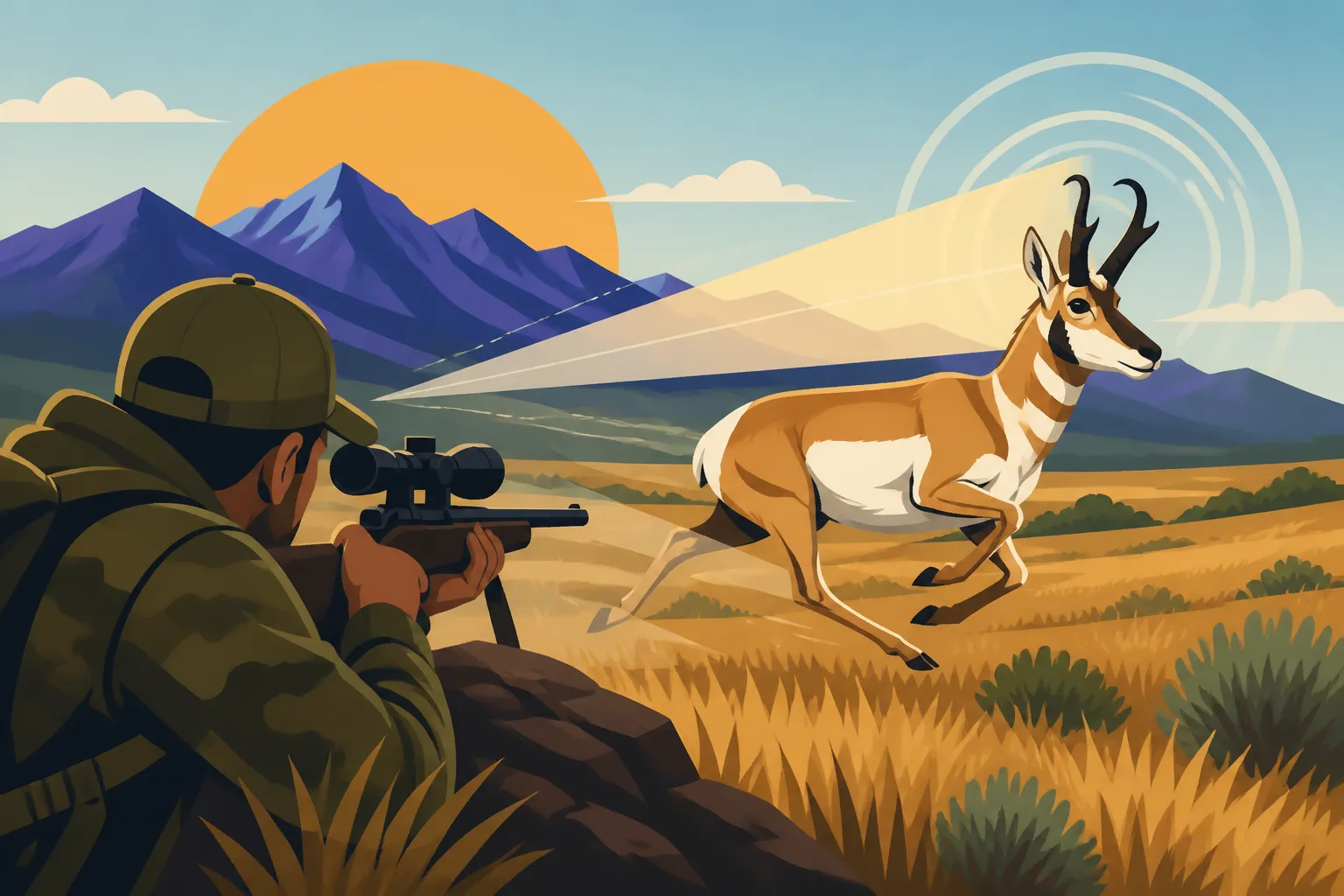
This is where pronghorn truly shine, and where most hunters face their greatest challenge. Pronghorn have exceptionally large eyes relative to their skull size, and they're positioned on the sides of their head, granting them an almost 360-degree field of vision without moving their head. More importantly, their eyes have an incredible optical power, often described as equivalent to 8x binoculars. This means they can spot a hunter, or any unusual movement, from distances of 3-4 miles away, sometimes even further. They're built for spotting the slightest anomaly in their vast, flat or gently rolling environment. Think about trying to spot a deer at that distance with your bare eyes—it's nearly impossible. For a pronghorn, it’s just another Tuesday.
The visual acuity also means they detect movement with extreme precision. A slight shift of your weight, a glint off your optics, or a piece of clothing flapping in the wind can be enough to send them into high alert. They don't need to identify what you are; they just need to identify that something is different or moving where it shouldn't be. This superior vision is why proper camouflage, incredibly slow movements, and using every bit of terrain for concealment are non-negotiable when stalking pronghorn.
Beyond Sight: The Role of Hearing and Smell
While vision is their primary defense, pronghorn also possess keen hearing and an excellent sense of smell. Their ears are moderately large and can swivel independently to pinpoint sounds. They might not hear a whisper from miles away, but sudden, unnatural noises like a dropped water bottle or the rustle of gear can alert them, especially if they are already on edge from something they saw.
Their sense of smell, while perhaps not as legendary as an elk's or a whitetail's, is still highly developed. The wind is always a factor when hunting any big game, and pronghorn are no exception. They can detect human scent carried on the breeze from considerable distances. While you might be perfectly hidden from sight, if the wind shifts and carries your scent to them, they will know you're there. This means paying diligent attention to wind direction is crucial, even when you think you're safely out of sight. A scent check should be part of every move you make. To better understand how these factors play into a successful hunt, our guide on Spot-and-Stalk Antelope Tactics offers practical insights.
The Frustration of Being Spotted: A Hunter's Reality
If you've spent any time hunting pronghorn, you've likely experienced the gut-wrenching feeling of being busted. You crawl on your hands and knees for an hour, thinking you're doing everything right, only to pop your head up for a peek, and they're already staring directly at you, flagging their white rump patches before rocketing across the prairie. It's not personal; it's simply their biology at work. They aren't running because they're afraid of you specifically, but because they're hardwired to run from anything that appears out of place or moves suspiciously in their open domain. This can lead to serious self-doubt for hunters, but understanding their superior senses helps to reframe it: you're not failing, you're just up against a truly incredible animal.
Crafting Your Strategy Against Superior Senses and Speed
Given their incredible speed and senses, hunting Montana pronghorn requires a strategic, patient, and often humbling approach. You can't just walk up on them, and you can't rely on luck. You have to actively counter their advantages.
Mastering the Approach: Stalking Techniques for Pronghorn
The spot-and-stalk method is king for pronghorn hunting, and it requires meticulous execution. The goal is to close the distance without ever being seen. This means using every ripple in the landscape, every dry creek bed, every low rise, and every patch of sagebrush for cover. Instead of walking, you'll often be crawling, belly-crawling, or moving in a low crouch for hundreds of yards, sometimes even a mile or more. It's physically demanding and mentally taxing.
When planning your stalk, always consider where the pronghorn are going. Are they feeding? Bedding down? Moving towards water? Try to intercept them or get ahead of their movement if possible, rather than chasing. Patience is your most important tool. Take your time, assess the terrain, and move slowly. If you suspect they might be looking your way, freeze. A long, slow stalk, even if it feels agonizingly slow, is infinitely better than a quick, busted stalk. Our comprehensive guide, Montana Antelope Hunting Guide, offers even more detailed stalking advice.
Using the Terrain and Wind to Your Advantage
Success hinges on your ability to utilize topography and wind direction. Before you even begin a stalk, pull out your maps—digital tools like those found on GoHunt are invaluable here—and analyze the contours of the land. Look for draws, coulees, isolated hills, or even dense sagebrush patches that can provide consistent cover. Plan your route so you're moving with the wind in your face or across your body, ensuring your scent doesn't drift towards the animals.
Sometimes, the best strategy isn't to move directly towards the animal, but to make a wide, sweeping arc, using multiple pieces of cover to stay out of sight and maintain a favorable wind. This might mean adding a mile or two to your stalk, but it significantly increases your chances of getting into shooting range. Remember, a pronghorn can see you from miles away, so starting your stalk far out and carefully planning your route through dead ground is essential. Always have a mental "bail-out" plan or an alternative route if your initial plan doesn't work out.
Decoying and Calling: Playing on Pronghorn Curiosity
While stalking is primary, decoying can be an incredibly effective tactic, especially for bowhunters. Pronghorn bucks, particularly during the rut, are territorial and curious. A well-placed decoy of a rival buck or a lone doe can sometimes draw them in, overriding their cautious nature. The key is timing and placement. During the rut, bucks are more aggressive and likely to investigate. Place the decoy so the buck has to come within your shooting lane to investigate. You'll typically set the decoy upwind of your position and hide yourself just behind it or to the side, allowing the pronghorn to focus on the decoy.
Calling is less common than decoying but can work in specific scenarios, primarily during the rut when bucks are responsive to doe bleats or challenges. A bleat call might stop a running buck or draw in a curious one. Like decoying, it plays on their social behavior and curiosity rather than trying to outsmart their senses directly. For a deeper dive into these methods, explore How to Decoy Antelope in Montana.
Essential Tools and Tactics for Montana Pronghorn Success
Bringing down a Montana pronghorn isn't just about strategy; it's also about having the right tools and knowing how to use them effectively. From optics that extend your vision to planning resources that help you choose the right ground, every piece of the puzzle contributes to success.
Optics are King: Spotting Pronghorn from Afar
Because pronghorn can spot you from such extreme distances, your best defense is often a good offense: spotting them first and from even further away. High-quality optics are not a luxury; they are an absolute necessity for pronghorn hunting in Montana's vast landscapes. You'll need powerful binoculars, typically 10×42 or 12×50, and a spotting scope with a tripod, ideally 20-60x or 25-75x, to efficiently scan miles of terrain.
Using your optics, you'll systematically grid the landscape, looking for any subtle movement, a flash of white, or the distinctive silhouette of a pronghorn. Don't just look for whole animals; often, you'll spot a piece of an animal behind a rise. Once spotted, use your spotting scope to assess the animal, determine if it's a shooter, and most importantly, identify the terrain features you'll use for your stalk. Invest in the best optics you can afford; they will be your most valuable asset. Our guide on Best Optics for Montana Big Game provides recommendations.
E-Scouting and Planning with Modern Resources
In today's hunting world, effective E-scouting is almost as important as physical scouting. Before you even set foot on the prairie, spend hours poring over maps and satellite imagery. Tools like GoHunt's mapping features allow you to identify potential pronghorn habitat, water sources, natural travel corridors, and critical, subtle terrain features that can provide cover for a stalk. Look for small depressions, drainages, or elevated points that you can use to hide your approach.
Identify potential access points, property boundaries (especially important with the mix of public and private land in Montana), and possible escape routes for the pronghorn. E-scouting helps you formulate an initial game plan and understand the "lay of the land" before you arrive, saving precious time in the field. When you are on the ground, always cross-reference your E-scouting with what you see; terrain can look different from satellite view. For deep dives into using these tools, consult How to E-Scout Montana Hunting Units.
Gear Up: Footwear, Camouflage, and Shooting Support
Beyond optics, the right gear can make or break your pronghorn hunt. Good footwear is crucial. You'll be covering miles, often crawling, on rough, sometimes thorny terrain. Comfortable, durable, and relatively quiet boots are essential.
Your camouflage pattern should blend with the open, often dry, grassy and sagebrush environments of Montana. Patterns with larger, more open elements that mimic natural shadows and textures work well. Avoid anything too dark or too "busy" that creates a solid outline against the open background.
Finally, a solid shooting platform is vital for the longer shots often required for pronghorn. A bipod attached to your rifle or shooting sticks will provide stability, especially after a long, strenuous stalk when your heart rate is up. Practice shooting from various positions, including prone, to ensure you're ready when the opportunity arises. Precision and confidence in your shot are paramount, as opportunities can be fleeting.
Disclaimer
Please note that hunting regulations, season dates, and access rules in Montana are subject to change. Always consult the latest Montana Fish, Wildlife & Parks (FWP) regulations before planning any hunting trip. This guide is for informational purposes only and does not replace official state guidelines.