Montana Mule Deer: Where to Find Them
It’s a common frustration for many hunters, whether seasoned veterans or newcomers to the Big Sky Country: you’ve got your Montana hunting license, your gear is dialed, but where do you actually start looking for mule deer? These iconic big game animals are notoriously elusive, disappearing into vast landscapes or seeming to vanish in plain sight. This guide is designed to cut through the guesswork, offering a detailed roadmap to understanding mule deer behavior and habitat, helping you pinpoint their locations across Montana’s diverse terrain.
Understanding Montana Mule Deer Habitat
Mule deer are incredibly adaptable animals, thriving in a wide range of environments across Montana. Unlike their whitetail cousins, which often prefer dense cover, mule deer are masters of using open country and broken terrain to their advantage. To consistently find them, you first need to understand the different types of habitat they call home throughout the year.
Mountain Ranges and Foothills
When most people picture hunting in Montana, they imagine rugged mountains, and for good reason—these areas are prime mule deer country. In the spring and summer, mule deer often migrate to higher elevations, seeking lush forage and cooler temperatures. This is where you'll find them in places like the Absaroka-Beartooth Wilderness, the Elkhorn Mountains, or the Tobacco Root Mountains. They favor areas with a mix of timber for cover and open slopes for feeding. Look for south-facing slopes, which tend to melt out faster in spring and retain warmth in the fall, providing critical forage. The broken terrain, with its countless draws, ridges, and basins, offers endless opportunities for mule deer to escape detection. During the early archery season, focusing on these higher elevations around timbered pockets and natural clearings can be incredibly productive. As the seasons change, and especially when significant snow starts to fall, these deer will begin their migration to lower elevations, following traditional routes they’ve used for generations. Understanding this vertical migration is key to finding them at different times of the year.
Sagebrush and Prairie Environments
Don't let the vastness of eastern and central Montana fool you into thinking there are no mule deer. On the contrary, the sagebrush and prairie environments, particularly the iconic Missouri Breaks, hold a significant and often overlooked population of mule deer. Here, the deer don't rely on dense timber for cover but rather on the topography itself. Deep coulees, river breaks, badlands, and extensive sagebrush flats provide all the concealment a mule deer needs. They are experts at lying down in a slight depression or behind a small sagebrush, seemingly vanishing into the landscape. This type of habitat often necessitates a different hunting approach, one focused heavily on glassing and long-range observation. The mule deer in these areas are accustomed to wide-open spaces and can see hunters from a long distance. Learning to glass for Montana mule deer effectively in these environments, picking apart distant hillsides and coulee systems, is crucial. Look for them along the edges of agricultural fields, near riparian zones (areas along rivers and streams), and in the breaks and badlands that offer protection from wind and sun.
Agricultural Interfaces and River Bottoms
While less common for trophy mule deer, many pockets of these animals can be found where their preferred habitat brushes up against agricultural lands or in the rich river bottoms throughout the state. Here, mule deer often coexist with whitetails, utilizing the abundant food sources provided by crops and the dense cover of riparian timber. You might find them feeding in alfalfa fields at dawn and dusk, then retreating to a nearby coulee, bluff, or river bottom during the day. The Yellowstone River corridor, for instance, offers a mix of agricultural fields and riverine habitat where mule deer can thrive. These areas might not present the classic mountain hunting experience, but they can be highly productive, especially during the general rifle season when deer are often pressured from other areas. Hunters need to be particularly mindful of property boundaries and obtaining permission when hunting these private land-dominated landscapes, as deer will often cross between public and private ground. These transition zones between wilder country and human activity are often overlooked but can hold surprisingly robust populations.
Seasonal Movement Patterns and Location Strategies
Mule deer are highly influenced by the seasons, and understanding their annual cycle is paramount to locating them consistently. Their movements are largely dictated by food availability, breeding instincts, and thermal regulation.
Early Season Archery Tactics
When Montana archery season kicks off, typically in early September, mule deer are still largely in their summer patterns. This means they are often found at higher elevations in the mountains, taking advantage of lush alpine and subalpine forage. During this time, they haven't faced significant hunting pressure, and their behavior can be somewhat predictable. Focus your efforts on basins and high benches that offer a good mix of feed, water, and bedding cover. North-facing slopes often hold feed longer as they retain moisture, while south-facing slopes are good for early morning sun. Bucks, especially mature ones, are often still in bachelor groups, focused on putting on weight before the rigors of the rut. This is a great time to implement tactics like Montana mule deer hunting: spot-and-stalk tactics. By glassing from a distance, identifying a group of deer, and then making a careful approach, you can capitalize on their relatively unpressured state. Consider utilizing mapping tools, like those offered by GoHunt, to identify potential high-elevation summer ranges, pinch points, and water sources before you ever leave home. This E-scouting can save you countless hours in the field.
The Rut and General Rifle Season
The general rifle season in Montana, usually starting in late October and extending through November, perfectly coincides with a significant portion of the mule deer rut. This is a game-changer for locating bucks. As the days shorten and temperatures drop, bucks become much more visible, actively seeking out does. Their focus shifts from feeding to breeding, making them more vulnerable and less cautious. During this period, deer are often on the move, and their traditional summer ranges give way to rutting grounds, which can be in foothills, prairie breaks, or even agricultural interfaces.
Does will dictate where the bucks are. Look for doe groups in areas with good browse and security cover. Bucks will be shadowing these groups, running off smaller bucks, and sometimes even sparring. This is the time when you might find a mature buck in an unexpected location, driven by the urge to breed. Weather can also play a huge role during the general rifle season. Early snowfalls can trigger a migration from higher elevations to winter ranges, pushing deer into more accessible areas. Understanding Montana Mule Deer Rut Explained can give you a significant advantage, as you'll know when and why they're moving. Remember, pressure from other hunters can also move deer, so adapt your strategy to hunt areas where deer might seek refuge, such as dense timber pockets or steep, overlooked canyons.
Late Season Winter Range
As winter truly sets in, and heavy snow blankets the high country, mule deer migrate to their traditional winter ranges. These areas are typically at lower elevations, often on south-facing slopes, benches, and river bottoms that receive more sunlight and have less snow accumulation. The goal here is survival, and deer will concentrate in areas with available forage, often bitterbrush, sagebrush, and other woody browse. Finding these winter ranges can be challenging, as they might be quite specific areas. However, once located, they can hold a significant number of deer.
This is a time when the deer are conserving energy, and you'll often find them bedding in sunny spots, sometimes even in relatively open country, relying on their eyesight and the vastness of the landscape for protection. Hunters who are willing to brave the colder temperatures and often tougher conditions can find success by focusing on these lower-elevation wintering grounds. Pay attention to game trails leading from higher elevations, as these often mark migration corridors. It's also critical during late season to focus on glassing tactics, as deer often bed down for long periods. Utilize quality optics to systematically search south-facing slopes, paying close attention to benches and sparse timber.
Using Tools and Resources to Locate Mule Deer
Finding mule deer in Montana's vast landscapes requires more than just keen eyesight; it demands smart planning and effective use of modern tools. Luckily, technology and traditional scouting methods can work hand-in-hand to boost your success.
E-Scouting with Mapping Software
In today's hunting world, e-scouting has become an indispensable tool for locating game, and mule deer are no exception. Platforms like GoHunt, onX Hunt, and others allow you to meticulously scout potential hunting areas from the comfort of your home. Start by identifying different habitat types we discussed earlier – mountain ranges, sagebrush flats, and river bottoms – within your chosen hunting district. Look for variations in terrain: areas with steep slopes, dense timber patches, and north-facing aspects (for bedding and summer feed) or south-facing aspects (for winter range). Identify water sources, which are always critical, and any natural funnels or pinch points that might concentrate deer movement.
When e-scouting, pay particular attention to public land boundaries, especially when considering areas near agricultural fields or in the foothills. GoHunt's detailed maps can highlight potential travel corridors between different parcels of public land or between bedding and feeding areas. You can mark waypoints for potential glassing knobs, bedding areas, and escape routes. By studying historical satellite imagery, you can even spot changes in vegetation or timber density over time, which might indicate good feed or historical bedding sites. This systematic approach to how to E-Scout Montana Hunting Units drastically reduces the amount of blind walking you’ll do, allowing you to prioritize areas with higher potential.
On-the-Ground Scouting and Sign Reading
While e-scouting is a powerful starting point, nothing beats boots-on-the-ground scouting. Once you’ve narrowed down potential areas, get out there and walk them. Look for fresh sign: tracks, droppings, rubs on trees or bushes, and bedding areas. Mule deer tracks are generally larger and more rounded than whitetail tracks. Fresh droppings, especially those that are moist and dark, indicate deer are currently using the area. Rubs are made by bucks scraping their antlers on trees or brush, signaling their presence and territoriality; bigger rubs usually mean bigger bucks.
Bedding areas are depressions in the ground where deer have rested, often found on benches, under conifers, or on slopes with good visibility. Pay attention to wind direction and thermal currents when identifying bedding areas, as deer will bed in spots that give them a scent advantage. During on-the-ground scouting, you might also find natural mineral licks or water holes, which can be magnets for deer. This firsthand knowledge of an area’s topography and deer activity is irreplaceable. It allows you to confirm your e-scouting observations and discover subtle nuances of the landscape that maps simply can't convey.
Understanding Montana Hunting Districts
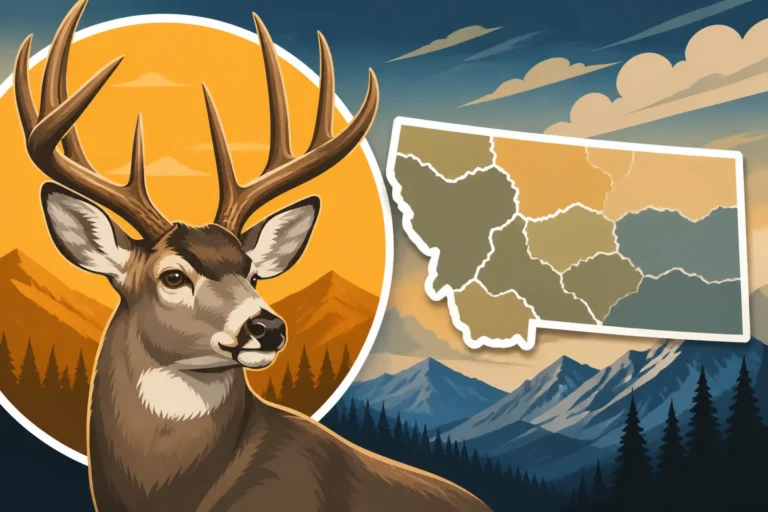
Montana's hunting districts are the backbone of its game management, and understanding their specifics is critical for mule deer success. Each district has unique characteristics, regulations, and often different draw odds for special permits. Before you even apply for your Montana general deer license, you should be researching specific districts. Sites like Montana Fish, Wildlife & & Parks (FWP) offer detailed information on each hunting district, including elk and deer populations, harvest statistics, and specific regulations.
Some districts might be known for their robust public land opportunities, while others might be predominantly private. Many districts in central and eastern Montana, for example, encompass vast stretches of Bureau of Land Management (BLM) land and state trust land, which are open to public hunting. Conversely, mountainous districts might feature extensive national forest lands. Knowing these distinctions helps you plan your hunt. You can delve into the specifics of Montana hunting districts explained to understand the nuances of how they are structured. Using tools like GoHunt’s Insider platform can provide detailed draw odds, population data, and harvest success rates specific to each hunting district, allowing you to make an informed decision on where to focus your efforts for mule deer.
Key Considerations for Success
Finding and harvesting a mule deer in Montana isn’t just about knowing where they live; it’s about understanding the external factors that influence their behavior and being prepared for the realities of the hunt.
Pressure and Avoiding Crowds
Montana is a popular hunting destination, and public lands, especially those with easier access, can see significant hunter pressure. Mule deer are incredibly sensitive to this. When pressured, they will often retreat to the thickest, steepest, or most remote cover they can find. This means your strategy needs to include methods for dealing with or, better yet, avoiding the crowds.
Consider hunting during weekdays instead of weekends if your schedule allows. Look for areas that require a longer walk-in or are further off main roads; often, just a mile or two from a trailhead can drastically reduce the number of other hunters you encounter. Learning How to Hunt Mule Deer on Montana Public Land successfully means being willing to put in the extra effort. Utilizing elevation can also be a key tactic: many hunters stick to the lower, more accessible slopes, leaving the higher, steeper country less disturbed. Pressure can also push deer across boundaries, so if you're hunting near private land, be aware that deer might seek refuge there when public land gets too busy. Sometimes, a successful hunt isn't about finding the most deer, but finding the deer that aren't being actively pursued by everyone else.
Weather and Its Impact
The weather in Montana can be incredibly unpredictable and plays a massive role in mule deer behavior. A warm, dry fall can keep deer spread out in their summer ranges, making them harder to find. Conversely, an early cold snap or significant snowfall can trigger a dramatic shift in their patterns, pushing them down from high country onto winter ranges.
Heavy snow not only forces deer to move but also makes them more visible against the white backdrop and can limit their movement, concentrating them in specific areas. Strong winds often push deer into protected pockets like coulees or the lee side of ridges. Understanding how weather moves Montana elk and deer is critical. Always check the forecast leading up to and during your hunt, and be prepared for rapidly changing conditions. Packing appropriate gear for everything from mild autumn days to full-blown winter blizzards is not just about comfort; it's about safety and being able to stay in the field when conditions might be pushing deer your way. A sudden drop in temperature or a fresh dusting of snow can transform a slow day into a productive one, if you're ready for it.
Physical Preparation and Persistence
Hunting Montana mule deer is physically demanding. Whether you're navigating steep mountain terrain, traversing miles of rolling prairie, or dealing with adverse weather, it will test your endurance. Being in good physical shape is not just about being able to cover ground; it's about being able to recover quickly, make good decisions when fatigued, and, perhaps most importantly, having the strength to pack out a harvested animal. Start a physical conditioning program months before your hunt, focusing on cardiovascular endurance, leg strength, and carrying weight.
Beyond physical fitness, persistence is the most crucial ingredient for success. Mule deer hunting often involves long hours of glassing, many miles walked, and days where you might not see a single animal. It's easy to get discouraged, but the hunters who succeed are usually those who stick with it, adapt their strategies, and keep learning. Every ridge you glass, every coulee you check, and every mile you walk adds to your understanding of the area and the deer within it. Don't give up after a slow morning; often, a change in wind, a break in the weather, or simply being in the right place at the right time in the afternoon can make all the difference. Remember, the challenge is a big part of what makes Montana mule deer hunting so rewarding.
| Habitat Type | Key Characteristics | Mule Deer Behavior | Optimal Hunting Season |
|---|---|---|---|
| Mountain Ranges | Steep, timbered, high elevation, diverse forage | Summer range, thermal cover, migration corridors | Early Archery, Late Rifle (migration) |
| Foothills & Breaks | Rolling hills, sagebrush, junipers, coulees, riparian zones | Transition zones, rutting grounds, good cover | Archery, General Rifle |
| Prairie & Badlands | Vast open spaces, deep draws, sparse cover, agricultural interfaces | Adaptable, use terrain for concealment, feed in fields | Early Archery, General Rifle (with caution) |
| River Bottoms | Dense riparian vegetation, agricultural interfaces | Food sources, dense cover, often shared with whitetail | General Rifle (especially pressured areas) |
Disclaimer
Always consult the most current Montana Fish, Wildlife & Parks regulations before planning any hunting trip, as rules and season dates can change annually. This guide provides general information and should not be used as a substitute for official regulations or professional guidance.