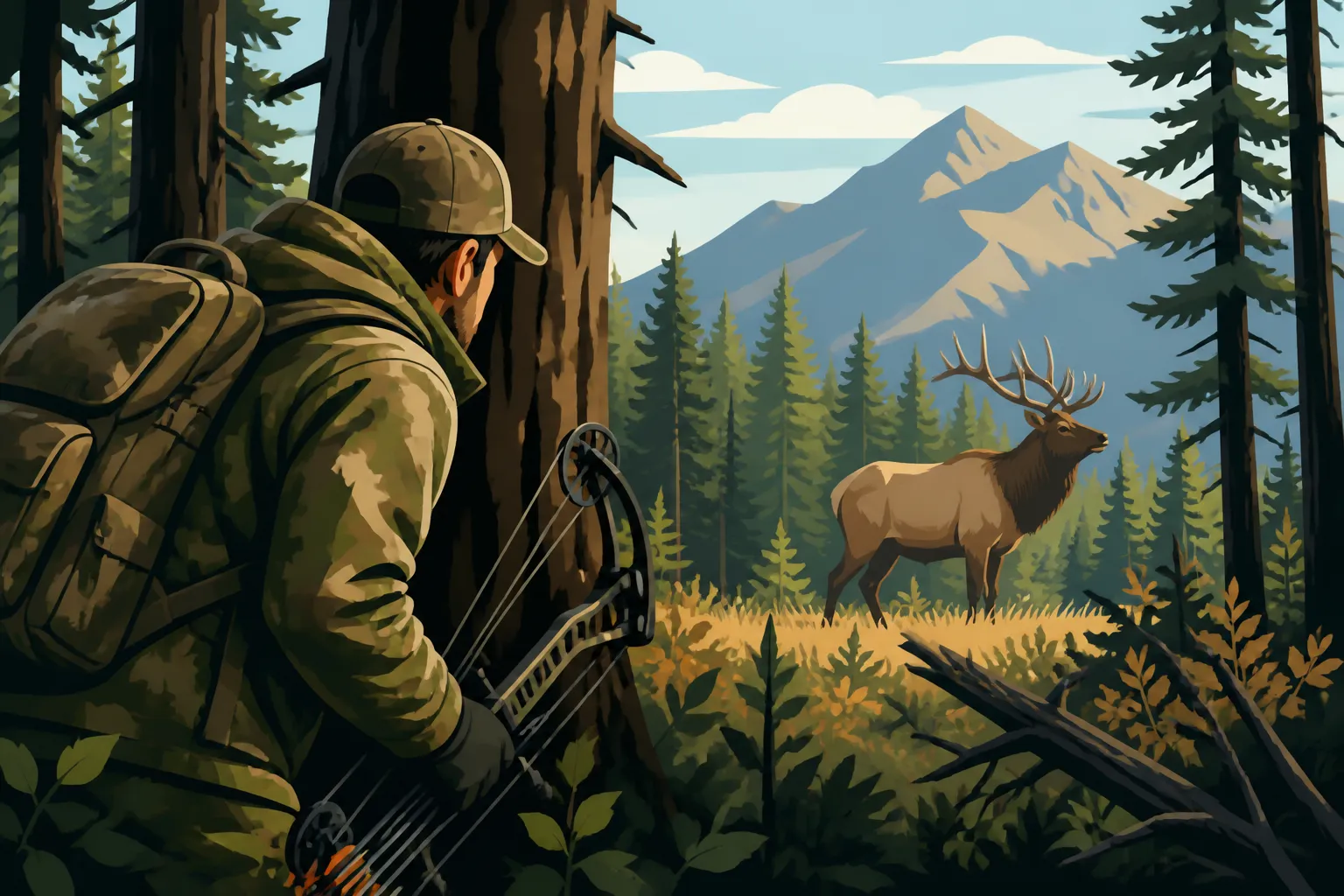
How to Move Quietly Through Montana Timber
Trying to slip silently through Montana's dense timber can feel like walking through a minefield of crunchy leaves, snapping twigs, and noisy undergrowth. It's a universal frustration for any hunter who's had an elk bust out before they even knew it was there, leaving you questioning every crunchy step. This guide dives deep into the art and science of moving quietly through the woods, giving you the tools and techniques to become a true phantom in Montana's challenging big game country, increasing your odds of a successful stalk.
The Crucial Role of Gear and Preparation for Silent Movement
Before you even step foot into the woods, your gear choices and how you prepare them play an enormous role in your ability to move silently. Many hunters overlook these foundational elements, thinking it's all about how they walk. But trust me, a squeaky backpack or the wrong fabric can give you away faster than a clunky step. Getting this right is the first, most critical step to becoming a ghost in the timber.
Choosing the Right Footwear for Variable Terrain
Your boots are your direct connection to the ground, and their impact on noise is paramount. You need a pair that offers support and protection without turning every fallen leaf into a trumpet blast. The ideal hunting boot for Montana's timbered country is a balance of stability, comfort, and quietness. Think about a boot with a softer, pliable sole that can grip without being overly stiff. Hard, aggressive treads can be noisy on rocks and dry ground, while softer compounds absorb sound better.
Lacing your boots correctly also matters more than you might think. A boot that's too loose can rub and squeak, while one that's too tight can restrict foot movement, leading to clumsy steps. Experiment with different lacing techniques to find one that secures your foot without creating friction noises. For deep dives into specific boot recommendations, check out our guide on the Best Boots for Montana Elk Hunting. When you're looking at a map on a platform like GoHunt, identifying areas of dense timber or rocky ridges should immediately trigger thoughts about your footwear choice for that specific terrain. A well-scouted area, even if remote, will still be a noisy challenge if your boots aren't up to snuff.
Layering Clothing for Stealth and Comfort
The clothing you wear directly impacts noise. Forget stiff, crinkly materials like old-school rain gear or overly bulky synthetics that swish with every movement. Modern hunting apparel has come a long way in combining warmth, durability, and quietness. Focus on soft, fleece-lined fabrics, merino wool, or quiet synthetic blends that glide against each other rather than rub loudly. Layering is key, not just for warmth but also for minimizing noise. A bulky jacket might keep you warm, but if it restricts your movement or rubs constantly, it's a liability.
Consider a base layer of merino wool, a quiet mid-layer fleece, and an outer shell made of brushed polyester or another soft, silent material. This allows you to shed or add layers as conditions change, always maintaining maximum stealth. Pay attention to zippers and snaps; some can be surprisingly loud. Before a hunt, make sure to wash your hunting clothes with scent-free detergent, and consider tumble drying with scent-absorbing dryer sheets. This not only helps with human scent but also softens the fabric, making it even quieter.
Here's a quick comparison of common hunting clothing materials and their noise characteristics:
| Material Type | Noise Level (Dry Conditions) | Noise Level (Wet Conditions) | Flexibility | Durability | Best Use Case |
|---|---|---|---|---|---|
| Merino Wool | Very Low | Low | High | Moderate | Base/Mid layers, quiet stalks, scent control |
| Brushed Fleece | Low | Moderate (can absorb water) | High | Moderate | Mid layers, outer shell in dry, quiet conditions |
| Softshell | Low to Moderate | Moderate (water-resistant) | High | Good | Outer layer for wind protection, light rain |
| Waxed Cotton | Moderate | Low | Low | High | Brush busting, can be stiff and loud when cold |
| Hard Shell (Rain) | High | High | Moderate | High | Emergency rain gear, often too loud for stalking |
Optimizing Your Pack for Noise Reduction
A well-packed backpack is a silent pack. Anything that can rattle, clang, or rub inside your pack will broadcast your presence to every animal within earshot. Start by ensuring that all hard items—your optics, spotting scope, water bottles, knife, rangefinder, and calls—are wrapped in soft clothing, socks, or even a small game bag. Use dedicated pockets and compression straps to secure items tightly, preventing them from shifting.
Hydration bladders, while convenient, can be noisy as water sloshes around. Keep them full to minimize sloshing or consider using smaller, quieter water bottles. Test your pack at home: load it up, put it on, and move around your house. Jump, bend, and twist. Listen for any tell-tale noises. Adjust and re-pack until it’s as silent as possible. Remember, a lighter pack is often a quieter pack, so only bring essentials. Our Montana Backcountry Hunting Gear List has more on optimizing your loadout. For anyone preparing for a serious backcountry excursion, knowing how to pack effectively for silent movement is just as important as knowing where to find the game, which is where tools like GoHunt can help identify those prime, remote areas.
Mastering the Art of Quiet Foot Placement and Body Control
Even with the best gear, your personal movement is the ultimate factor in remaining undetected. Moving quietly through Montana's timber is an acquired skill that requires deliberate practice and a heightened sense of awareness. It's not about speed; it's about precision and intentionality.
The Intentional Hunter's Walk Technique
The "hunter's walk" or "elk shuffle" is a fundamental skill for moving quietly. It involves placing each foot with extreme care, testing the ground before committing your weight. Instead of lifting your foot straight up and stomping it down, roll your foot from heel to toe, feeling for crunchy leaves, dry twigs, or loose rocks. The goal is to distribute your weight gradually, allowing you to detect and avoid noise traps.
Start by placing the ball of your foot down, then slowly transfer your weight to your heel. If you feel or hear something loud, you can often shift your weight or lift your foot before making a definitive sound. This technique takes practice and slows you down significantly, but that's the point. It transforms you from a bipedal alarm system into a deliberate, silent predator. This is a core part of effective Montana Elk Hunting: Spot-and-Stalk Tactics.
Minimizing Body Noises and Unnecessary Movements
Beyond your feet, every part of your body can create noise. Be mindful of branches brushing against your clothing, jacket zippers clanking, or even your pant legs rubbing together. When you navigate through dense brush, try to move slowly, pushing branches aside gently rather than letting them snap back. Visualize the path you want to take and move deliberately through it, minimizing contact with noisy vegetation.
When you need to stop, do so slowly and intentionally. Avoid sudden jerky movements. If you're carrying a rifle, ensure its sling doesn't allow it to swing wildly or hit your pack. Consider a quieter sling or secure it more tightly. The general rule is: if it can make a sound, it probably will. Anticipate potential noise sources and preemptively address them. For example, some hunters use neoprene covers on their rifle slings or tape down any loose straps on their pack.
Pacing, Pausing, and Listening
One of the most effective strategies for moving quietly is to combine deliberate movement with frequent pauses. Don't just walk continuously. Adopt a rhythm of "stop, look, listen, move." Take a few intentional steps, then pause. During these pauses, actively scan your surroundings, not just for game, but also for quieter paths forward. Listen intently for subtle sounds of animals – a rustle, a twig snap, a distant bugle. This also allows the forest to settle after your movement, reducing the chance that you've spooked an animal just beyond your line of sight.
Often, animals won't immediately bolt; they'll often freeze or try to identify the source of a sound. By pausing, you give them time to relax and might even hear them move away or, even better, reveal their position. This technique is especially crucial when you're still-hunting, as covered in our article How to Still-Hunt Montana Timber. It's a game of patience and observation, not a race.
Harnessing Environmental Factors for Unseen Approaches
Montana's diverse timber environments offer both challenges and opportunities for quiet movement. Understanding and utilizing these natural elements can make the difference between a successful stalk and an empty handed hike out.
Reading the Wind and Thermals to Your Advantage
Wind is arguably your most important ally or enemy when it comes to silent movement and avoiding detection. Always, always, always pay attention to the wind direction. If your scent is blowing towards the animals, it doesn't matter how quietly you move; they'll smell you and be gone. Use a wind checker frequently. Understanding how to use the wind when hunting Montana Elk is non-negotiable.
Thermals, which are rising and falling air currents, are equally critical, especially in mountainous timber. In the morning, as the sun heats the ground, thermals generally rise, carrying your scent uphill. In the evening, as the air cools, thermals drop, carrying your scent downhill. Plan your approach routes to ensure the wind and thermals are carrying your scent away from your target animals. This might mean making a long, circuitous route to get into the right position, but it's far better than walking straight in and getting busted by a swirling thermal. GoHunt's mapping features can help you visualize elevation changes, which are crucial for predicting thermal behavior. Knowing how to use thermals in Montana Elk Country will dramatically improve your success.
Utilizing Natural Terrain and Vegetation for Cover
The very elements that make timber noisy can also provide excellent cover. Use the contours of the land, ridges, draws, and dense stands of trees to hide your movement and muffle your sounds. Instead of walking over a noisy crest, try to skirt around it, staying just below the horizon line. If there's a small depression or a thicket, consider walking through it if it provides a quieter path, even if it adds a few extra yards to your route.
Walking on pine needles is generally much quieter than walking on dry aspen leaves or crunchy grass. Look for softer ground, mossy patches, or even damp areas after a rain. Avoid game trails unless they are soft and consistently quiet, as they can sometimes be funnel points for noise due to heavy animal traffic compacting the ground. When you're e-scouting Montana Hunting Units, pay attention to these subtle terrain features and vegetation types. Identify potential quiet travel corridors before you even leave home.
Understanding Timber Types and Their Sound Profiles
Not all timber is created equal when it comes to noise. Different tree species and forest floor compositions will produce varying sound profiles underfoot.
- Conifer Forests (Pine, Fir, Spruce): Often feature a thick carpet of pine needles that can be surprisingly quiet, especially if slightly damp. However, large fallen logs and dead branches can be extremely brittle and loud.
- Deciduous Forests (Aspen, Cottonwood): Known for their notorious crunchy leaf litter, especially in dry conditions. These can be the most challenging to move through silently. Focus on finding patches of bare earth, moss, or damp ground.
- Mixed Forests: A combination of the above, offering varied challenges and opportunities. You might find quiet sections of pine needles interspersed with noisy aspen stands.
By understanding the timber types in the area you're hunting, you can adjust your strategy. If you're in a particularly noisy section, slow down even more, take smaller steps, and maximize your pauses. If you're moving through a quiet conifer stand, you might be able to pick up your pace slightly. This local knowledge is invaluable for Montana Public Land Hunting Strategy.
Developing the Mindset and Skills Through Practice
Quiet movement isn't just a physical skill; it's a mental game. It requires patience, discipline, and a willingness to learn from every outing. You won't master it overnight, but consistent effort will yield significant results.
Off-Season Scouting as a Training Ground
Don't wait until opening day to practice silent movement. Use the off-season to scout your hunting areas. This is the perfect time to identify quiet travel routes, learn the sound profiles of different timber types in varying conditions (dry vs. wet, early morning vs. midday), and practice your hunter's walk without the pressure of a live animal. Think of it as a physical preparation for a Montana Elk Hunt, but for your stealth skills.
During scouting trips, actively listen to the sounds you make. Pay attention to how your pack sounds, how your clothes rub, and how different types of ground react to your footsteps. This direct feedback is invaluable. Platforms like GoHunt are fantastic for identifying promising areas for scouting, allowing you to pre-plan routes that might offer quieter passage through dense timber. The more familiar you are with the terrain and its acoustic properties, the more naturally you'll move when it counts.
Cultivating Patience and Mental Focus
Moving quietly through timber demands immense patience. You might cover a quarter-mile in an hour, which can feel agonizingly slow. This is where mental fortitude comes in. Resist the urge to rush. Every time you feel impatient, remind yourself of the goal: to get close to the animal without being detected. Take a deep breath, recalibrate your focus, and slow your pace.
Visualize success. Imagine yourself slipping through the trees, unheard and unseen, getting into position for that perfect shot. Mental rehearsal helps solidify the patient, deliberate movements necessary. Be fully present in the moment, focusing on each step, each sound, and each scent. Distractions, whether from your phone or your own racing thoughts, will undermine your stealth. This deep focus is what transforms a simple walk into a precision stalk.
Learning from Every Step in the Woods
Even experienced hunters get busted. The key isn't to avoid mistakes entirely, but to learn from them. Every time an animal spooks, ask yourself why. Was it your boots? Your pack? The wind? Did you step on a hidden branch? Did you fail to see a quiet path just to your left? Take mental notes, or even better, jot them down in a hunting journal.
Analyze your tactics, your gear, and your route. The timber environment is dynamic; what was quiet yesterday might be crunchy today. Adaptability is crucial. Continuously refine your hunter's walk, experiment with different gear setups, and challenge yourself to improve your observational skills. Whether you're on a Montana DIY Elk Hunting Guide adventure or a weekend whitetail hunt, every outing is a learning opportunity to become a more silent, effective hunter.
Disclaimer
Hunting is an inherently dangerous activity. This guide provides general information and best practices for moving quietly through timber but cannot account for all variables or ensure safety. Always prioritize safety, adhere to all local, state, and federal hunting regulations, and be prepared for emergencies. The author and publisher are not responsible for any accidents, injuries, or legal infractions that may occur as a result of using this information.