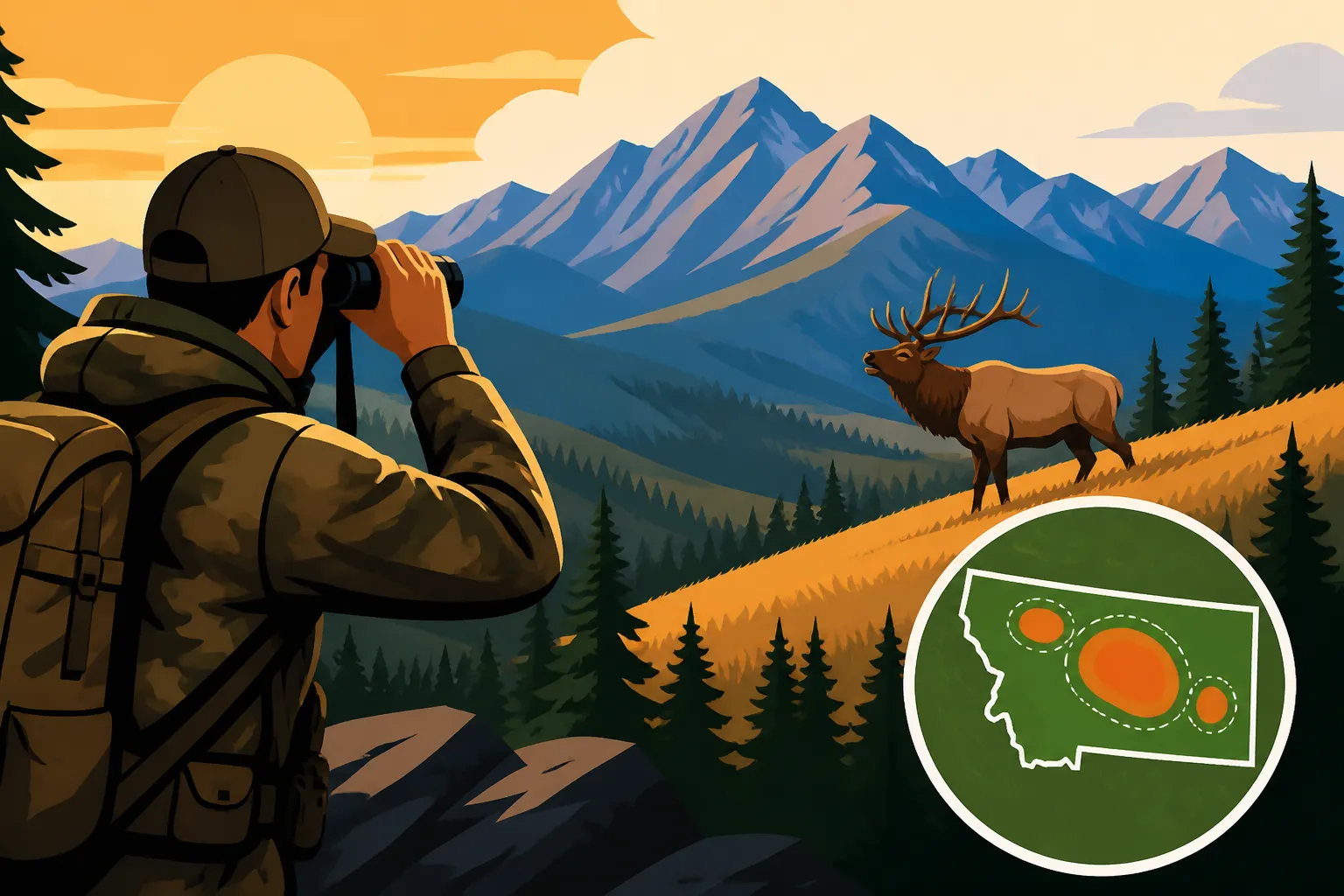
How to Locate Montana Elk Before Opening Day
That nagging feeling in the pit of your stomach, the one that whispers, 'Am I really ready for opening day?' It’s a common frustration for even seasoned Montana elk hunters. You've spent months dreaming of it, but getting on those elusive critters often comes down to the work you put in before the first shot is fired. This comprehensive guide is designed to empower you with proven strategies and practical steps for locating Montana elk before opening day, helping you replace anxiety with a solid game plan.
The Critical Importance of Pre-Season Scouting
You might think hunting starts when the season officially opens, but for many successful hunters in Montana, the real work begins months in advance. Pre-season scouting isn't just a bonus; it's often the single most critical factor distinguishing a successful hunt from a frustrating one. The vastness of Montana's landscape, combined with the often-unpredictable nature of elk, means that showing up cold on opening day is a recipe for disappointment. Imagine driving hours, only to find the "perfect" spot you picked from a map is now a clear-cut logging operation or crawling with other hunters. That's a gut punch no one wants.
Proper scouting alleviates much of that stress and uncertainty. It allows you to develop an intimate understanding of your chosen hunting grounds, anticipate elk movements, and adapt to changing conditions. It’s about building a mental map, not just of trails and peaks, but of where the elk eat, sleep, drink, and hide from pressure. This groundwork helps you avoid the common pitfalls and gives you a significant advantage when that first crisp morning of the season arrives. It’s the difference between hoping for luck and executing a well-informed strategy.
Understanding Elk Behavior and Movement
Elk are creatures of habit, but their habits are incredibly complex and influenced by a myriad of factors. Understanding these patterns is the cornerstone of locating them before the season opens. Their behavior is largely dictated by food, water, cover, and perceived safety. During the late summer and early fall, leading up to opening day, elk are typically focused on putting on weight in preparation for the rut and the harsh winter ahead. This means they'll be found near abundant forage, often in higher elevations during warmer periods, before slowly starting to descend as temperatures drop or hunting pressure mounts.
Their daily routine usually involves feeding heavily in the early morning and late evening, bedding down in secure, thick cover during the day, and traveling between these areas. Bulls might be in bachelor groups, focused on growing their antlers, while cows and calves will be in larger, more social herds. Knowing what they're looking for – specific types of grasses, forbs, or even agricultural crops if you're hunting near private land – can narrow down your search immensely. Observing these subtle shifts in behavior and preferred habitat during your pre-season scouting allows you to predict where they’ll likely be when the season kicks off.
Avoiding Opening Day Crowds and Pressure
One of the biggest frustrations for hunters, especially on Montana's accessible public lands, is the sheer volume of people on opening day. Imagine putting in all that effort to scout a perfect basin, only to find five other trucks parked at the trailhead. Pre-season scouting is your secret weapon against this scenario. By understanding elk movement patterns and preferred bedding areas, you can identify spots that are less obvious to the casual hunter. This often means going a little further, getting a little higher, or pushing into thicker, nastier timber that others might avoid.
Beyond simply avoiding crowds, understanding pressure helps you predict elk behavior. Elk are incredibly smart and will quickly adapt to human presence. If a trailhead becomes too busy, they'll often move to less pressured areas, often referred to as "sanctuaries" – places with dense cover, steep terrain, or limited access that offers them security. Your pre-season work allows you to identify these likely sanctuaries and understand the travel corridors elk will use to reach them when the hunting pressure inevitably hits. This knowledge gives you the foresight to position yourself ahead of the game, rather than simply reacting to the rush. Consider looking into areas discussed in our guide on how to hunt elk in Montana's wilderness for less-pressured opportunities.
Digital Scouting: Your E-Scouting Command Center
In today's age, effective elk hunting begins long before you set foot in the woods, thanks to the incredible power of digital scouting, or "e-scouting." This isn't just a convenient tool; it's an absolute game-changer, especially for hunters planning a trip to a new area or trying to maximize their limited time in the field. The ability to pore over maps, analyze terrain, and identify potential hotspots from your couch at home or office saves countless hours of wasted effort and boots-on-the-ground scouting in unproductive areas. It gives you a significant head start, allowing you to narrow down vast tracts of land into manageable, promising sections.
E-scouting tools provide a bird's-eye view of the landscape, revealing nuances that might be missed on traditional paper maps. You can assess features like slope aspect, elevation changes, vegetation density, and proximity to water sources with remarkable precision. This digital reconnaissance allows you to quickly eliminate improbable areas and focus your physical scouting efforts on locations with the highest potential. For an even deeper dive into this, check out our article on How to E-Scout Montana Hunting Units.
Mapping Tools for Topography and Habitat Analysis
The cornerstone of digital scouting lies in robust mapping applications. Tools like OnX Hunt, Gaia GPS, and GoHunt's mapping platform are indispensable. These applications layer critical information onto satellite imagery, providing a wealth of data at your fingertips. You can see public and private land boundaries, which is absolutely crucial in Montana where land ownership can be a checkerboard. Beyond that, topographical lines reveal subtle ridges, saddles, and drainages that act as natural travel corridors or bedding areas for elk.
With these tools, you can virtually "walk" the terrain. Look for areas where north-facing slopes meet dark timber, as these often provide cool, shaded bedding cover. Identify water sources like springs, creeks, and ponds, especially in dry years, as elk will frequent these. Pay attention to changes in vegetation type, which can indicate transitions from feeding areas to bedding cover. Many of these apps also allow you to mark waypoints, measure distances, and even download maps for offline use, ensuring you're prepared even when cell service disappears deep in the Montana backcountry. Utilizing the full suite of features in these mapping programs can paint a highly accurate picture of potential elk habitat.
Identifying Key Habitat Features
Successful pre-season elk location hinges on understanding where elk want to be. Through e-scouting, you can systematically identify these critical habitat features without burning precious vacation days. Start by looking for bedding cover. Elk love dense, dark timber, often on north-facing slopes or in thick pockets of lodgepole pine, where they can find thermal cover and security. These are often the places they'll move to when pressured. Water is another non-negotiable requirement. Rivers, creeks, springs, and even stagnant ponds can be critical, especially during warmer parts of the season. Use your mapping tools to pinpoint every potential water source within a reasonable distance of likely bedding and feeding areas.
Food sources are equally vital. Elk are grazers and browsers, so look for open meadows, old burns, clear-cuts with regrowth, or even agricultural fields adjacent to timbered areas. Identifying these feeding grounds and the secure cover nearby where elk will bed down provides a clear blueprint for their daily movements. Think about saddles and benches that connect these areas—these are often natural travel routes. Also, don't overlook natural pinch points or funnels that could concentrate elk movement, especially during the rut. Understanding these nuances from your digital scout is key to planning your approach in the field, a strategy often highlighted in guides like "How to Pattern Montana Elk Movement".
Analyzing Historical Data and Draw Odds
Beyond simply looking at maps, modern e-scouting involves leveraging data. Services like GoHunt Insider are invaluable here. They compile historical draw odds, success rates, and unit-specific harvest reports from state fish and wildlife agencies. This information, often difficult to sift through on raw FWP websites, is presented in an accessible format, allowing you to quickly understand the historical potential of different hunting districts. For instance, if you see a district has consistently low success rates or extremely tough draw odds, it might prompt you to reconsider or adjust your expectations.
Furthermore, historical weather patterns can influence elk movement. A heavy snow year might push elk to lower elevations earlier, while a dry year could make water sources even more critical. While not directly "e-scouting" the elk themselves, analyzing this broader data allows you to make more informed decisions about where to focus your efforts and when. This data-driven approach, often paired with insights from resources like How to Read Montana Draw Odds, helps you pick not just an area with elk, but an area where you have a realistic chance of success.
Boots-on-the-Ground Reconnaissance: The Unbeatable Edge
As powerful as digital scouting is, nothing truly replaces "boots-on-the-ground" reconnaissance. E-scouting gives you a fantastic starting point, narrowing down vast tracts of land into promising areas. But it's only when you actually walk the terrain, smell the pine needles, feel the slope, and see the subtle signs that you begin to develop a truly comprehensive understanding of your hunting area. Satellite imagery can show you dark timber, but it can't tell you if it's impenetrable dog-hair thicket or open, walkable old growth. It can show you a "trail," but not if it's a forgotten game trail or a well-used elk superhighway.
Physical scouting confirms your digital findings, uncovers hidden gems, and allows you to understand the scale and challenges of the terrain. It helps you find those small, overlooked pockets that might hold elk escaping pressure. This pre-season effort also gives you a chance to physically prepare for a Montana elk hunt by getting your body accustomed to the elevation and ruggedness. It's about connecting the dots between the map on your screen and the reality of the forest floor, ensuring you're not surprised on opening day.
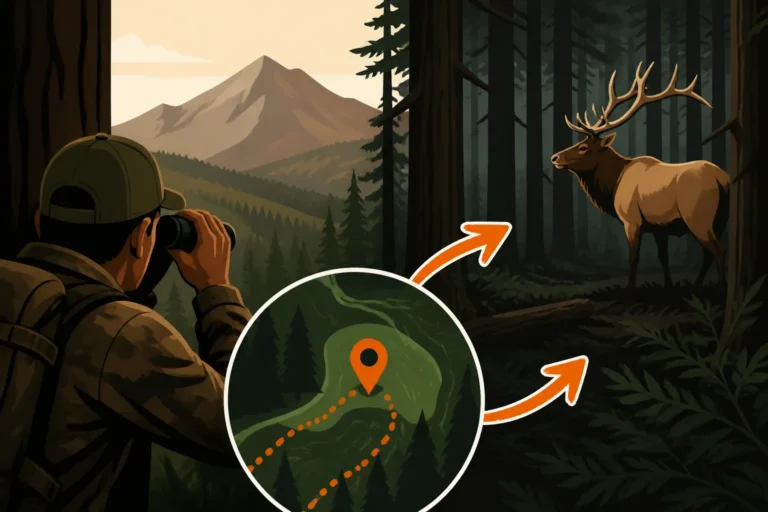
Finding Fresh Sign and Active Areas
When you're out there walking, your primary mission is to find fresh elk sign. This is concrete proof that elk are using the area. Look for tracks in soft dirt, mud near water sources, or along ridge lines. Fresh tracks will have sharp edges and may even show moisture if it's recent. Pay close attention to size and pattern – a bull's track will be larger and more splayed than a cow's. Elk scat is another dead giveaway; fresh droppings will be moist and shiny, whereas older droppings will be dry and dull. The location of scat can also tell you about their movements – finding it near a water source, for example, confirms that spot is being used.
Beyond tracks and scat, keep an eye out for rubs and wallows. Rubs are areas where bulls have scraped their antlers on trees, marking their territory and shedding velvet. Fresh rubs will expose lighter wood underneath the bark. Wallows are muddy depressions where elk roll to cool off and remove parasites. An active wallow will be muddy, churned up, and might even have fresh hair. Finding a series of fresh rubs or an active wallow indicates a highly active elk area, providing invaluable intelligence for your hunt. This is the kind of local detail you just can't get from a satellite image.
Glassing Techniques for Early Season
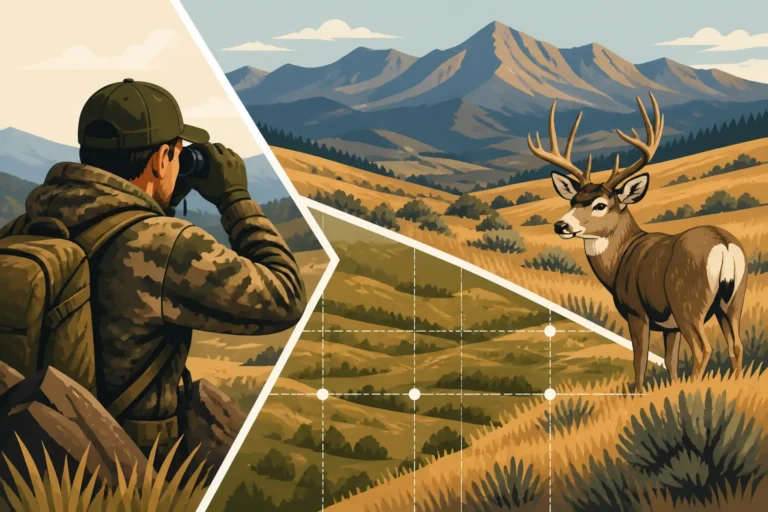
Glassing, the art of using binoculars or a spotting scope to scan distant terrain, is an indispensable tool for locating Montana elk, even before the season opens. During the early season, elk are often still in their summer patterns, meaning they might be feeding in open areas at dawn and dusk, or moving across clearings between bedding and feeding. This makes them susceptible to detection from a good vantage point. Find a high spot with a broad view of potential elk country – expansive basins, clear-cuts, or open ridge systems. Set up your optics on a tripod for stability and systematically grid the area, moving slowly and deliberately.
Look for anything that looks out of place: a patch of darker color, a horizontal line where everything else is vertical, or the flick of an ear. Elk can blend in remarkably well, so patience is key. Early morning and late evening are the best times, as elk are most active. Even if you don't spot an elk directly, you might see deer, bears, or other wildlife that indicate a healthy ecosystem, which often correlates with good elk habitat. For tips on maximizing your optical advantage, refer to our guide on How to Use Optics for Montana Big Game. Identifying key feeding areas and potential travel routes through glassing helps validate your e-scouting and focus your efforts.
Setting Up Trail Cameras Strategically
Trail cameras are a fantastic extension of your pre-season scouting efforts, offering eyes in the woods when you can't be there. Once you've used e-scouting and physical scouting to identify promising areas—like active game trails, water sources, wallows, or funnels between bedding and feeding—deploy your cameras. Think strategically about placement: angle them to cover a wider area, ensure they're camouflaged, and position them high enough to prevent tampering but low enough for good animal detection.
Consider placing cameras on active trails leading to known feeding or bedding areas. A camera overlooking a secluded water hole or an active wallow can provide invaluable intelligence on not just the presence of elk, but also their preferred times of travel and even individual animals, allowing you to scout a Montana hunting district much more efficiently. Running multiple cameras across different potential areas gives you a broader picture of elk movement across your chosen district. Always adhere to Montana FWP regulations regarding trail camera use on public lands, as rules can change. This passive scouting method is excellent for confirming patterns without adding human pressure to the area.
Putting It All Together: Your Pre-Season Elk Plan
Successfully locating Montana elk before opening day isn't about doing just one of these things; it's about integrating all of them into a cohesive, intelligent pre-season plan. Each piece of the puzzle – digital scouting, historical data analysis, and boots-on-the-ground reconnaissance – builds upon the last, refining your understanding and increasing your confidence. The goal is not just to find an elk, but to find their patterns, their preferred spots, and to anticipate their reactions to hunting pressure. This layered approach helps you develop a dynamic strategy, allowing you to adapt when conditions inevitably change.
Remember, elk are constantly moving, and no plan survives first contact with the enemy (or in this case, the elk and other hunters). But having a well-researched, flexible plan dramatically improves your odds of a successful opening day, rather than spending those precious first hours blindly wandering or chasing rumors. Your pre-season work transforms you from a hopeful wanderer into a strategic hunter.
Developing a Flexible Game Plan
Your pre-season scouting should culminate in a flexible game plan, not a rigid itinerary. While you’ll identify specific promising locations, understand that elk can and will move. Your plan should include primary, secondary, and even tertiary spots based on your scouting. For example, your primary spot might be a high-elevation basin that's holding elk in early archery season. Your secondary plan might be a more timbered area lower down if pressure pushes them out, or if an early snowstorm hits. This adaptability is key to hunting Montana elk.
Consider mapping out different entry and exit points for these areas, understanding wind direction and thermals for each approach, and identifying potential escape routes for elk. For an archery hunt, your game plan might focus on glassing from afar and then executing a spot-and-stalk maneuver or setting up near a wallow. For rifle season, it might involve finding natural ambush points along known travel corridors, as discussed in How to Ambush Elk on Montana Public Land. The more contingency plans you have, the better equipped you'll be to react to real-time conditions, making decisions based on data, not desperation.
Season-Specific Considerations
The timing of opening day significantly influences elk behavior and, therefore, your pre-season scouting priorities. If you're hunting the early archery season, often starting in September, you'll be looking for elk in their summer patterns. Bulls might still be in bachelor groups, and the rut is just beginning. Your focus will be on high-elevation feeding areas, secluded water sources, and dark timber for bedding. Calling might be effective, so understanding how to bugle-locate a Montana bull elk could be vital.
As the season progresses into the general rifle season, typically in late October, things change dramatically. The rut is often winding down, and hunting pressure intensifies. Elk will be seeking more secure cover, pushing into thicker timber and less accessible terrain. Your scouting should identify these security zones and the corridors elk use to reach them. Understanding How to Hunt Montana's General Rifle Season, with its increased pressure, means focusing on overlooked pockets and anticipating where elk will go to escape the orange army. Cold fronts and snow can also push elk to lower elevations, so identifying winter range transitions can be a pre-season scouting coup. Each season presents unique challenges and opportunities that intelligent pre-season work can help you exploit.
Key Elk Sign to Look For Description What it Tells You Best Time to Spot
How to find elk in Montana during late archery season can be a real head-scrrectcher. The weather's turning, the rut is either just kicking off or already in full swing for the early birds, and the elk are starting to move from their high summer ranges down to lower elevations. It feels like every year brings new challenges, whether it's a dry fall keeping them high longer, or an early cold snap sending them scrambling. Finding those big game animals before you even step foot in the woods with your bow is crucial, and it’s a mix of knowing where to look on a map, understanding elk behavior, and getting your boots on the ground.
Pre-Season Digital Reconnaissance and Data Analysis
Before you even think about putting on your hiking boots, your journey to locating Montana elk before opening day should absolutely start with extensive digital reconnaissance. This is your chance to turn your computer into a high-tech scouting command center, leveraging a wealth of online resources to narrow down potential hunting areas. The vastness of Montana means you can't just blindly pick a district and hope for the best. You need to be strategic, informed, and efficient with your time. Digital scouting is all about making intelligent guesses based on solid data and geographical features, significantly reducing wasted effort in the field.
It’s crucial to treat your digital scouting like a detective solving a mystery. You're looking for clues, piecing together information, and building a profile of where the elk should be. This preparatory phase is where you start to understand the landscape, anticipate movements, and develop an initial game plan, long before you can physically verify anything.
Leveraging Advanced Mapping Tools
The backbone of any effective e-scouting strategy is a robust mapping application. While basic maps are a start, advanced platforms like OnX Hunt, Gaia GPS, or even the detailed mapping features offered by GoHunt, provide an incredible level of detail. These tools allow you to overlay various data points onto high-resolution satellite imagery, revealing critical information you simply can't get from a flat paper map. You can identify public versus private land boundaries, which is non-negotiable for hunting Montana elk ethically and legally. These apps also show topographical lines, allowing you to visualize elevation changes, steepness of slopes, and natural funnels.
Beyond basic topo and land ownership, look for specific features. Mark potential bedding areas (often dense, north-facing timber or thick riparian zones), feeding areas (open parks, old burns, clear-cuts, or agricultural fields bordering cover), and water sources (springs, creeks, rivers, stock tanks). Pay attention to saddles between ridges and subtle benches on hillsides – these are often natural travel corridors. The ability to measure distances, mark waypoints, and draw lines helps you plan routes, estimate travel times, and understand the scale of the terrain you'll be covering. Being able to download these maps for offline use is a lifesaver in areas with no cell service, which is common in many prime Montana hunting units.
Analyzing Historical Data and Draw Information
Digital scouting isn't just about pretty maps; it's also about crunching numbers and understanding historical trends. Websites from Montana Fish, Wildlife & Parks (FWP) offer a treasure trove of harvest data, population estimates, and season summaries that can help you understand the health and distribution of elk herds in various hunting districts. While raw FWP data can sometimes be a bit clunky, services like GoHunt's Insider platform often streamline this information, making it much easier to digest and apply to your planning.
Look at past success rates for specific districts, paying attention to bull-to-cow ratios and general harvest trends. Has a district seen a decline in harvest? Are the bull numbers looking good? This can inform your choice of where to focus your efforts. Also, consider the draw odds for specific permits if you're looking beyond a general tag. Knowing the historical difficulty of drawing a particular permit can help you manage expectations or even decide to build Montana preference points for future hunts. Understanding these statistics can give you a significant edge, helping you select districts that align with your hunting goals, whether that's a trophy bull or simply filling the freezer.
Identifying Key Habitat Features from Afar
Your advanced mapping tools allow you to virtually "see" the landscape in incredible detail, helping you identify what elk need. Look for those dark timber patches, especially on north-facing slopes, as these are critical thermal and security cover, particularly as temperatures drop. Consider how elk will travel between these bedding areas and feeding grounds. Do you see natural funnels, narrow strips of timber connecting larger blocks, or subtle benches that offer easier travel across steep terrain?
Water is another non-negotiable for elk. Use your maps to pinpoint every potential water source – springs, creeks, rivers, ponds, or even stock tanks in eastern Montana's plains. During dry years, these water sources become absolute magnets. Food sources will vary. In the mountains, look for open meadows, south-facing slopes that green up earlier, or areas with aspen groves. In lower, timbered country, old clear-cuts or burns with fresh regrowth can be prime feeding grounds. The combination of secure bedding, accessible water, and abundant food, all visible on your screen, forms the foundation of your initial game plan for locating Montana elk.
Boots-on-the-Ground Scouting: Verifying and Refining Your Plan
Once you've done your homework with digital scouting and feel like you have a solid understanding of potential elk areas, it's time to get your boots on the ground. This physical reconnaissance is absolutely vital because what looks good on a map doesn't always translate perfectly to reality. A "trail" on satellite imagery might be an impassable game trail, and what appears to be dense timber might be too open or too choked with blowdowns to be ideal bedding. This is where you verify your assumptions, find the hidden nuances, and get a true feel for the terrain, smell the pines, and start truly connecting with the land.
The more time you spend physically scouting before opening day, the more confident and efficient you'll be when the season officially begins. You're not just looking for elk; you're looking for their signs, their patterns, and validating your strategy. This is an investment of time and effort that pays dividends when it matters most.
Finding Fresh Sign and Active Movement
When you're out there, become a detective of the forest floor. The freshest sign tells you where elk are, not just where they might have been. Look for fresh tracks in soft dirt, mud around water sources, or along ridge lines. A fresh track will have sharp, distinct edges, and you might even see moisture in the hoof print. Pay attention to the size and spacing – large, splayed tracks usually indicate a bull. Elk droppings are another key indicator; fresh scat will be moist, shiny, and dark, whereas old droppings will be dry, faded, and crumbly. The quantity of scat can also indicate how much traffic an area is getting.
Beyond tracks and scat, keep an eye out for rubs. These are where bulls have thrashed their antlers on small trees or saplings. Fresh rubs will expose lighter wood beneath the bark and may even have strips of velvet attached. Wallows are muddy depressions where elk roll to cool off and deter insects; an active wallow will be muddy, churned up, and might have fresh hair or scent. The presence of fresh sign is a clear confirmation that elk are actively using an area. The more fresh sign you find, the more confident you can be in your chosen spots. This kind of detective work is crucial when you're trying to figure out How to Locate Montana Elk Before Opening Day.
Effective Glassing Techniques
Even during your pre-season scouting, effective glassing can reveal a lot about elk presence and patterns. Find a high vantage point with a sweeping view of the country you've e-scouted. This could be an open ridge, a prominent knob, or a rock outcrop. Set up your binoculars (10x or 12x are common choices) or a spotting scope on a sturdy tripod. Stability is key for long periods of scanning. Systematically grid the area, slowly moving your optics across the landscape from side to side, then dropping down a little and moving back the other way. Take your time; don't rush.
Look for anything out of place: a horizontal line in a vertical forest, a patch of color that doesn't quite match the surroundings, or a slight movement. Elk are masters of camouflage, and often you'll only catch a glimpse of an ear twitch or a leg. Early mornings and late evenings are prime glassing times when elk are most active and out feeding. Even if you don't spot an elk, seeing deer, moose, or bears can confirm the area is healthy and capable of supporting big game. Your glassing efforts help confirm your e-scouting observations and pinpoint exactly where elk might be moving or feeding. For more in-depth advice on this, check out our piece on How to Glass Montana's Big Country.
Strategic Trail Camera Deployment
Trail cameras are a fantastic way to extend your scouting reach and gain valuable intelligence without being present 24/7. Once you've identified promising locations through e-scouting and initial physical scouting – like active game trails, secluded water holes, wallows, or funnels – deploy your cameras. Think strategically about placement. Position cameras to cover natural pinch points where elk are funneled, or over a well-used game trail that leads to a bedding area or water source.
Angle your cameras correctly to avoid false triggers from sunlight or swaying branches, and ensure they're camouflaged to avoid detection by both animals and other people. Consider placing them a bit higher on a tree, angled down, to get a better view and reduce the chance of deer walking directly under the sensor. Over a few weeks, these cameras can provide invaluable data: specific times of day elk are moving, the size of bulls in the area, herd dynamics, and even how they react to changing weather. This information helps you fine-tune your approach for opening day, telling you not just if elk are there, but when and how many. Always make sure to check local FWP regulations on trail camera usage on public lands before deploying them.
Adapting Your Strategy for Opening Day
The reality of hunting in Montana is that conditions are always changing. The elk move, the weather shifts, and hunting pressure fluctuates. Your pre-season work isn't about creating a rigid, unchangeable plan, but rather building a robust foundation of knowledge that allows you to adapt. Think of your e-scouting and physical reconnaissance as gathering intel; opening day is when you deploy that intelligence in a dynamic environment.
A successful hunter is always learning, always observing, and always ready to pivot. Having multiple options and understanding the "why" behind elk movements will allow you to make smart decisions in the moment, increasing your chances of success.
Understanding Elk Responses to Pressure
One of the biggest factors influencing elk behavior on opening day is hunting pressure. Even if you've done extensive pre-season scouting and found a honey hole, that spot might quickly empty out once the woods fill with other hunters. Your pre-season work should include identifying potential sanctuary areas – places with thick timber, steep terrain, or limited access that elk will retreat to when pressured. These are often dark timber patches on north-facing slopes, deep canyons, or remote wilderness areas.
Knowing these escape routes and sanctuaries allows you to anticipate where elk will go after the initial push. Instead of chasing them, you can position yourself strategically along these escape corridors or near the secure bedding areas they'll seek. This foresight is a key component of an effective Montana Public Land Hunting Strategy. By understanding the typical routes elk take when pressured, you can often intercept them as they seek refuge, giving you an advantage over hunters who are simply following the herd.
Thermal Hunting and Wind Direction
The wind and thermals are constant, invisible forces that dictate elk movement and how you approach them. Pre-season scouting gives you the opportunity to study the thermal patterns of your hunting area. Thermals are air currents that rise as the sun heats the ground and fall as the air cools. In the mornings, air warms and rises, carrying your scent uphill. In the evenings, air cools and falls, carrying your scent downhill. Understanding these daily thermal shifts is critical to making a silent and scent-free approach.
Through your physical scouting, you can learn how these thermals interact with the specific topography of your chosen basin, ridge, or canyon. Knowing which way the wind typically blows, and how thermals will affect your scent cone, allows you to plan your approach routes carefully. For example, you might need to drop into a drainage early in the morning to keep your scent low as you climb towards a bedding area, or skirt a ridge line in the evening to keep your scent from blowing directly into a feeding meadow. This understanding is paramount to closing the distance on an elk without alerting them. Our article, How to Use the Wind Hunting Montana Elk, offers even more detailed insights into this critical skill.
Early Season vs. Late Season Adjustments
Your pre-season scouting needs to account for when you'll actually be hunting. The tactics for Montana elk hunting in early archery season are often different than those for the late rifle season. In early archery season, elk are often still in their high summer range, focused on feeding, and the rut is just beginning. You'll scout for high alpine meadows, accessible water sources, and areas where bachelor groups of bulls might be congregating. Calling can be very effective if done correctly.
As you move into the general rifle season, especially later in the year, elk typically descend to lower elevations as food sources change and snow pushes them down. Hunting pressure will also be significantly higher. Your pre-season scouting for this period should prioritize identifying security cover, lower-elevation food sources, and transition zones between summer and winter range. Consider scouting for wallows in Montana, as these can be active throughout different parts of the season. Knowing the elk's likely elevation and habitat preferences based on the time of year will dictate where you focus your efforts, making your scouting efforts as relevant and impactful as possible.
Disclaimer
Please remember that hunting regulations, seasons, and access can change. Always consult the official Montana Fish, Wildlife & Parks (FWP) regulations for the current year before planning any hunt. This guide is for informational purposes only and does not replace official state resources.