How to Hunt Montana Spring Black Bear
The excitement of spring bear hunting in Montana is real, but let's be honest, it can also feel incredibly daunting. You've been cooped up all winter, dreaming of chasing game, and now the snow is melting, and those big bruins are waking up. But figuring out how to actually put yourself in a position to encounter a Montana black bear in the spring, let alone harvest one, is a puzzle. It's not like deer hunting; the rules, the locations, and the tactics are often a whole different ballgame. This comprehensive guide is here to break down the complexities of chasing black bears in the vast landscapes of Montana, ensuring you're well-prepared and confident when you head into the mountains.
Understanding Montana Spring Black Bear Seasons and Regulations
Navigating the regulations for Montana's spring black bear season can feel like a labyrinth, especially for newcomers or those used to other states' rules. The first step, and arguably the most important, is to thoroughly understand the season dates and licensing requirements. Montana Fish, Wildlife & Parks (FWP) sets these dates annually, and they can vary significantly by hunting district (HD) and region. It's not a uniform statewide season, which often catches people off guard.
General Season Dates and Permit Requirements
Generally, spring black bear seasons in Montana kick off around April 15th and can run through late May or early June, depending on the specific hunting district. Some districts in the western, more mountainous regions might have slightly different start and end dates compared to central or eastern regions where suitable bear habitat is less prevalent. It's absolutely crucial to consult the current FWP regulations booklet or their website to verify the exact dates for your chosen hunting district. Remember, you'll need a valid Montana hunting license, a conservation license, and a black bear license. For non-residents, the process involves purchasing a non-resident base hunting license along with the black bear license, which might also include an Artificial Light System (AIS) Prevention Pass.
Many hunting districts are "general" for black bears, meaning you can hunt with a purchased black bear license. However, some areas, particularly those bordering national parks or with specific management objectives, might require a special permit drawn through a lottery system. These are typically limited-entry opportunities and have earlier application deadlines, often in December or January, long before the spring season begins. Always double-check if your desired area falls under a limited permit system before making extensive plans. For instance, you might encounter specific districts in the Bitterroot or Flathead regions that have permit requirements due to proximity to grizzly bear country or other wildlife management concerns.
Sex Identification and Ethical Considerations
One of the biggest challenges and critical regulations for spring black bear hunting in Montana is positive sex identification. In many districts, especially those with potential for grizzly bear encounters, it is often illegal to harvest a sow (female) with cubs or a grizzly bear. Grizzlies are federally protected, and misidentification can lead to severe penalties. This means you must be able to differentiate a male bear from a female, and also from a grizzly, before pulling the trigger or releasing an arrow.
This isn't always easy, as black bears can come in various color phases, from black to cinnamon, brown, and even blonde, and their size can vary. Mature boars (males) typically have broader heads, smaller ears relative to their head size, and a less pronounced rump. Sows often appear more leggy, with ears that seem larger for their head, and a higher, more defined rump. When in doubt, don't shoot. It's better to pass on a bear than to make an irreversible mistake. Ethical hunting practices also dictate ensuring a clean, humane kill, so practicing your shooting skills before the season is paramount. Many hunters will also practice field judging techniques well in advance. You can find more detailed information on regulations, including specific district boundaries and bear identification tips, on the FWP website or by checking out a comprehensive resource like Montana Black Bear Season Dates.
Locating Spring Black Bears in Montana
Finding black bears in the spring in Montana is all about understanding their post-hibernation behavior and their immediate needs: food and warmth. As the snow melts and new vegetation begins to emerge, bears will follow that green-up, often starting at lower elevations and gradually moving higher as spring progresses. This seasonal movement is key to narrowing down your search.
Key Habitats and Food Sources
Montana's diverse landscape offers numerous habitats for black bears. In the spring, they are predominantly found in timbered mountain ranges, dense drainages, and areas with south-facing slopes. These south-facing slopes are critical because they receive the most direct sunlight, causing the snow to melt faster and the first shoots of nutrient-rich grasses, forbs, and dandelions to appear. Bears are ravenous after months of hibernation and will seek out these early green-ups aggressively.
Look for areas with a mix of dense timber for cover and open slopes for feeding. Old clearcuts, power line easements, avalanche chutes, and logging roads that provide access to sunny slopes are prime locations. Areas near riparian zones (river or creek bottoms) can also be productive as new growth often emerges there first. In the western part of the state, National Forests like the Kootenai, Flathead, and Lolo are prime bear country, offering vast expanses of public land. Further east, the Custer Gallatin National Forest also holds significant bear populations. Utilizing online mapping tools, like those found on GoHunt, can be incredibly helpful for identifying south-facing slopes, historical clearcuts, and access points on public land. This e-scouting can save you valuable time and boot leather.
Tracking Bear Sign and Activity
Once you're in potential bear country, it's time to become a detective. Bears leave behind plenty of clues if you know what to look for. Fresh tracks in mud or lingering snow are a dead giveaway. Look for five toes with claw marks that are often wider than the pad itself, indicating a black bear. Bear scat, often tubular and containing undigested plant matter from their spring diet, can also indicate recent activity.
Rub trees, where bears scratch and rub their backs, are another excellent sign. These are often pine or fir trees with bark rubbed off at various heights. You might even find hair caught in the sap or rough bark. Another subtle sign is turned-over rocks or ripped-apart logs, indicating bears have been foraging for insects, grubs, or roots. The fresher the sign, the closer you are to a bear. Remember, these animals move a lot, so fresh sign is more important than old. Pay close attention to trails, especially those leading from bedding areas in thick timber to feeding areas on open slopes. For further insight into the landscapes bears frequent, consider exploring the Montana Black Bear Population and Range article.
Essential Tactics for Spring Black Bear Hunting
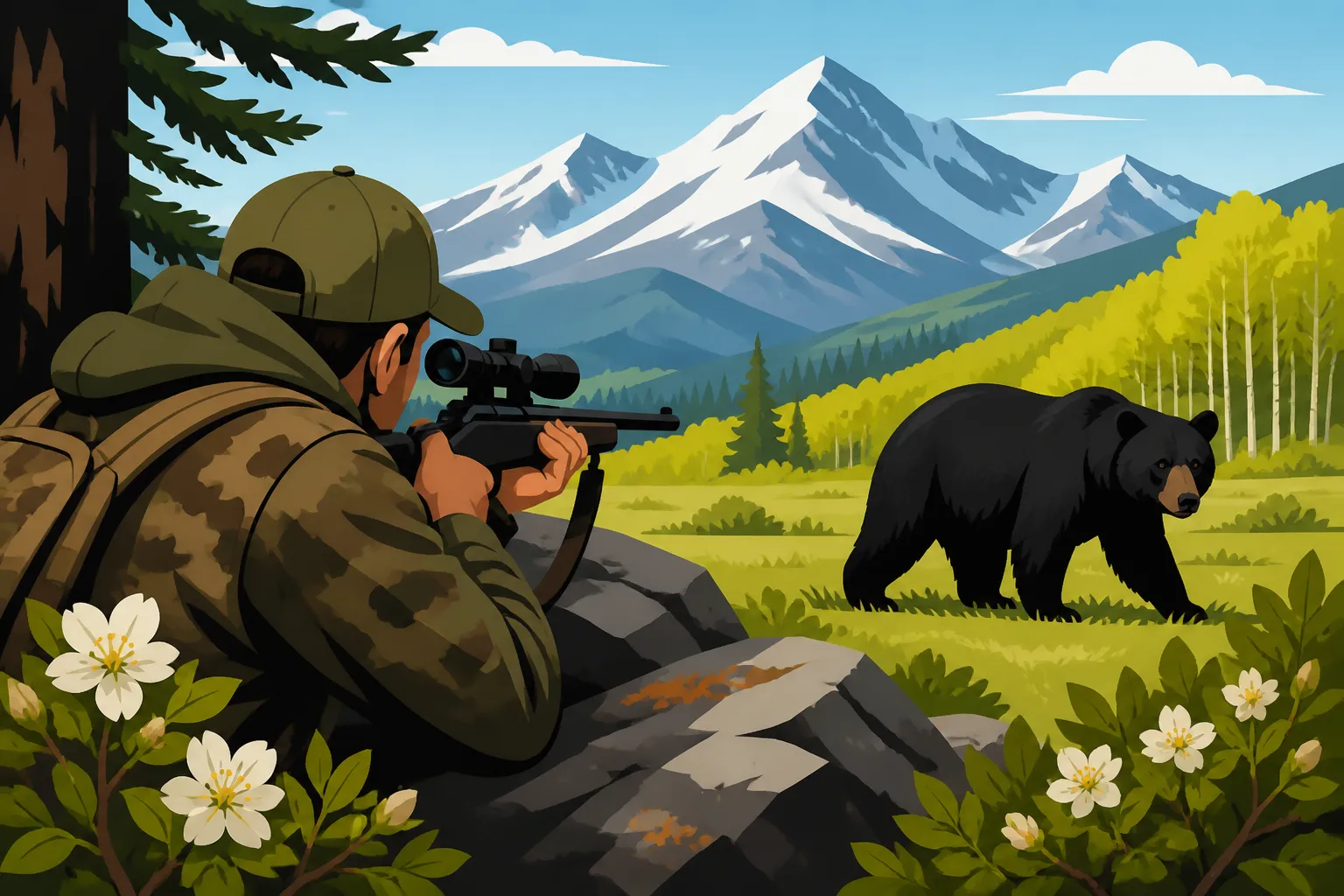
Spring black bear hunting in Montana typically revolves around spot-and-stalk methods. Unlike fall hunting where bears might be focused on berries or acorns, spring bears are often visible as they graze on green vegetation, making them susceptible to being spotted from a distance.
The Art of Glassing and Spotting
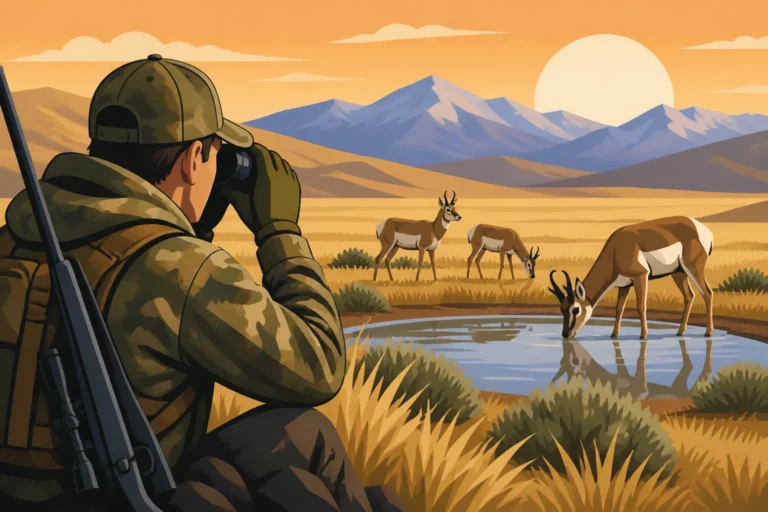
Effective glassing is the cornerstone of spring bear hunting. You'll spend a significant amount of time behind binoculars or a spotting scope, systematically scanning open hillsides and clearcuts. Find a good vantage point that overlooks prime south-facing slopes, preferably with good light in the morning or late afternoon. Bears are most active during these cooler periods. A good pair of high-quality binoculars, like 10x42s, and a powerful spotting scope (20-60x or higher) are non-negotiable. This is where investing in the Best Optics for Montana Big Game really pays off.
Set up your spotting scope on a sturdy tripod and grid the landscape methodically. Don't just glance; scrutinize every dark patch, every moving shadow. A bear can often look like a stump or a dark rock until it moves. Pay special attention to the edges of timberlines, the bottoms of avalanche chutes, and areas where new green growth is obvious. When you spot a bear, take your time to evaluate it, paying close attention to sex identification clues, its size, and its behavior. Sometimes, a bear will vanish into the timber, only to reappear minutes later on another part of the slope. Be patient, observe, and plan your approach carefully.
Executing a Spot-and-Stalk Approach
Once a bear is spotted and evaluated, the real work begins: the stalk. This is where your knowledge of the terrain, wind, and bear behavior comes into play. Always approach a bear from downwind, using the terrain for cover. Bears have an incredible sense of smell, and the wind is your biggest enemy if it's not in your favor. Pay attention to thermals in the mountains; they often rise in the morning and fall in the evening, so understand how they will affect your scent cone as you move. Learning How to Use the Wind Hunting Montana Elk can be directly applied here.
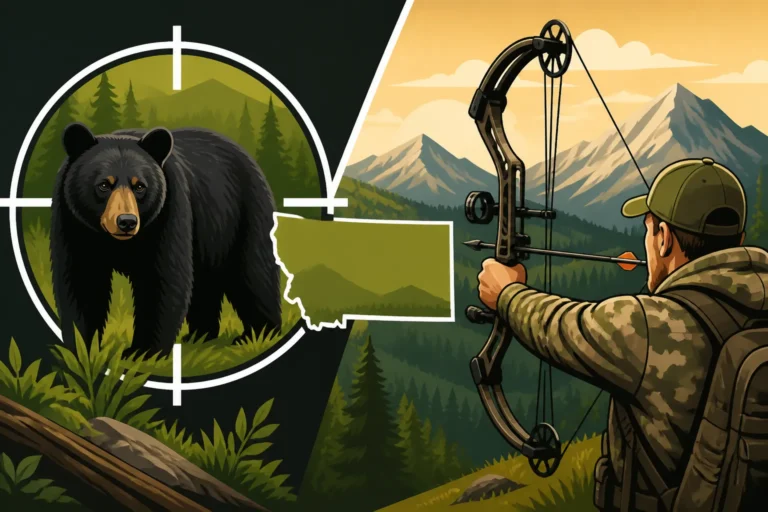
Your stalk needs to be slow, quiet, and deliberate. Move only when the bear's head is down or it's looking away. Use natural cover like trees, rocks, and terrain features to conceal your movement. Be prepared for the bear to move while you're stalking, sometimes requiring you to adjust your approach or even back out and re-evaluate. The goal is to get within an ethical shooting range, which for most rifle hunters is within a few hundred yards, and for bowhunters, much closer, typically within 50 yards. This is a classic example of Montana Spot-and-Stalk Tactics in action.
Still-Hunting Timber and Access Roads
While spot-and-stalk is primary, don't overlook still-hunting tactics, especially in dense timber or along access roads. Still-hunting involves moving slowly and deliberately through the woods, stopping frequently to scan, listen, and glass. Bears will often bed down in thick cover during the day and can be bumped unexpectedly. This tactic requires extreme stealth and patience.
When still-hunting, use the wind to your advantage, and move into the wind if possible. Focus on areas where you've seen fresh sign or where you know bears might be transitioning between bedding and feeding areas. Along old logging roads, bears will sometimes walk the road itself, especially in low-light conditions, or graze on the edges of the road where new vegetation grows. Be cautious, move slowly, and be prepared for a quick shot opportunity. This method is often employed in combination with glassing, especially if a spotted bear disappears into heavy cover and you decide to pursue it. The tactics found in How to Still-Hunt Montana Timber are highly applicable here.
Gear Considerations for a Montana Spring Bear Hunt
A successful spring black bear hunt in Montana hinges not just on tactics, but also on having the right gear. The spring mountains can be notoriously fickle, offering everything from warm sunshine to driving snow and rain, sometimes all in the same day. Being prepared for these variations is crucial.
Optics and Weaponry
As mentioned, high-quality optics are paramount. A good pair of 10x binoculars, a sturdy spotting scope with tripod, and a rangefinder are essential for locating, identifying, and judging bears, as well as for planning your stalk and confirming distances.
For weaponry, choose a rifle chambered in a cartridge suitable for black bears, such as .270, .30-06, .308, or even a .300 magnum. Shot placement is critical, so practice extensively with your chosen load. Many bowhunters also pursue spring bears, utilizing compound bows with appropriate draw weights and broadheads designed for penetration. Whatever your weapon, ensure it is sighted in, and you are proficient with it under various field conditions. Always carry bear spray as a non-lethal deterrent, especially in areas where grizzlies are present, which is much of western Montana bear country.
| Gear Category | Essential Items | Key Considerations |
|---|---|---|
| Optics | 10x Binoculars, Spotting Scope (20-60x+), Tripod, Rangefinder | High-quality, durable, waterproof. Critical for spotting and identifying. |
| Weaponry | Rifle (.270, .30-06, .308, .300 magnum) or Bow | Caliber/draw weight appropriate for black bear. Practice shot placement. Always carry bear spray. |
| Navigation | GPS device, Topo maps, Compass, OnX Hunt/GoHunt app | Reliable GPS, physical maps for backup. Digital mapping apps for e-scouting, real-time location, and public land boundaries. |
| Clothing | Layered system (base, mid, outer), Waterproof/windproof shell, Quality hiking boots, Gaiters, Hat, Gloves | Adaptable to rapidly changing weather. Boots broken in and waterproof. Avoid cotton. |
| Safety/Survival | Bear spray, First-aid kit, Water filter/purifier, Headlamp, Fire starter, Emergency shelter, Communication device (satellite messenger) | Always have essentials for unexpected situations. Know how to use a satellite messenger. |
| Field Dressing | Sharp knife, Game bags, Rope/cordage | Keep meat clean and cool. Prepare for a full pack-out if successful. |
Clothing and Footwear
Layering is paramount for spring hunting in Montana. Start with a moisture-wicking base layer, add insulating mid-layers (fleece or down), and top it off with a waterproof and windproof outer shell. Conditions can change rapidly, and being able to shed or add layers will keep you comfortable. Good quality, broken-in, waterproof hiking boots are a must for navigating potentially wet, muddy, or snowy terrain. Consider gaiters to keep snow and debris out of your boots, especially when traversing steep hillsides.
Navigation and Safety Essentials
Montana's backcountry can be vast and unforgiving. A reliable GPS device, along with downloaded topographic maps and a compass (and knowing how to use them), is non-negotiable. Digital mapping apps like OnX Hunt or GoHunt are incredibly valuable for identifying public land, property boundaries, and potential bear habitat. Before heading out, make sure you download your maps for offline use, as cell service is often nonexistent in prime bear country. You can learn a lot about utilizing these tools by reading How to E-Scout Montana Hunting Units.
Always carry bear spray, even if you’re rifle hunting, and know how to deploy it quickly. A comprehensive first-aid kit, water purification system or ample water, a headlamp, fire starter, and an emergency shelter (like a lightweight tarp or bivy sack) should always be in your pack. Consider carrying a satellite communication device like a Garmin inReach or a Zoleo, especially if hunting solo or in remote areas, as cell service is often unreliable. A good general list can be found in Montana Backcountry Hunting Gear List.
Safety and Ethical Considerations in Bear Country
Hunting black bears in Montana means being in their natural habitat, which requires a heightened sense of awareness and responsibility. Safety, both for yourself and for the wildlife, should always be your top priority.
Bear Identification and Avoiding Conflicts
The most crucial safety aspect for spring black bear hunting is accurate bear identification. As mentioned, grizzlies inhabit much of western Montana and are federally protected. Misidentifying a black bear for a grizzly or shooting a sow with cubs can have severe legal consequences and impact bear management efforts. Before you even think about raising your weapon, use your optics to confirm it's a black bear and that it's alone. Look for key physical differences: grizzlies typically have a prominent shoulder hump, a dish-shaped face, and smaller, rounder ears compared to the more straight facial profile and larger ears of a black bear. Their claws are also much longer and straighter than a black bear's.
Beyond hunting, always practice bear safety in the backcountry. Make noise while hiking, especially in dense cover, to avoid surprising a bear. Store food and scented items in bear-resistant containers or hung from trees away from your camp. If you encounter a bear, never run. Stand your ground, make yourself look large, and speak firmly. If a bear charges, and you have bear spray, deploy it. If a black bear attacks, fight back. If a grizzly attacks, play dead unless the attack is predatory. You can read more about Montana Spring vs Fall Bear Hunting for additional context on bear behavior.
Proper Field Dressing and Meat Care
Once you've successfully harvested a black bear, proper field dressing and meat care are paramount. Bear meat is delicious and should be treated with the same respect as venison or elk. Immediately after the kill, cool the carcass as quickly as possible. Skin the bear and quarter it, removing as much meat as possible from the bone. Bear fat can be rendered for cooking or other uses, but typically doesn't hold up well on the meat itself in warm temperatures, so trim as much as practical.
Place the meat in breathable game bags to protect it from dirt and insects while allowing air circulation. If you're in the backcountry, hanging the game bags in a shady spot, off the ground and away from scavengers, is essential. Get the meat cooled down and to a processor or refrigeration as soon as possible. In some regions, FWP may require you to submit a tooth for aging and collect a rib plug for CWD testing. Always check the regulations for these specific requirements. Taking care of your harvest ensures you honor the animal and enjoy the fruits of your labor. Knowing How to Pack Out an Elk in Montana provides valuable insights into meat care in the field that can be directly applied to bears.
Disclaimer
Hunting carries inherent risks, and it is the responsibility of each individual hunter to know and comply with all current Montana Fish, Wildlife & Parks regulations. This guide provides general information and should not be considered a substitute for official FWP regulations. Always consult the most recent FWP hunting regulations booklet for the specific hunting district you plan to hunt. Be safe, ethical, and responsible in the field.