How to Hunt Elk in Montana Snow
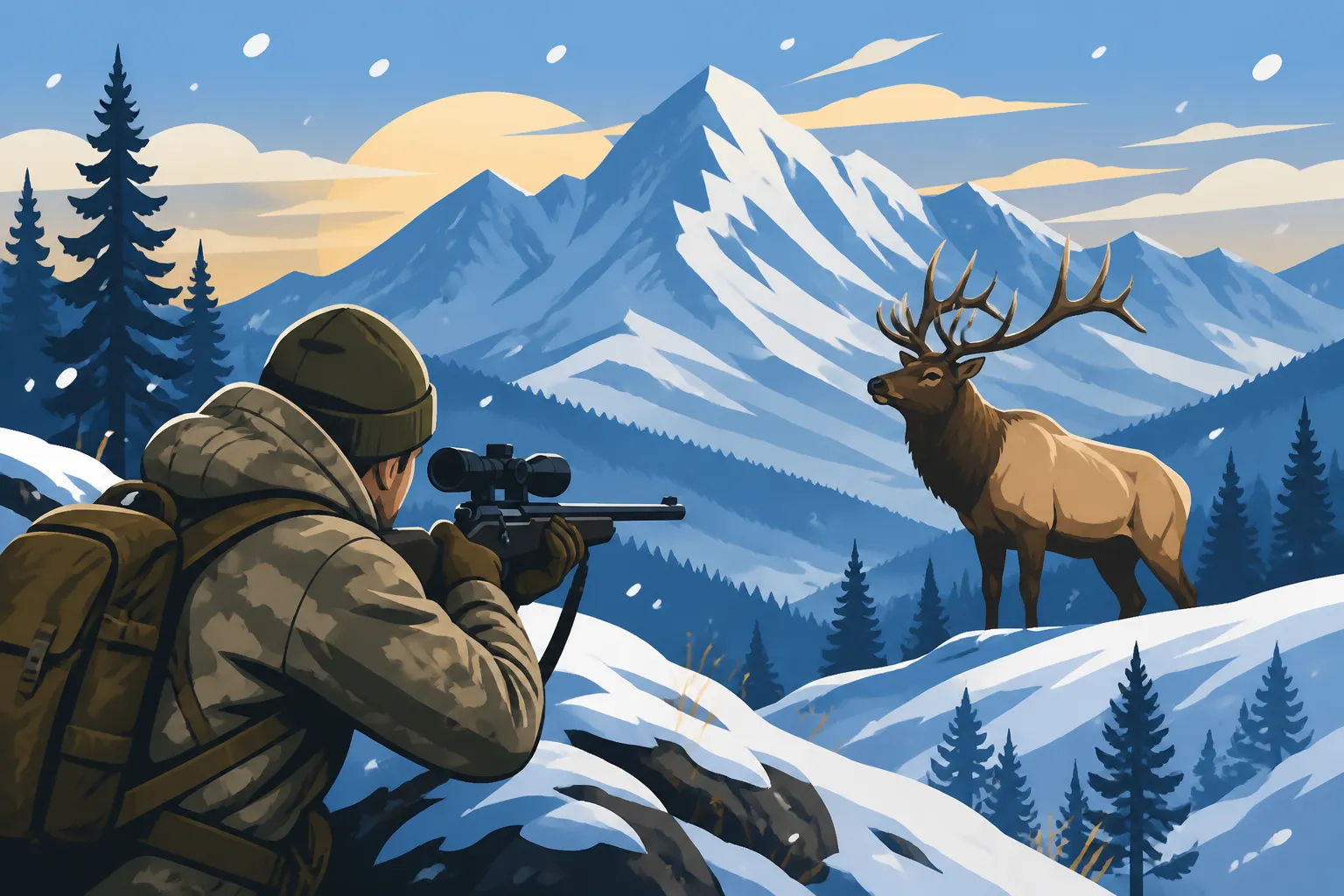
Hunting elk in Montana is tough enough, demanding physical grit, keen tracking skills, and a whole lot of patience. But when the snow blankets the mountains and the plains, transforming the familiar landscape into a pristine, often brutal, winter wonderland, the challenge amplifies exponentially. Suddenly, you're not just contending with vast terrain and elusive animals; you're battling the elements themselves. This guide is all about equipping you with the knowledge and tactics to not only survive but thrive when pursuing elk in Montana's snow.
Understanding Elk Behavior in a Snowy Montana Landscape
When the snow starts piling up, elk don't just magically disappear or stop being elk. Instead, their patterns shift dramatically in response to the changing conditions. Understanding these changes is your first and most critical step toward success. It's about thinking like an elk, anticipating their needs, and recognizing how the snow impacts their daily lives.
How Deep Snow Changes Elk Movement and Habitat
Elk are survivors, and deep snow directly impacts their ability to feed, move, and find shelter. As snow depths increase, their energy expenditure goes up significantly. Imagine trying to walk through waist-deep snow all day – it's exhausting! Because of this, elk will naturally seek out areas where the snow is shallower, or where travel is less arduous.
Often, this means a shift to lower elevations, particularly south-facing slopes. These aspects receive more direct sunlight, which helps to melt snow faster and can keep vegetation exposed longer. They'll gravitate towards benches and ridges that might be wind-swept, clearing snow from crucial forage. Conversely, northern slopes and dense timber, while offering thermal cover, can accumulate deep snow, making them less attractive for sustained foraging during severe winter conditions. They might use thick conifer stands for bedding to escape the wind and heavy snowfall, but they won't typically feed extensively there. Look for natural migration corridors that connect summer and winter ranges; these pathways, often used for generations, become critical travel lanes during heavy snowfalls. You might also find them concentrating near agricultural fields or areas with a history of being supplemental feeding grounds, if such locations exist within their normal wintering range, but always be aware of private land boundaries and regulations.
Reading Tracks and Sign for Success
Snow is both your greatest ally and a tricky adversary. Fresh snow creates a pristine canvas, offering a perfect record of every animal that has passed. Learning to read these tracks is paramount when you're hunting elk in Montana. First, differentiate between fresh and old tracks. A fresh track will have crisp, sharp edges, whereas an older track might appear melted or rounded, especially if the sun has been out or temperatures have fluctuated. Look for tell-tale signs like distinct dewclaw impressions, which often indicate a bull or a heavier elk.
Beyond the tracks themselves, look for other signs. Droppings in fresh snow are incredibly informative – still steaming droppings mean an elk is very close! Browsing activity, where elk have nipped off branches or pawed through snow to reach forage, tells you they've been feeding. Bedding areas, often depressions in the snow, will show you where they've rested. If you find multiple fresh beds, you're likely close to a herd. Pay attention to the direction of travel, the gait (walking, trotting, running), and whether the tracks seem purposeful or meandering. An elk that's just moving from a feeding area to a bedding area might leave a very direct track, while one that's been bumped will be moving quickly. Understanding these nuances helps you piece together the elk's recent activities and predict their next move. Tools like onX Hunt or GoHunt can help you overlay snow depth maps with public land boundaries and known elk habitat to narrow down your search even before you hit the field.
Essential Gear and Preparations for Winter Elk Hunting
Hunting in the snow isn't just about finding elk; it's about being prepared for the conditions. Montana winters are no joke, and a lack of proper gear can quickly turn a memorable hunt into a dangerous situation. Your equipment needs to be up to the task, durable, reliable, and designed for extreme cold and wet weather.
Layering for Extreme Cold and Wet Conditions
Layering is absolutely critical when hunting in the snow. Forget cotton; it holds moisture and will chill you to the bone the moment you stop moving. Start with a moisture-wicking base layer made of merino wool or synthetic materials. This layer pulls sweat away from your skin, which is vital for preventing hypothermia. Next, add a mid-layer for insulation – a fleece jacket or a puffy vest works well. For your outer shell, you need something waterproof and windproof, but also breathable. GORE-TEX or similar high-performance membranes are worth every penny in a Montana blizzard. Think about a shell jacket and pants that can withstand heavy snow, freezing rain, and biting winds.
Don't forget your extremities. A warm, waterproof hat is non-negotiable, as you lose a significant amount of heat through your head. Insulated, waterproof gloves or mittens are essential for keeping your hands functional. Consider a glove system with a thin liner glove for dexterity, and a thick outer shell. For your feet, choose insulated, waterproof boots, preferably rated for sub-zero temperatures. Pair these with good quality merino wool socks, and consider bringing an extra pair to change into if your feet get wet. Remember, staying dry is just as important as staying warm. Having an extra set of base layers or a puffy jacket stored in a waterproof bag in your pack can be a game-changer if you get wet. For more insights on staying warm, check out our guide on how to handle cold-weather gear for Montana.
Optimizing Your Optics and Navigation Tools for Snow
Snow can create beautiful scenery, but it also creates challenges for your optics and navigation. Glare off the snow can be intense, so quality binoculars and a spotting scope with good light transmission and anti-reflective coatings are crucial. You'll want to choose optics that perform well in low-light conditions, as winter days are shorter and often overcast. A lens cloth and anti-fog spray are must-haves, as condensation can quickly obscure your view.
For navigation, a reliable GPS unit or a smartphone with a robust hunting app like GoHunt's mapping system is indispensable. These tools allow you to pinpoint your location, track your movement, and mark important waypoints like game trails, potential bedding areas, or where you parked your truck. Always carry a physical map and a compass as a backup, and know how to use them. Batteries drain faster in cold weather, so carry spares and keep them close to your body heat. A power bank for your phone is also a smart addition. When scouting winter conditions, use your digital mapping tools to identify south-facing slopes and areas of dense timber that might offer critical winter habitat. Our article on how to e-scout Montana hunting units can offer more detailed tips.
Strategic Tactics for Hunting Elk in Montana Snow
With the right gear and an understanding of elk behavior, it's time to refine your hunting tactics specifically for snowy conditions. The snow can expose elk but also hinder your movement, making a strategic approach vital.
Still-Hunting and Tracking on Fresh Snow
Fresh snow is a tracker's dream. Every movement an animal makes leaves a clear, undeniable record. This makes still-hunting and tracking an incredibly effective method for hunting elk in Montana snow. The basic premise is simple: move slowly, quietly, and deliberately through the timber, pausing frequently to glass ahead and listen. The snow will muffle your footsteps, allowing you to get closer to unsuspecting elk.
When tracking, focus on identifying fresh tracks. As discussed, look for crisp edges and distinct dewclaw marks. Once you're on a fresh track, commit to it. Follow it patiently, always anticipating where the elk might be headed. Elk will often follow contours, benches, and ridges, so learn to read the topography alongside the tracks. When the tracks lead into thick cover or a known bedding area, slow down even further. Approach from downwind, or use thermals to your advantage, knowing they typically fall in the mornings and rise in the afternoons. Move with the wind in your face or across your face. If you lose the tracks, circle widely downwind to try and pick them up again. The goal is to catch the elk before they know you're there. This method requires immense patience, but the rewards can be incredible. You might also find our guide on how to still-hunt Montana timber useful for this approach.
Locating and Hunting Winter Range and Thermal Cover
As the snow deepens, elk become increasingly dependent on their winter range and areas of thermal cover. These are the locations you need to be targeting. Winter ranges are typically lower elevation, south-facing slopes where snow depth is manageable and forage is accessible. Thermal cover refers to dense conifer forests that block wind and trap heat, providing a warmer microclimate for bedding.
Spend time e-scouting before your hunt to identify these areas using mapping software. Look for areas with a mosaic of open slopes for feeding and dense timber for bedding, ideally connected by easy travel routes. Once on the ground, focus your efforts on these zones. Pay close attention to the transition lines between timber and open country, as elk frequently move along these edges. Look for rubs on trees and old droppings, which indicate historical use. Remember, elk are trying to conserve energy, so they won't travel far from feed to bed. If you find fresh sign in a bedding area, the feeding area is likely nearby, and vice-versa. Our detailed guide on how to find elk in Montana dark timber offers more specific strategies for these crucial areas.
Using Weather to Your Advantage
Winter weather isn't just a challenge; it can be your greatest asset. A fresh snowfall acts like a reset button, making all tracks new and much easier to read. It also dampens sound, allowing you to move more quietly. Pay attention to fronts moving in – a severe storm can push elk down from higher elevations into their winter ranges, concentrating them. Hunting immediately after a heavy snowfall can be incredibly productive, as elk will be on the move, trying to feed and recover from the storm.
Conversely, extremely cold, clear days might find elk bedded down for longer periods, trying to conserve heat. In these conditions, focusing on dense thermal cover becomes even more important. Wind, especially strong winds, can also concentrate elk. They'll seek shelter in leeward pockets or thick timber, often on north-facing slopes, even if it's colder, simply to escape the direct force of the wind. Learning how to use the wind hunting Montana elk and understanding how to use thermals in Montana elk country are advanced skills that become even more important in winter. A sudden cold front can trigger a movement of elk, making for some excellent hunting opportunities if you're prepared.
Crucial Safety Measures and Post-Harvest in Winter
Hunting in Montana's winter conditions demands a heightened awareness of safety. The dangers are real, from environmental hazards to the logistical challenges of handling game in freezing temperatures. Being prepared means not only having the right gear but also understanding the risks and knowing how to mitigate them.
Mitigating Risks of Hypothermia, Frostbite, and Avalanches
Hypothermia and frostbite are ever-present threats when hunting in freezing, snowy conditions. Hypothermia occurs when your body loses heat faster than it can produce it, leading to a dangerously low body temperature. Symptoms include shivering, confusion, slurred speech, and loss of coordination. Frostbite is the freezing of body tissue, most commonly affecting fingers, toes, ears, and nose. To prevent these, layering correctly, staying dry, and staying fueled are paramount. Always carry extra layers, especially insulation, and high-energy snacks. If someone shows signs of hypothermia, get them warm and dry immediately, and seek medical attention.
Avalanches are another serious concern in Montana's mountains, especially after significant snowfalls or during periods of warming. Before heading into avalanche-prone terrain, check the local avalanche forecast (like those from the Gallatin National Forest Avalanche Center or Flathead Avalanche Center). Learn to identify avalanche terrain – typically slopes between 25 and 45 degrees, especially those with cornices, recent slides, or fractured snowpack. If you're going into serious backcountry during winter, carry an avalanche beacon, probe, and shovel, and know how to use them. Consider taking an avalanche safety course. Never underestimate the mountains in winter; a moment of complacency can have dire consequences. For those venturing deep into remote areas, our comprehensive Montana backcountry hunting guide offers more detailed safety protocols.
Field Dressing and Packing Out an Elk in Bitter Cold
Successfully harvesting an elk in the snow is only half the battle; the real work often begins with field dressing and packing out the meat. The cold can be your friend here, helping to cool the meat quickly, but it also makes the physical process much harder on your hands and body.
When field dressing, work quickly and efficiently. The cold will stiffen the carcass, making butchering more difficult if you delay. Bring a sharp, reliable knife and a bone saw. Wear rubber gloves under your insulated gloves to keep your hands clean and prevent contact with cold blood and organs. Once quartered, get the meat off the snow and hang it if possible to allow for better airflow and cooling. This also keeps it away from predators. Mesh game bags are essential for protecting the meat from dirt, flies (even in cold, you can get early season flies in sunny spots), and debris.
Packing out an elk in deep snow is incredibly arduous. You'll be post-holing, dragging, and climbing, often in fading light. Consider bringing a sturdy game cart or a sled if the terrain allows, though in steep, deep snow, a good backpack system for quarters is often the only option. Our article on how to pack out an elk in Montana provides detailed instructions for this critical step. Don't attempt to pack out an entire elk by yourself in a single trip, especially in challenging snow conditions. Make multiple trips, or bring hunting partners. Ensure you have proper headlamps with fresh batteries, as darkness falls quickly in winter. Having a plan for meat care, including how to keep elk meat cool in Montana's early season (even though it's cold, preventing spoilage is still key if temps fluctuate), is vital.
| Category | Essential Items | Considerations for Snow Hunting |
|---|---|---|
| Clothing | Base layers (merino/synthetic), Mid-layers (fleece/puffy), Outer shell (waterproof/windproof), Insulated hat, Waterproof gloves/mittens, Insulated waterproof boots, Wool socks | No cotton! Focus on superior insulation and breathability. Bring spares. |
| Optics | Binoculars, Spotting scope, Rangefinder | Good low-light performance, anti-fog, lens cloth, glare reduction. |
| Navigation | GPS unit, Smartphone with hunting app (e.g., GoHunt), Physical map, Compass, Power bank, Spare batteries | Batteries drain faster in cold; keep spares warm. Redundancy is key. |
| Safety | First-aid kit, Fire starter, Emergency shelter, Headlamp, Bear spray (if relevant), Avalanche gear (beacon, probe, shovel) | Tailor kit to conditions; avalanche awareness is non-negotiable in mountainous terrain. |
| Hunting Specific | Reliable rifle/bow, Ammunition/arrows, Sharp knife, Bone saw, Game bags, Rope, Game cart/sled (terrain dependent) | Practice with cold hands. Protect meat from snow/dirt. |
| Food & Water | High-energy snacks, Thermos with hot beverage, Water bottles (insulated) | Stay hydrated and fueled; consider a water filter for longer trips. |
Disclaimer
Hunting is an inherently dangerous activity. This guide provides general information and recommendations for hunting elk in Montana snow. Conditions can change rapidly and unexpectedly. Always prioritize safety, adhere to all Montana Fish, Wildlife & Parks regulations, and ensure you have the necessary skills, gear, and physical fitness for your chosen hunting area and conditions. When in doubt, err on the side of caution.