How to Set Up on a Bugling Elk in Montana
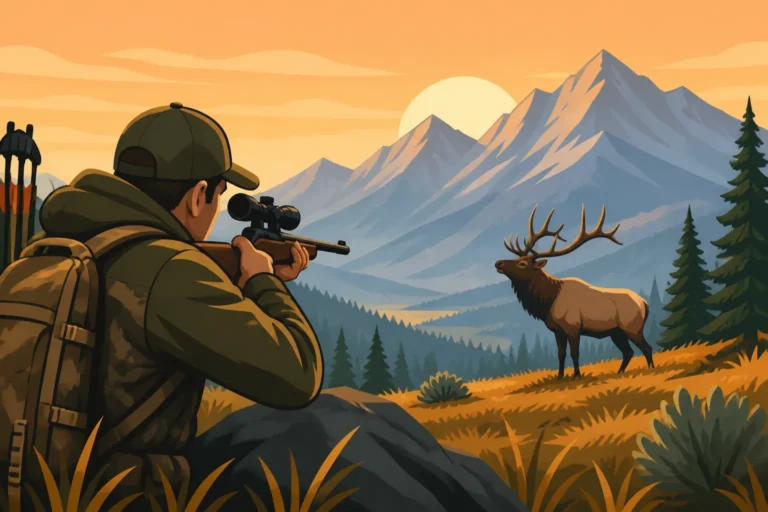
That spine-tingling sound of a bull elk bugle cutting through the crisp Montana air is one of the most exhilarating experiences a hunter can have. But let's be honest, it often ends in frustration: a busted stalk, a spooked animal, or finding yourself in an impossible shooting situation. This guide isn't about just hearing the bugle; it's about methodically executing a setup that puts you in a position to capitalize on that hard-earned opportunity, turning those thrilling moments into successful hunts.
Deciphering the Bugle and Initial Evaluation
The moment you hear a bugle, a thousand thoughts race through your mind. Is he close? Is he alone? Is he moving? Your immediate reaction and assessment of that initial call are absolutely critical to the success of your setup. Don't just rush in; take a breath and listen.
Understanding the Elk's Mood and Location
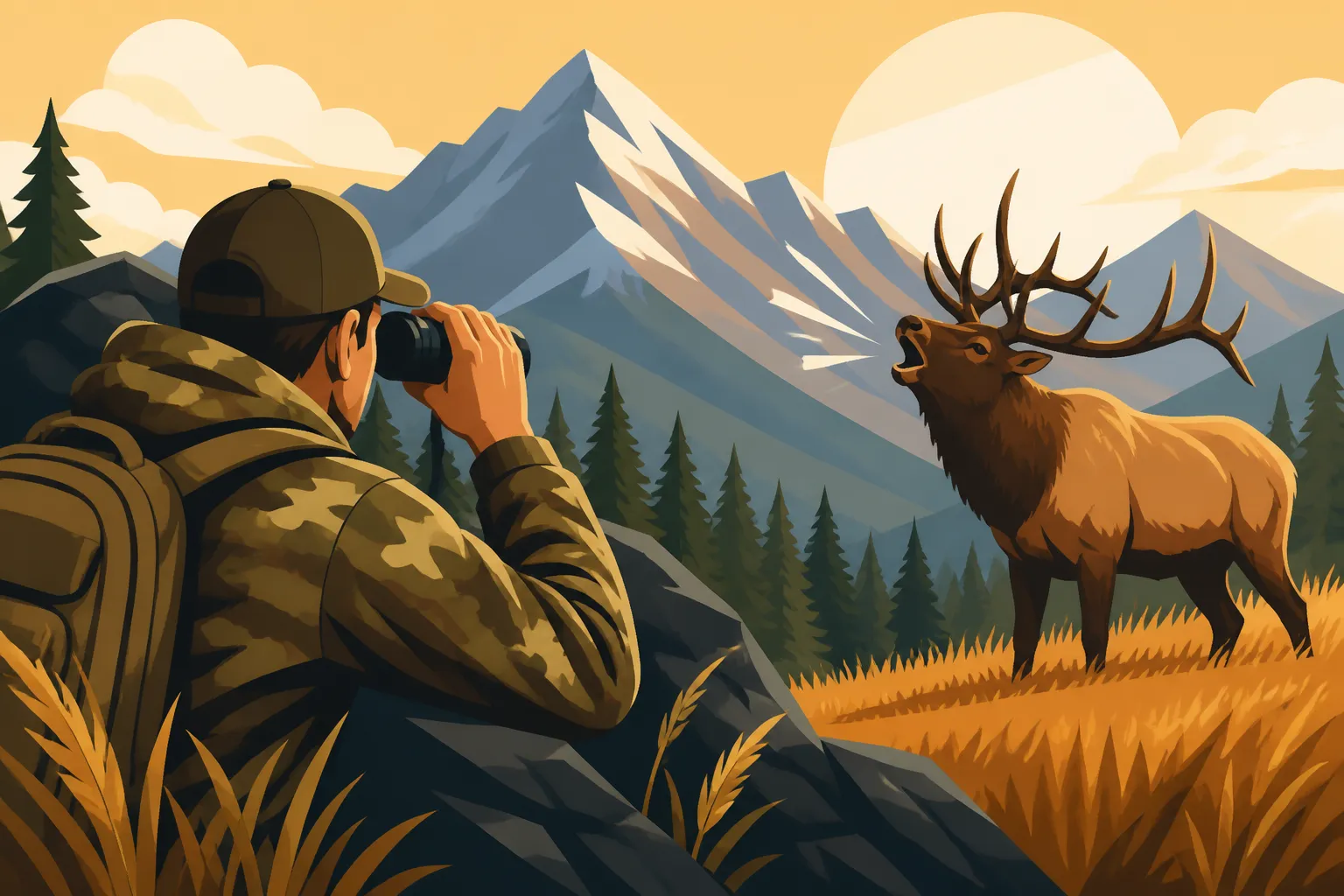
Every bugle tells a story, and learning to interpret that story is a skill honed over many hours in the field. Is it a screaming, challenging bugle from an enraged herd bull guarding his cows? Or is it a softer, more inquisitive locator bugle from a satellite bull trying to find company? Perhaps it's a "grumpy" bugle from a bull that's just been bumped and is still agitated, or a simple, relaxed vocalization from an elk feeding contentedly in a secluded basin.
A loud, drawn-out, and aggressive bugle, especially one accompanied by grunts and chuckles, often signals a bull that is actively herding cows or challenging rivals. This bull might be more likely to come to a call, but he's also often surrounded by a network of vigilant cow elk, making a silent approach much harder. If it's a solo or "lone wolf" bugle, especially during the pre-rut or post-rut, that bull might be more responsive to cow calls or a subtle challenge. Understanding How to Bugle-Locate a Montana Bull Elk is the first step, but then you need to analyze what that bugle means for your next move.
Beyond the sound, try to pinpoint the exact location. Is it echoing off a canyon wall, making him sound closer or farther than he truly is? Does the sound seem to be coming from a ridge top, a dark timber patch, or down in a drainage? Elk are masters of using topography to their advantage, and their bugles can be incredibly deceptive. Often, a bull will bugle from a thick timber stand or a deep draw, preferring to stay hidden while surveying his surroundings.
Assessing the Terrain and Wind Direction
Once you've got a decent idea of the elk's approximate location and demeanor, your eyes need to immediately shift to the terrain and, most importantly, the wind. Pull out your maps – a physical topo map or a digital one on an app like GoHunt – and start visualizing the landscape between you and the elk. Look for obvious funnels, natural barriers, benches, saddles, and potential escape routes. Knowing how to How to E-Scout Montana Hunting Units effectively before your hunt can save precious time in these critical moments.
The terrain will dictate your approach. If he's on a ridge, can you use the back side of the ridge for cover? If he's in a thick drainage, are there open benches above him or a parallel ridge you can use to get closer? Avoid skylining yourself on ridgetops; elk are constantly scanning. Look for patches of dark timber, draws, or changes in elevation that can provide concealment as you move.
Then, there's the wind. Oh, the wind! It's the silent killer of more elk stalks than any other factor. Elk have an olfactory sense that is many times more powerful than a bloodhound's. Always, always keep the wind in your favor. This means it should be blowing from the elk to you, or across your path if you're approaching from the side. Never, under any circumstances, allow your scent to blow towards the elk. Use a wind checker constantly – a small bottle of powder or milkweed down will be your best friend.
Consider the thermals, which are localized air currents caused by heating and cooling of the land. In the mornings, thermals generally fall down slopes; in the evenings, they rise. Mid-day, especially in sun-exposed areas, winds can swirl unpredictably. Understanding How to Use Thermals in Montana Elk Country is absolutely paramount, especially when setting up on a bugling bull. This might mean taking a much longer, more arduous route to get downwind or crosswind from the elk, but it's a non-negotiable factor for success.
The Strategic Approach: Closing the Distance
Now that you've assessed the situation, it's time to move. But this isn't a race; it's a calculated, stealthy chess match where every step matters.
Silent Movement and Utilizing Cover
Moving quietly through the mountains of Montana, especially in dry conditions or through crunchy timber, is incredibly challenging. But it's absolutely essential. Your pace should be slow and deliberate. Think heel-to-toe, testing the ground before committing your weight. Look for soft spots like moss, pine needles, or damp earth. Avoid dry leaves, deadfall, and rocky areas that will announce your presence. This might sound obvious, but the adrenaline of a hot bugle can make even seasoned hunters forget their fundamentals. If you're wondering How to Move Quietly Through Montana Timber, it really comes down to patience, picking your steps, and using soft-soled boots. Brands like Kenetrek and Schnee's are popular among Montana hunters for their durability and traction, but even the best boots won't help if you're not paying attention to where you're putting your feet.
Always use the terrain and vegetation to your advantage. Stay behind ridges, in the shadows of dark timber, or within the confines of a deep draw. Never, ever walk on a skyline where you can be silhouetted against the horizon. If you need to cross an open area, do so quickly and efficiently, perhaps when the bull is bugling or distracted, but only if you are confident you won't be seen. Think like an elk: where would they travel to remain hidden? Mimic their movements.
Sometimes, closing the distance means pausing for extended periods. Elk often follow predictable patterns, especially if they are feeding or moving to a bedding area. Observing these patterns, even if it means sacrificing immediate progress, can lead to a much better setup. This is where patience truly becomes a virtue.
Playing the Wind and Thermals
As mentioned, the wind is your master. Continuously check the wind direction as you move. Micro-thermals can shift rapidly, especially in varied topography. What was a perfect crosswind might suddenly swirl uphill or downhill, putting you in jeopardy. If the wind changes and starts blowing towards the elk, stop immediately. Retreat, reposition, or wait it out. It's better to lose a bit of ground or time than to get winded and blow the entire stalk.
Your approach should always prioritize staying downwind. If the bull is bugling from a north-facing slope, and the thermals are falling in the morning, you might need to approach from the west or east, staying low and out of the direct scent cone. As the day progresses and thermals begin to rise, you might need to adjust your approach to stay above him, allowing the rising air to carry your scent away. It's a dynamic puzzle that requires constant vigilance.
On challenging terrain, you might find yourself needing to move directly into a swirling wind. In these rare cases, your best bet might be to move incredibly slowly, using every piece of cover, and relying on very subtle calls to keep the bull focused on something other than your scent. However, this is a high-risk strategy and generally not recommended for a primary setup.
Communicating with Calls (Subtly)
When you're actively trying to set up on a bugling bull, your calling strategy needs to shift from locating to enticing. Less is often more. If the bull is actively bugling and sounds interested, a soft, seductive cow call or a few subtle chirps can often be enough to pique his curiosity and draw him closer, or at least confirm his continued presence and direction of travel. Resist the urge to aggressively bugle back, especially if you think he's close. You don't want to challenge him and push him away, or worse, have him circle wide to get downwind of your bugle.
The goal with calling during a setup is to make the bull expect to see another elk at a specific location, usually ahead of you or slightly to the side. If he responds to a soft cow call, he's telling you he's interested. Then, go silent and let him look for you. The moment he goes quiet and you can't hear him moving, he's probably coming to investigate. This is your cue to get ready. For more in-depth strategies, check out our guide on Montana Elk Hunting: Calling Tactics. Sometimes, a well-placed single cow call can be more effective than a full symphony of bugles and chuckles.
Executing the Final Setup for the Shot
This is it. You've closed the distance, navigated the wind, and now it's time to seal the deal. The last 50-100 yards are often the most critical and demand the utmost discipline.
Choosing the Optimal Shooting Lane and Backstop
As you approach the estimated location of the bull, begin actively searching for a good shooting lane. What does this mean? It's an opening, typically 20-40 yards, that gives you a clear, unobstructed shot at an elk. This is particularly crucial for archery hunters (see: Montana Elk Hunting: Archery Tactics). For rifle hunters, while your range is greater, a clear lane is still essential for an ethical shot (for more on this, check out our Montana Rifle Elk Hunting Guide).
Position yourself so that if the elk comes in, he'll likely present a broadside or slightly quartering-away shot as he tries to pinpoint the sound of your call. Ideally, you want to be positioned so that any calls you make sound like they're coming from a different spot than where you're actually set up, drawing his attention slightly past or to the side of your actual position. This takes practice and requires understanding elk behavior during the rut, as detailed in Montana Elk Behavior During the Rut.
Also, always consider your backstop. Is there a hill, a thick timber stand, or open terrain behind where the elk might stand? Ensure that if you take a shot, your projectile will impact a safe backstop and not travel indiscriminately into the landscape. This is a critical safety consideration that sometimes gets overlooked in the heat of the moment.
The Waiting Game and Final Adjustments
Once you've selected your setup spot, it's time to become a statue. Range likely shooting lanes and points of interest. Nock an arrow, shoulder your rifle, and ensure your optics are dialed. Eliminate all unnecessary movement. Scan not just for the elk, but for any flicking ears, dark patches in the timber, or subtle movements that indicate his approach. Elk can appear as if from nowhere, silently materializing in your shooting lane.
The waiting game can be agonizing. Your heart will pound. Your muscles might cramp. But this is the moment where mental fortitude pays off. If you're hunting with a bow, practice holding at full draw for extended periods. If with a rifle, practice quickly and quietly getting into a stable shooting position. Patience here is absolutely crucial. Many hunters blow a setup by fidgeting, making noise, or getting impatient and moving too soon.
Make any final micro-adjustments to your body position for comfort and stability. Lean against a tree, go to a knee, or find a comfortable sitting position that offers a clear shot. Have your rangefinder ready to confirm distances in the moment. Remember, a successful setup isn't just about getting close; it's about being ready when the opportunity presents itself.
The Role of a Caller in a Two-Person Setup
If you're lucky enough to be hunting with a partner, a two-person setup can dramatically increase your success rate. The strategy here is simple: one person acts as the shooter, and the other as the caller. The caller positions themselves 40-70 yards behind or to the side of the shooter, always ensuring they are downwind.
The caller's role is to draw the bull's attention away from the shooter. As the bull approaches, he will naturally focus on the source of the calls. The caller can use a variety of sounds – cow calls, chuckles, even subtle bugles – to keep the bull engaged and looking in their direction. This misdirection allows the shooter to remain undetected and often provides a perfect broadside shot as the bull walks past, concentrating solely on the "other" elk. This is a highly effective tactic often employed in Montana DIY Elk Hunting Guide scenarios where you have a hunting partner.
Here’s a quick overview of common setup scenarios and how to approach them:
| Scenario | Elk Behavior Indication | Setup Strategy | Key Consideration |
|---|---|---|---|
| Aggressive Bull | Constant, loud bugles, possibly raking trees. | Get downwind quickly. Use terrain to cut distance. Call sparingly to keep him engaged. | Be prepared for a fast approach by the bull; stay hidden. |
| Locator Bull | Intermittent bugles, seems to be moving. | Move silently parallel or slightly ahead, aiming to cut him off. | Patience is key; predict his path, then get into position. |
| Bedded Bull | Soft, "grumpy" bugles from a thicket, not moving much. | Ultra-stealthy, slow approach, prioritizing wind and cover. Use subtle calls. | This requires extreme patience and precision for a close shot. |
| Bull with Cows | Bugling and chuckling, surrounded by watchful cows. | Approach from downwind, focus on breaking up his attention. Caller can distract. | Difficult, often requires a two-person team or extreme patience. |
| Bull in Dark Timber | Bugling from dense forest, hard to see movement. | Close distance quietly, focusing on openings. Be ready for a quick, close shot. | Visibility is low; anticipate short shooting windows. |
No matter the scenario, the principles remain the same: wind, cover, patience, and precise execution. Following these steps greatly increases your odds of turning that electrifying bugle into a successful harvest in the magnificent landscapes of Montana.
Disclaimer
Hunting is an activity with inherent risks. This guide provides information for educational purposes only and does not guarantee success or safety. Always prioritize safety, adhere to all local, state, and federal hunting regulations, and respect wildlife. Ensure you have proper licensing, hunter education, and landowner permissions. Be aware of your surroundings and any potential hazards.