How to Hunt Montana Waterfowl
Hunting waterfowl in Montana can feel like a wonderfully wild endeavor, but it often comes with a heap of questions about where to go, what to bring, and how to outsmart those incredibly sharp birds. It's not like still-hunting timber for deer; ducks and geese are constantly on the move, and their behavior shifts with the weather, water levels, and hunting pressure. If you've ever felt overwhelmed trying to piece together a successful Montana waterfowl hunt, you're not alone. This comprehensive guide is designed to demystify the process, offering practical advice and seasoned insights to help you get started or refine your approach to hunting ducks and geese across Big Sky Country.
Understanding Montana's Diverse Waterfowl Landscape
Montana truly is a land of contrasts, and nowhere is that more evident than in its waterfowl habitat. From vast, windswept prairies dotted with countless potholes to the towering peaks of the Rocky Mountains bisected by major river systems, the variety of terrain dictates the hunting experience and the species you'll encounter. Understanding these diverse landscapes is the first step to becoming a successful waterfowl hunter here.
Diverse Habitats and Flyways
Montana sits at a fascinating crossroads for migratory birds, influenced by both the Pacific and Central Flyways. This unique position means we often see a broader range of species than states exclusively in one flyway. Waterfowl, in their annual migrations, follow ancient pathways, and Montana's abundant water sources and agricultural lands act as critical stopovers and breeding grounds.
Think about the prairie potholes of Eastern Montana – these seemingly small, often ephemeral wetlands are absolute magnets for dabbling ducks like mallards, pintails, and wigeon. They're like little oases in a sea of grass and grain, providing food and security. Farther west, the large reservoirs and deep mountain lakes, such as Canyon Ferry or Flathead Lake, attract diver ducks like canvasbacks, redheads, and scaup, which prefer deeper water for feeding. Then, you have the mighty rivers, like the Missouri or Yellowstone, which serve as superhighways for ducks and geese, offering consistent water and food sources even when smaller ponds freeze up. Each habitat type presents its own challenges and rewards, demanding different tactics and gear. Getting to know the lay of the land, even through tools like GoHunt's mapping features, can give you a massive leg up in locating these prime waterfowl areas before you even set foot in the field.
Key Waterfowl Species
The sheer variety of waterfowl you might encounter in Montana is part of the allure. While mallards are arguably the king of ducks here, and Canada geese are ever-present, there’s a much wider cast of characters.
For ducks, you'll primarily be targeting Mallards, especially during the later season when cold fronts push down birds from Canada. They love agricultural fields and shallow wetlands. Pintails are another highly sought-after dabbler, known for their elegant flight and preference for open water and fields. Wigeon, with their distinctive "whee-woo" call, and various Teal (Green-winged and Blue-winged) are also common, particularly early in the season. On the diving duck front, you might encounter Canvasbacks, Redheads, and Scaup (bluebills) on larger bodies of water. Don't forget the occasional Gadwall or Shovelers either; every bird adds to the experience.
When it comes to geese, Canada Geese are by far the most prevalent. You'll find resident populations almost everywhere, augmented by migrating birds throughout the fall. Depending on where you hunt, you might also get shots at Snow Geese and Ross's Geese, particularly during spring or fall migrations on the eastern plains. Each species has its own flight patterns, calling tendencies, and preferred feeding habits, which means you'll need to adapt your approach to be consistently successful. Understanding their behavior is key to knowing where and when to set up.
Regulatory Framework
Navigating Montana's waterfowl regulations can feel like deciphering ancient hieroglyphics sometimes, but it's absolutely crucial for staying legal and ensuring a sustainable future for these birds. The state's hunting seasons are structured around federal guidelines that divide the state into different zones for ducks and geese, reflecting the varying migration patterns and population dynamics across the vast landscape.
Montana's waterfowl season dates are set annually, with different opening and closing dates for specific species and regions. You'll typically find an earlier opener for ducks in the Western Zone and a slightly later one in the Eastern Zone, with similar variations for geese. Bag limits also differ by species, and often by sex for certain ducks like mallards. It’s imperative to have your Montana Hunting Seasons Explained and a copy of the current regulations handbook from Montana Fish, Wildlife & Parks (FWP) with you. Beyond the basic hunting license, you'll need a state Migratory Bird Stamp and a federal Duck Stamp. Don't forget the Montana AIS Prevention Pass Explained if you're using any watercraft, as preventing aquatic invasive species is a big deal here. Always double-check the specific hunt codes and regulations for the districts you plan to hunt, as they can sometimes have special restrictions.
Essential Gear and Setup for Montana Waterfowl
Venturing out for waterfowl without the right gear is like trying to climb a mountain in flip-flops – you might get somewhere, but it won't be pretty, and success will be fleeting. Montana's weather can be notoriously unpredictable, swinging from mild autumn days to brutal blizzards in a matter of hours. Having the right tools for the job isn't just about comfort; it's about effectiveness and safety.
Shotguns, Ammunition, and Chokes
Your shotgun is your primary tool in the waterfowl blind, and choosing the right one, along with appropriate ammunition and chokes, is paramount. Most serious waterfowl hunters opt for a 12-gauge shotgun, typically a semi-automatic or pump-action, due to its versatility and ability to handle various loads. Popular models from manufacturers like Benelli, Beretta, and Browning are common, renowned for their reliability in harsh conditions. However, any reliable 12-gauge will get the job done if you know how to shoot it.
When it comes to ammunition, steel shot is mandatory for all waterfowl hunting in Montana, as well as for most other migratory birds. Lead shot is absolutely prohibited in these scenarios. You'll want to select your shot size based on the species you're targeting. For ducks, especially mallards, shot sizes #2 or #3 steel are generally excellent all-around choices. If you're encountering smaller ducks like teal, #4 steel can be effective. For geese, you'll want to step up to larger shot, like BB, BBB, or even T shot, to ensure enough knockdown power at longer ranges. Remember that steel shot behaves differently than lead, often requiring a slightly more open choke. For ducks, a modified or improved cylinder choke is often perfect, while a modified or full choke might be preferred for geese, especially if you anticipate longer shots. Patterning your shotgun with your chosen ammunition and chokes before the season is a critical step that far too many hunters skip.
Decoys and Spreads
Decoys are the artistry of waterfowl hunting. They're how you communicate with birds on the wing, convincing them that your little piece of Montana is the safest, most appealing place to land. The type, quantity, and arrangement of your decoys will vary wildly depending on what you're hunting and where.
For duck hunting on potholes or smaller rivers, a spread of 6-12 realistic floating mallard decoys might be all you need. Adding a few pintails or wigeon can also enhance realism. Crucially, don't underestimate the power of motion decoys. A spinning-wing decoy, often called a "mojo," can be a game-changer, especially on calm days when visibility is high. For larger water, or when targeting heavily pressured birds, you'll likely need a bigger spread, perhaps 2-4 dozen or more, to create the illusion of a bustling feeding area.
Goose hunting, particularly in fields, often demands a much more substantial spread. Full-body Canada goose decoys are the gold standard, although highly realistic silhouettes and shell decoys can also be effective, especially if you're trying to save on weight and bulk. A field spread of 2-4 dozen geese is a good starting point, but some hunters run spreads of 100+ when targeting large flocks of educated birds. Setting your decoys in a natural-looking "J" or "U" shape, with a landing zone open for incoming birds, is a common tactic. Always consider the wind direction – ducks and geese almost always land into the wind.
Blinds and Camouflage
Concealment is non-negotiable in waterfowl hunting. Ducks and geese have incredible eyesight, and even a slight glint or unnatural shape can send them flaring away. Your blind and camouflage need to blend seamlessly with the environment.
On the open prairies, layout blinds are king for field hunting geese or ducks. These low-profile blinds allow you to lie flat, providing excellent concealment in stubble fields. A-frame blinds or panel blinds, brushed in heavily with local vegetation, are great for larger groups or when you need to stand up. For hunting rivers or potholes with natural cover, simply finding a good clump of cattails or a brushy bank and augmenting it with a camouflage net can be incredibly effective.
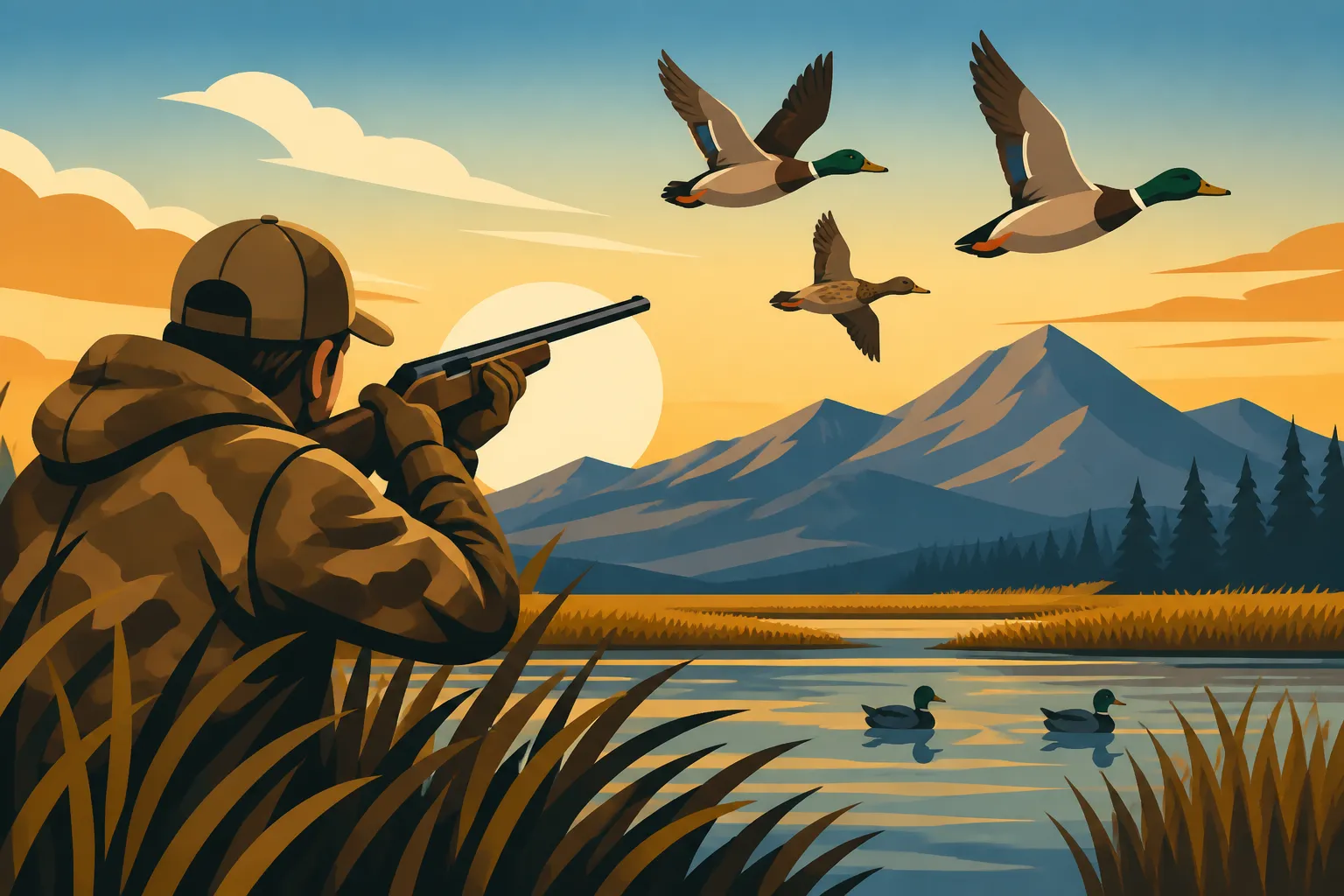
Your personal camouflage needs to match the environment as well. Browns and tans for stubble fields, greens and browns for marshy areas, and patterns like Mossy Oak Shadow Grass Blades or Realtree Max-5 are popular choices. Don't forget to cover your face and hands – a balaclava, face paint, or gloves are essential. Remember, the goal isn't just to be hidden, but to appear as a natural part of the landscape. Even a small detail, like an exposed face or brightly colored thermos, can blow your setup.
Tactics for Montana Duck Hunting
Hunting ducks in Montana is a dynamic endeavor, demanding adaptability as conditions change and birds move. Whether you're chasing them in small, secluded potholes or on the vast expanses of big reservoirs, understanding duck behavior and employing the right tactics can dramatically improve your success rate.
Pothole and Small Water Hunting
The countless potholes, small ponds, and sloughs scattered across Montana, particularly in the central and eastern parts of the state, are absolute gems for duck hunters. These smaller water bodies often hold excellent numbers of dabbling ducks like mallards, pintails, and wigeon, especially early in the season before the really cold weather sets in. The beauty of pothole hunting is its simplicity and intimacy.
Often, this type of hunting boils down to jump shooting or setting a minimal decoy spread. Jump shooting involves stealthily approaching a pond or slough, often with a partner, and flushing birds as you come over the bank. It requires keen observation, a good understanding of duck escape routes, and quick reflexes. When using decoys, less is often more. A small spread of 6-12 decoys, strategically placed to mimic resting or feeding birds, is usually sufficient. Focus on creating an inviting landing zone, always considering the wind direction. Potholes are also fantastic for early season hunts when ducks haven't seen much pressure. Key to success here is relentless scouting; these areas can be hit or miss, so using tools to locate water and then driving to verify bird presence is crucial. A simple call, like a feed chuckle or a few contented quacks, can sometimes draw in curious birds. Remember, smaller water often means less space for birds to work, so good concealment is paramount.
River and Stream Strategies
Montana's rivers and larger streams, like the Yellowstone, Missouri, Clark Fork, and countless smaller tributaries, offer a completely different but equally rewarding duck hunting experience. Unlike still water, rivers present constantly moving currents and dynamic environments that birds use for feeding, resting, and navigating.
Hunting moving water often involves setting up on bends, islands, or along brushy banks where ducks seek refuge from the current or feed in slack water. Ducks will often fly low along river corridors, using the natural contours for cover, making these pinch points ideal ambush locations. A popular tactic is to use a small spread of floating decoys, often anchored to prevent them from drifting downstream too quickly, positioned in a natural eddy or along a bank. You can also use the current to your advantage, deploying decoys upstream of your position to drift naturally into a realistic spread. Many hunters practice pass shooting along rivers, positioning themselves to intercept ducks flying from one feeding area to another, often using the natural concealment of riverbank vegetation. When floating a river by canoe or drift boat, jump shooting can be highly effective, but always be mindful of private land boundaries and public access points. Understanding how to use the wind hunting Montana elk is often a high-country concept, but similarly, knowing how wind affects river currents and duck flight paths is vital for river hunting.
Large Water and Reservoir Hunting
Hunting ducks on Montana's big water – the large reservoirs like Canyon Ferry, Fort Peck, or Flathead Lake, and bigger natural lakes – presents its own set of challenges and thrills. These expanses attract diver ducks and can hold huge numbers of dabblers, especially during migration, but they demand specialized gear and tactics.
Boat hunting is often essential for accessing prime locations on large bodies of water. A reliable boat, equipped for cold weather and potentially choppy conditions, is a must. Layout boats or larger blinds built into the boat itself are common. Decoy spreads on big water tend to be much larger than on potholes, often numbering in the dozens, sometimes hundreds, to attract birds from a distance. Diver decoys, like canvasbacks, redheads, and bluebills, are often deployed in long lines or large rafts, mimicking the large groups these birds prefer. Dabbling duck decoys are mixed in closer to the blind, creating an enticing landing hole.
Adapting to changing weather conditions is crucial on large water. Wind can turn a calm lake into a dangerous washing machine in minutes, so always prioritize safety. High winds can also push ducks into more sheltered bays or coves, so scouting for these protected areas is vital. Many hunters use long-range glassing techniques to spot rafts of ducks far out on the water, then plan their approach based on wind and access. This type of hunting can be incredibly rewarding, offering opportunities for diverse bags and fast-paced action, but it requires thorough preparation and a keen awareness of your surroundings.
Tactics for Montana Goose Hunting
Goose hunting in Montana offers its own distinct challenges and rewards, often requiring different strategies than duck hunting. Canada geese are robust, intelligent birds, and successfully hunting them demands meticulous scouting, effective calling, and impeccable concealment. From vast agricultural fields to open water roosts, Montana presents diverse goose hunting opportunities.
Field Hunting for Geese
Field hunting for Canada geese is arguably the most popular and productive method in Montana, especially in areas with extensive agricultural operations. Geese regularly feed in grain fields, picking up waste grain after harvest, and establishing these feeding patterns is the first step to success.
Scouting is paramount when field hunting. You absolutely cannot skip this step. Before sunrise or after sunset, you need to observe where geese are flying to and from, noting the specific fields they're hitting. Once you've identified a hot field, your setup involves large spreads of full-body goose decoys. These are arranged to mimic a feeding flock, with a large, inviting "kill hole" or landing zone directly in front of your blinds. Decoys should face into the wind, as geese always land into the wind. Layout blinds are the go-to for field hunting, allowing hunters to remain completely concealed within the decoy spread. Camouflage patterns should match the field stubble perfectly – think corn, wheat, or barley.
Calling is another critical component. Learning to make realistic clucks, moans, and layout calls can draw geese in from a distance and convince wary birds to commit. Practice different calling sequences to mimic an excited, feeding flock. As geese approach, focus on being absolutely still until the moment of truth. This meticulous approach to field hunting for geese is how many seasoned hunters fill their limits in Montana.
Water Roost Hunting
While field hunting gets a lot of attention, intercepting geese as they move to and from their water roosts can be equally effective, especially during colder periods when birds are congregating in larger numbers. Geese typically spend the night on large, open bodies of water where they feel safe from predators, then fly out to feed in fields at dawn and return at dusk.
Your strategy here is to position yourself along the flight path between the roost and known feeding areas. This might involve setting up near a specific point on a large reservoir, a river bend, or even a small pond they use as a staging area. Unlike field hunting, which focuses on landing birds, water roost hunting often involves more pass shooting opportunities as geese fly overhead, although some may decoy into water spreads near the flight path. For this, you'll need good concealment along the bank, using natural cover or portable blinds. Decoys can still be used, often a smaller spread of floaters, to give the illusion of a few early arrivals or late stragglers.
Timing is everything with water roost hunting. You need to be in position well before first light for the morning flight out and remain until well after sunset for the evening flight back. Pay close attention to how the geese react to weather changes; high winds can push them lower, while calm conditions might make them fly higher. It's a game of observation and patience, but catching a large flock of Canadas silhouetted against a Montana sunrise or sunset can be an unforgettable experience.
Managing Pressured Geese
Montana's waterfowl, particularly geese around populated areas or those that have been hunted heavily throughout the season, become incredibly "educated" and wary. These birds are a true test of a hunter's skill and patience, often requiring a completely different approach than hunting naive early-season birds.
One of the biggest changes you'll need to make is impeccable concealment. Any shine, any movement, any unnatural shape will send them flaring. This means brushing blinds in meticulously with local vegetation, covering every exposed bit of skin, and remaining absolutely motionless when birds are approaching. Some hunters even go as far as using black paint or specialized camo netting on their gun barrels to eliminate glare. Advanced calling techniques become more important too. Instead of aggressive, loud calling, you might need to use softer, more subtle clucks and moans, mimicking a content, undisturbed flock. Over-calling can easily scare off pressured birds.
Another tactic involves downsizing your decoy spread or using more realistic, full-body decoys to create a more natural-looking, less "hunter-trap" appearance. Mixing in different species of decoys, like a few mallards among the geese, can also add to the realism. Furthermore, hunting smaller, less obvious fields that might not see as much pressure, or trying to catch birds in less conventional spots like small loafing ponds during midday, can be effective. Tools like onX Hunt or even GoHunt can help you scout for these less accessible or overlooked spots. Remember, pressured geese have seen it all, so thinking outside the box and being more subtle in your approach is key.
Scouting, Ethics, and Conservation
Successful and responsible waterfowl hunting in Montana isn't just about calling and shooting; it's deeply rooted in diligent scouting, unwavering ethical conduct, and a strong commitment to conservation. These pillars ensure that the tradition of waterfowl hunting can continue for generations to come.
Effective Scouting Techniques
You've heard it a thousand times, and it's true: scouting is the most critical component of a successful waterfowl hunt. You can have the best gear and be the best shot, but if you're not where the birds are, you'll go home empty-handed. Scouting needs to be an ongoing process, not just a one-time pre-season event.
Start with digital scouting from home. Websites like GoHunt and public land mapping apps (like onX Hunt) are invaluable resources. They allow you to study satellite imagery, identify potential water sources (potholes, sloughs, rivers, reservoirs), pinpoint agricultural fields, and determine land ownership (public vs. private). Look for areas where water meets agriculture, or natural corridors like river systems. This digital reconnaissance helps narrow down your physical scouting efforts. Once you have some promising areas identified, it's time for boots-on-the-ground (or wheels-on-the-gravel) scouting. Drive county roads, observe fields at dawn and dusk for feeding geese and ducks, and use binoculars or a spotting scope to identify flight paths and bird concentrations. Don't be afraid to pull over and watch for extended periods. Birds are creatures of habit, and once you identify a pattern, you're well on your way. Always be mindful of respecting private property during your scouting missions. The goal is to locate active feeding and loafing areas, understanding that these can change daily with weather and hunting pressure. Learning How to E-Scout Montana Hunting Units will serve you well.
Waterfowl Hunting Ethics and Safety
Ethical conduct and safety are non-negotiable in the hunting world, and waterfowl hunting is no exception. Our actions in the field reflect on all hunters, and upholding a high standard is our collective responsibility.
Ethical hunting starts with knowing your limitations. Only take shots at birds within your effective range. "Sky-busting," or shooting at birds too far out, results in wounded birds that are often unretrievable, which is a waste of a precious resource and deeply unethical. When ducks or geese are working your spread, wait until they are committed and within clean killing range before calling the shot. Always make every effort to retrieve downed birds, even if it means wading into icy water or slogging through thick mud. Respect private property boundaries, even when retrieving a bird, and always ask permission if a bird falls on private land. Being a considerate and respectful hunter also means being a good steward of the land; pick up your spent shells, decoy lines, and any trash you might find.
Safety is paramount. Always follow the fundamental rules of firearm safety: treat every gun as loaded, never point a gun at anything you're not willing to destroy, keep your finger off the trigger until ready to shoot, and be sure of your target and what's beyond it. When hunting in groups, establish clear zones of fire. When using a boat, wear life jackets, especially in cold water conditions, and ensure your boat is equipped with all necessary safety gear. Always tell someone where you're going and when you expect to return. The cold, wet environments of waterfowl hunting can pose unique risks, so dress in layers, avoid cotton, and be prepared for rapidly changing weather.
Conservation and Habitat Stewardship
Waterfowl hunting is inextricably linked to conservation. The funds generated through hunting licenses and the sale of federal Duck Stamps directly support habitat acquisition and conservation efforts across the continent. Organizations like Ducks Unlimited, Delta Waterfowl, and local conservation groups are instrumental in protecting and restoring wetlands, which are critical not only for ducks and geese but for countless other species.
As hunters, we are the front-line conservationists. Our participation and financial contributions directly benefit the wildlife we pursue. Understanding the importance of healthy wetlands and agricultural practices that benefit waterfowl is part of the hunting ethos. This might involve supporting local conservation projects, participating in habitat improvement days, or simply advocating for responsible land and water management. Every time you buy a license or a duck stamp, you're contributing to a larger effort that ensures healthy waterfowl populations and vibrant ecosystems for future generations. It's a powerful and often understated aspect of what it means to be a waterfowl hunter in Montana.
Public Land and Access Considerations
One of the biggest draws to hunting in Montana is the sheer amount of public land, but navigating access for waterfowl can be a bit trickier than for big game. While national forests and BLM lands offer fantastic big game opportunities, waterfowl often concentrate on specific water bodies or agricultural fields, many of which are on private land. However, with careful planning and an understanding of regulations, plenty of public waterfowl hunting opportunities exist.
Navigating Montana's Public Water Access
Montana law generally recognizes public access to navigable waters, regardless of who owns the underlying streambed or adjacent land. This is a huge advantage for waterfowl hunters. If a river or stream is "navigable" (meaning it can be used for recreation in its natural or ordinary condition), you can typically float and hunt from that water. However, you must stay within the ordinary high-water mark; stepping onto private land without permission, even to retrieve a downed bird, is trespassing.
Large bodies of water like reservoirs (e.g., Canyon Ferry, Fort Peck), many larger lakes, and major rivers like the Missouri and Yellowstone offer significant public water access. You can often launch boats at designated public ramps and then hunt from your boat or set up blinds on public islands or publicly owned shorelines. Identifying these public access points and understanding the rules for specific water bodies is key. Always use Montana Hunt Access Maps Explained to verify public land and water boundaries. State Trust Lands, often interspersed throughout the landscape, can also offer fantastic waterfowl opportunities, but they often require a State Land Use License in addition to your regular hunting licenses. Always consult the FWP regulations and detailed maps before heading out.
Block Management Areas for Waterfowl
Montana's Block Management Program (BMA) is a unique and invaluable resource for hunters, providing access to millions of acres of private land for hunting. While many BMAs are geared towards big game like deer and elk, some specifically enroll lands that offer excellent waterfowl hunting. This is a game-changer for accessing prime private lands that would otherwise be off-limits.
BMAs are essentially agreements between private landowners and Montana FWP, opening up private lands for public hunting under specific rules set by the landowner and FWP. For waterfowl, these BMAs might include access to private ponds, sloughs, or agricultural fields known to hold ducks and geese. The beauty of Block Management is that it helps hunters find places to go without the hassle of seeking individual landowner permission. However, access is often regulated, requiring sign-in boxes, specific entry points, or even reservations for popular areas.
To find waterfowl-friendly BMAs, you'll need to consult the annual Block Management Program Guide, available from FWP offices or online. This guide details each BMA, its specific regulations, and the species it offers. Always read the rules carefully, as some BMAs might only allow certain types of hunting (e.g., walk-in only, no vehicle access) or have specific days for waterfowl hunting. Using Montana Block Management Areas Explained alongside your digital mapping tools will help you identify and plan hunts on these critical private land parcels. It's a fantastic way to experience some of Montana's best waterfowl hunting without paying for a guided hunt on a private ranch.
| Species | Preferred Habitat | Typical Hunting Method | Calling Strategy | Notes |
|---|---|---|---|---|
| Mallard | Potholes, rivers, agricultural fields | Decoy over water/fields, jump shooting | Quacks, feed chuckles, greeting calls | Most common, adaptable to various tactics |
| Pintail | Open water, shallow marshes, fields | Decoy over water/fields (often with mallards) | Whistles, soft quacks | Wary, elegant fliers, often fly high |
| Wigeon | Shallow marshes, ponds, flooded fields | Decoy over water/fields | "Whee-woo" whistles, short quacks | Often decoying readily, good table fare |
| Teal (Green/Blue) | Small ponds, shallow marshes, sloughs | Jump shooting, small decoy spread | High-pitched peeps, short quacks | Very fast flyers, early season specialists |
| Canada Goose | Agricultural fields, large rivers, reservoirs | Field decoys (full body), water roost ambushes | Honks, clucks, murmurs, greeting calls | Highly intelligent, require excellent concealment |
| Snow/Ross's Goose | Large agricultural fields, open water | Large field spreads (white decoys), electronic calls | High-pitched honks, barks | Eastern MT plains, often in massive flocks |
| Canvasback | Large, deep lakes and reservoirs | Diver decoys, large raft spreads | Grunts (rarely called) | Fast, powerful flight, require deeper water |
| Redhead | Large lakes, deep marshes, reservoirs | Diver decoys, often with canvasbacks | Growls, meows (rarely called) | Often decoy well, but require patience on big water |
Disclaimer
The information provided in this guide is for general informational purposes only and is not a substitute for official regulations. Hunting laws and regulations in Montana can change frequently. Always consult the current Montana Fish, Wildlife & Parks (FWP) regulations and obtain all necessary licenses, stamps, and permits before engaging in any hunting activities. It is your responsibility to know and follow all applicable laws. Hunting involves inherent risks, and safety should always be your top priority.