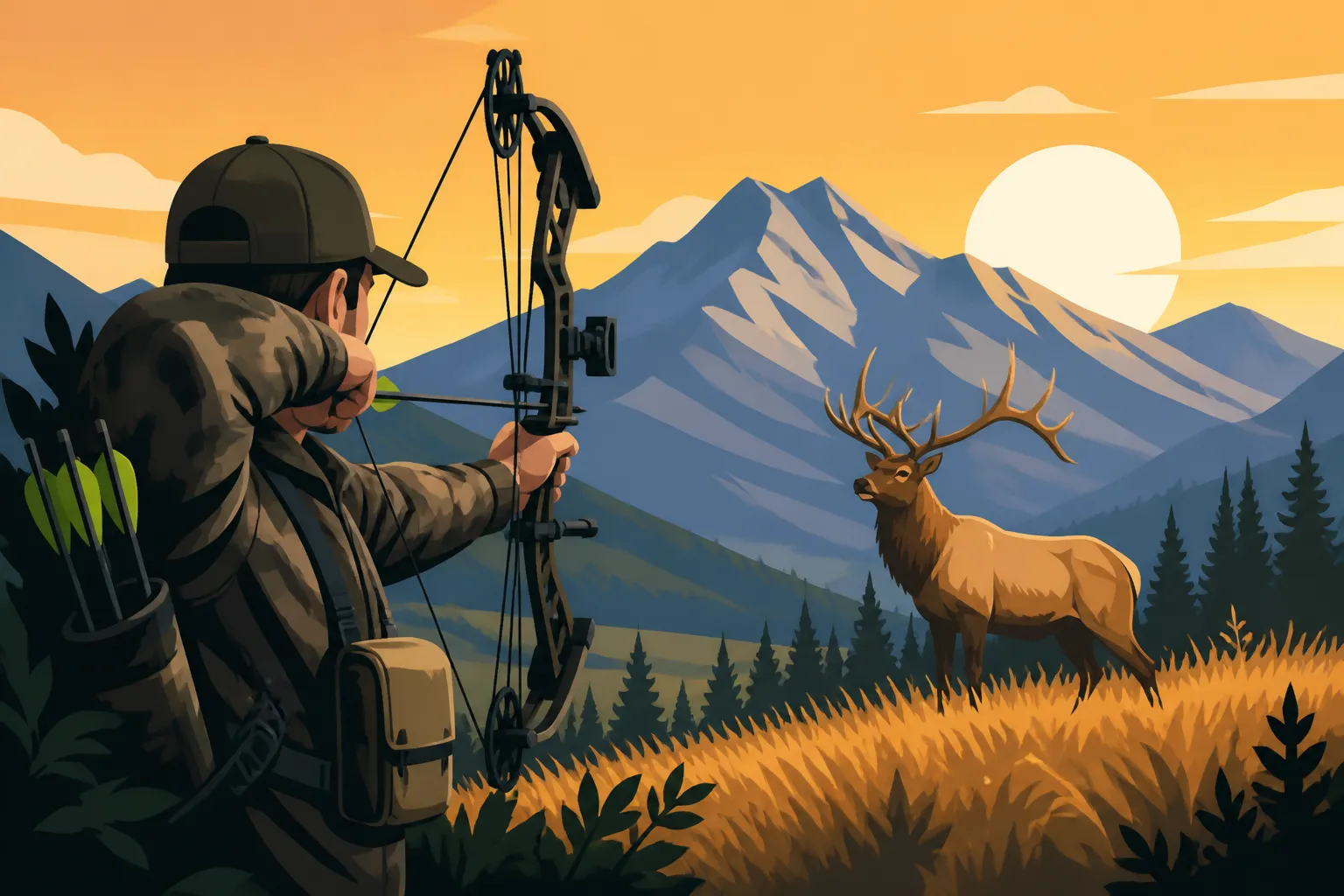
Montana Archery Elk Hunting Guide
For many hunters, the thought of chasing elk with a bow in Montana brings a mix of excitement and apprehension. It's a daunting challenge, combining the immense physical demands of the rugged terrain with the precision and patience required to get within spitting distance of a wild bull. If you've ever dreamt of that close-quarters encounter but felt overwhelmed by where to start, this comprehensive guide will walk you through everything you need to know to pursue Montana elk with archery tackle.
Why Archery Elk in Montana? Understanding the Appeal
Montana offers an incredible landscape for archery elk hunting, drawing passionate bowhunters from across the country. There's a raw, primal connection to the land and the animal when you commit to hunting with a bow, and Big Sky Country delivers that experience in spades. But it's more than just a feeling; there are tangible advantages and unique experiences that make archery elk hunting in Montana particularly special.
The Thrill of Close-Range Encounters
Let's be honest, getting within 40 yards of a mature bull elk with a bow is an adrenaline rush unlike any other. It's a game of chess played in the wild, where every step, every sound, and every shift in the wind could make or break your hunt. The margin for error is razor-thin, demanding a level of stealth and woodsmanship that challenges even the most seasoned hunters. Unlike rifle hunting, where a long shot can often seal the deal, archery demands intimacy. You're not just shooting an animal; you're entering its world, engaging with it on its terms, and experiencing the environment in a profound, immersive way. This pursuit requires a deep understanding of elk behavior, an ability to read the terrain, and an unwavering commitment to patience. It's truly a test of your hunting skills and personal resolve, culminating in a moment that most hunters dream about for years.
Leveraging the Rut for Success
One of the biggest draws to Montana's archery elk season is that it primarily coincides with the peak of the elk rut. This magical time of year, typically from early September through early October, transforms the mountains into a symphony of bugles. Bull elk are far more vocal and less cautious as they compete for cows, making them more susceptible to calling strategies. For bowhunters, this means opportunities to draw a bull closer than almost any other time of the season. The rut provides a unique window where bulls are actively moving, fighting, and advertising their presence, offering archers a chance to engage directly with them. Being in the mountains when a bull's bugle echoes through the crisp morning air is an unforgettable experience, and with a bow in hand, you have a legitimate chance to bring that bull into range.
Extended Season Opportunities
Montana's archery-only elk season typically opens in early September and runs until mid-October, offering a generous window of opportunity for hunters. This early start means you're often hunting before the heavy rifle pressure begins, giving you a chance to pursue less-pressured animals. While general rifle season typically kicks off in late October, the archery season allows you to be in the woods when elk are still primarily focused on the rut, and before they’ve been pushed by the influx of rifle hunters. This extended, specific timeframe is a significant advantage for bowhunters, providing more days afield and a better chance to encounter active elk, especially during the crucial rut period. It allows for flexibility in planning your hunt and increases your odds of finding a willing bull before the dynamics of the season shift. To understand the exact dates, always check the current Montana Hunting Seasons Explained.
Essential Gear for Your Montana Archery Elk Hunt
Hunting elk in Montana's rugged landscapes with a bow requires a specific set of gear that can withstand the elements and perform when it matters most. This isn't a casual stroll in the park; it's a demanding endeavor that will test your equipment as much as it tests you. Investing in reliable, high-quality gear is paramount to your success and safety.
Bow and Arrow Setup Considerations
Your bow is, naturally, the heart of your archery elk hunting setup. It needs to be dialed in perfectly for both accuracy and quietness. First, ensure your bow is sighted in for a range of distances, typically out to 60-70 yards, though most ethical shots are taken much closer in real hunting scenarios. Heavy arrows, in the 450-550 grain range, are often favored for elk due to their increased kinetic energy and penetration, especially when paired with a good broadhead. Mechanical broadheads are popular for their large cutting diameter, but fixed-blade broadheads are known for their reliability and penetration on tough animals like elk, particularly if bone is encountered. Make sure your broadheads are razor sharp and fly true with your field points. Test your setup extensively at various distances and angles, including from an elevated position or kneeling, as you might encounter in the field. Every component, from your arrow rest to your release, should be meticulously checked and maintained for optimal performance.
Optics and Rangefinding for Archery Hunters
Good optics are non-negotiable for Montana elk hunting, especially for archery. A high-quality binocular, typically 10×42 or 10×50, is essential for glassing vast mountainsides and spotting distant elk. Brands like Vortex Optics or [Zeiss] offer excellent clarity and durability that stand up to the rigors of the backcountry. Paired with a tripod adapter, your binoculars become a powerful scouting tool. A reliable rangefinder is also critical for archery; estimating distances in steep, broken terrain can be incredibly difficult, and a precise range is vital for making an ethical shot. Look for a rangefinder with angle compensation, which is invaluable when shooting uphill or downhill. For those looking to dive deeper into long-range glassing strategies for deer (which can be applied to elk scouting), check out how to use Optics for Montana Mule Deer. A spotting scope (15-45x65mm or similar) can also be a game-changer for evaluating bulls from afar, allowing you to decide if a stalk is worthwhile without spooking them.
Backpacks, Boots, and Layering Systems
Montana's diverse terrain and unpredictable weather demand thoughtful choices in footwear, packs, and clothing. For boots, prioritize stiffness, support, and waterproofing. You'll be covering miles over rocks, steep inclines, and potentially wet ground, so ankle support and durable construction are key. Try on multiple pairs with the socks you plan to wear to ensure a comfortable, blister-free fit. Brands like Kenetrek and Schnee's are popular choices among Montana hunters. Your backpack is your mobile base camp; for day hunts, a 30-45 liter pack might suffice, but for multi-day backcountry trips, you'll need a frame pack capable of carrying 60+ liters and hauling meat. Look for packs with good weight distribution, comfortable hip belts, and durable materials. For detailed recommendations, see our Montana Backcountry Hunting Gear List. Finally, layering is crucial. Montana weather can swing wildly from warm, sunny afternoons to freezing, snowy mornings, often within the same day. A good layering system consists of a moisture-wicking base layer, insulating mid-layers (fleece or puffy jackets), and a waterproof/windproof outer shell. Bring a warm hat and gloves, even in September. Always pack more water and food than you think you'll need, along with essential survival items like a first-aid kit, fire starter, and headlamp.
Physical and Mental Preparation for the Backcountry
Montana elk hunting, especially with a bow, is a grueling test of endurance. It's not just about being able to hike; it's about hiking steep grades, often at elevation, carrying a heavy pack, and then having the physical and mental stamina to execute a shot when the opportunity finally arises. Many hunts are lost not because of poor shooting, but because hunters simply can't get to the elk, or can't recover quickly enough to make a move.
Building Stamina and Strength
To truly enjoy and succeed on a Montana archery elk hunt, you need to be in peak physical condition. This means months of dedicated training. Focus on exercises that mimic the demands of the hunt:
- Cardio: Long hikes (4-8 miles) with a weighted pack (30-60 lbs) on varied terrain, including steep inclines. Running, cycling, or stair climbing can also build endurance. Aim for at least 3-4 sessions per week.
- Strength Training: Emphasize core strength, leg strength (squats, lunges, deadlifts), and back strength to handle packing out meat. Don't neglect shoulder and arm strength for drawing your bow repeatedly under fatigue.
- Balance and Agility: Uneven ground, downed timber, and rocky slopes require good balance. Incorporate exercises like single-leg stands or dynamic movements to improve stability.
Start your training well in advance, ideally 4-6 months before your hunt. Gradually increase intensity and duration. Remember, you'll be hunting at elevations ranging from 4,000 to over 10,000 feet in many prime elk areas, which significantly impacts your cardiovascular system. Being physically prepared allows you to hunt harder, longer, and more effectively, increasing your chances of success. For a detailed workout plan, consider our Montana Elk Hunt Fitness Plan.
Mental Fortitude and Resilience
Beyond the physical, archery elk hunting in Montana demands immense mental toughness. You will face adversity: missed opportunities, exhausting climbs that yield no elk, days of rain or snow, and the ever-present feeling of being alone in vast wilderness. It's easy to get discouraged when the going gets tough. Develop a strong mindset by:
- Setting Realistic Expectations: Not every hunt will end with an elk. Focus on the experience, the process, and the lessons learned.
- Practicing Patience: Archery hunting is a waiting game. Train yourself to remain still and focused for extended periods.
- Problem-Solving: When things go wrong, and they will, don't dwell on it. Adapt your strategy, learn from your mistakes, and move forward.
- Positive Self-Talk: Encourage yourself, even when you're tired and morale is low. Remind yourself why you're there.
Mental resilience is what keeps you going when your body wants to quit. It’s what allows you to push through another ridge, make one more call, or sit just a little longer, often leading to opportunities that others miss. Trust your preparation and embrace the challenge.
Practice, Practice, Practice
Your physical preparation means little if you can't confidently and accurately shoot your bow under pressure. This goes beyond shooting at a static target in your backyard.
- Simulate Hunting Scenarios: Practice shooting after strenuous exercise, when your heart rate is elevated. Shoot from kneeling, sitting, and awkward angles, just as you might in the field.
- Vary Distances: Don't just shoot at 20 or 30 yards. Practice out to 60-70 yards to build confidence, but always remember to stay within your ethical maximum range when hunting.
- Broadhead Tuning: Ensure your broadheads fly exactly like your field points. Any deviation can lead to a missed or wounded animal.
- Pressure Drills: Introduce mild pressure by setting a timer, having a friend call out distances, or simulating the urgency of a hunting situation. This helps you perform when the moment of truth arrives.
The goal isn't just to hit the target, but to execute a smooth, consistent shot under any condition. The more you practice, the more muscle memory you build, and the more confident you'll be when that bull finally steps out.
Key Archery Elk Hunting Tactics in Montana
Montana’s diverse terrain and elk behavior demand a versatile approach for archery hunters. There's no single "best" method, but rather a toolbox of tactics you'll need to employ depending on the situation, the elk's mood, and the habitat. Understanding when and how to apply each tactic is crucial for success.
Calling Strategies for Archery
Calling is arguably the most exciting and effective archery elk hunting method, especially during the rut. When bulls are looking for love or a fight, well-executed calls can draw them right into your lap.
- Bugling: Used to locate bulls or challenge an interested bull. A locator bugle is a good starting point, but if a bull responds, be prepared to engage with realistic challenge bugles. Remember, you're trying to sound like another bull infringing on his territory.
- Cow and Calf Calls: These are often best for drawing in wary bulls or calling in cows, which can bring the bull along. Soft cow mews and chirps can convey a sense of calm and presence, making a bull feel safe to approach. Sometimes, a series of excited cow calls can really pique a bull's interest.
- Distress Calls: Used sparingly, a lost calf call or a specific aggressive bugle sequence can sometimes elicit a response from a bull looking to assert dominance or investigate a perceived threat.
The key to calling is realism and patience. Don't overcall. Listen to the elk, read their responses, and adapt your calling to match their mood. Always consider the wind direction, as a bull will often circle downwind to scent-check before committing. A good understanding of how to Call Elk in Montana will be invaluable here, and specifically, learning how to Bugle for Montana Elk can put you miles ahead.
Spot and Stalk Techniques
While calling dominates during the rut, not every bull will respond to calls, and sometimes the terrain makes calling ineffective. This is where spot and stalk comes into play. It requires exceptional glassing skills, patience, and silent movement.
- Glassing: Find a high vantage point overlooking prime elk habitat—north-facing slopes, timber edges, or drainages where elk might feed or bed. Use your binoculars and spotting scope to meticulously pick apart the landscape. GoHunt provides excellent mapping tools to identify these types of terrain features. Look for subtle movements, flicking ears, a patch of antler, or the distinct shape of an elk.
- Planning the Stalk: Once an elk is spotted, carefully plan your approach. Consider the wind, terrain features for cover, and potential escape routes for the elk. A successful stalk often involves a long, circuitous route to get into position undetected.
- Execution: Move slowly, deliberately, and silently. Every step counts. Use natural cover like trees, rocks, and terrain contours to break up your outline. Anticipate the elk's movements and try to intercept them rather than chase them. Be prepared to wait, sometimes for hours, for the right shot opportunity to present itself. This method is particularly effective when you understand how to Spot-and-Stalk Antelope in Montana, as many of the principles of stealth and wind reading transfer directly.
Hunting Timber and Dark Cover
Elk, especially pressured bulls, often seek refuge in thick timber and dark, north-facing slopes during the day. This environment presents unique challenges and opportunities for archery hunters.
- Still-Hunting: This involves moving incredibly slowly and deliberately through the timber, pausing frequently to observe, listen, and scan for elk. Take one or two steps, then stop for several minutes, looking for horizontal lines, patches of brown, or flicking ears that betray an elk's presence. Use your ears to listen for subtle sounds: a rustle of leaves, a breaking twig, or the soft grunt of an elk. Check out our guide on How to Still-Hunt Montana Timber for more in-depth advice.
- Ambushing Travel Routes: Elk use established trails, especially between bedding and feeding areas. Identify these routes through scouting and set up an ambush point downwind, often near water sources, saddles, or benches. This requires patience and often an early morning or late evening commitment.
- Understanding Security Cover: Elk feel safe in thick cover. Don't be afraid to go into the nastiest, steepest, darkest timber you can find. That’s often where the big bulls are hiding. Pay close attention to thermals and wind patterns within the timber, as they can be unpredictable.
Understanding Thermals and Wind
The wind is an archery hunter's best friend and worst enemy. Elk have an incredible sense of smell, and a single gust of wind in the wrong direction can instantly end your hunt.
- Thermals: In mountainous terrain, air currents (thermals) typically rise during the day as the ground heats up and fall in the evening as the air cools. Elk often use these predictable patterns to their advantage, bedding high and dropping into drainages to feed, with the rising thermals carrying their scent away from bedded predators.
- Playing the Wind: Always, always hunt into the wind or with a crosswind. Never allow your scent to blow ahead of you or directly towards the elk. This often means planning long routes to get into position. Use a wind checker constantly to monitor subtle changes, especially in swirling canyon bottoms or dense timber.
- Adapting to Conditions: Wind conditions can change rapidly. Be prepared to adjust your approach or abandon a stalk if the wind shifts unfavorably. It's better to back out and try another day than to blow a potential opportunity with a bad wind. Understanding how to Use the Wind Hunting Montana Elk and how to Use Thermals in Montana Elk Country are foundational skills for any successful hunt.
E-Scouting and On-the-Ground Reconnaissance
Modern hunting begins long before you set foot in the woods. Effective e-scouting and thorough pre-season reconnaissance are critical for increasing your odds, especially in vast, unfamiliar Montana units. This planning phase can reveal patterns, pinpoint prime habitat, and save you countless hours of unproductive hiking.
Utilizing Digital Tools for Unit Selection
The digital age has revolutionized how we scout. Tools like GoHunt and onX Hunt maps are invaluable for identifying promising elk country.
- Habitat Identification: Use satellite imagery to locate key features: dark timber for bedding, open parks and meadows for feeding, water sources, saddles, and ridge lines that elk might use for travel. Pay close attention to north-facing slopes, which often hold elk during warmer weather.
- Access Points and Pressure: Identify public land boundaries, roads, trails, and potential access points. E-scouting can also help you find remote areas with less human pressure, which often hold more mature bulls. Consider how to Beat the Crowds on Montana Public Land.
- Topography Analysis: Study contour lines to understand elevation changes, steepness, and potential funnels or pinch points where elk might travel. Look for subtle benches or terraced terrain within steep mountainsides where elk might bed. Learn how to E-Scout Montana Hunting Units to maximize your digital scouting efforts. This initial desktop research will help you narrow down potential hunting districts and develop a preliminary game plan.
Pre-Season Scouting and Identifying Core Areas
While e-scouting is powerful, there's no substitute for boots-on-the-ground scouting. If possible, visit your chosen unit a few weeks or months before the season starts.
- Verify E-Scouting: Confirm that the habitat you identified digitally actually looks good on the ground. Water sources might be dry, or timber might be thicker or thinner than it appeared from above.
- Look for Sign: Scout for fresh elk sign: tracks, droppings, rubs on trees, and wallows. Fresh sign indicates current elk presence and activity. Pay attention to how fresh the sign is and the direction of travel.
- Locate Wallows and Water Holes: Elk frequently use wallows, especially during the rut. These can be prime ambush spots. Identify reliable water sources, as these are critical, particularly during the warmer early archery season. Learning how to Hunt Elk Wallows in Montana and how to Hunt Elk Water Holes in Montana can be highly effective.
- Identify Bedding and Feeding Areas: Pinpoint specific locations where elk are likely to bed during the day and feed in the mornings and evenings. Connect these areas with travel corridors. This intimate knowledge of their daily routines is invaluable for planning your approach during the hunt.
Interpreting Elk Sign
Understanding what elk sign tells you is like reading a story about their behavior.
- Tracks: Fresh tracks, especially large bull tracks, are always exciting. The direction of travel and the spread of the hoof prints can indicate whether an elk is walking casually or moving quickly. Look for fresh dew on tracks to gauge how recently an animal passed.
- Droppings (Scat): The freshness and consistency of scat tell you a lot. Piles of fresh, soft, warm droppings mean elk are nearby. Older, dried scat indicates they've been there, but perhaps not recently.
- Rubs and Scrapes: Rubs are trees where bulls have stripped bark with their antlers, usually during the rut. These indicate a bull's presence and sometimes his size. Larger rubs on bigger trees often mean bigger bulls. Scrapes are less common for elk than deer but can occasionally be found.
- Wallows: Muddy depressions where elk roll to cool off and leave their scent. Freshly churned mud and strong elk odor mean recent use. These are active community hubs for elk, especially during the rut.
- Bedding Areas: Look for flattened areas in tall grass or soft dirt where elk have laid down. Fresh beds will often have a strong scent and warmth. Identifying these gives you insight into their security and resting spots.
The more you learn to interpret these signs, the better you'll become at predicting elk movement and identifying hot spots within your hunting unit.
Navigating Montana's Public Land and Access
Montana boasts an incredible amount of public land, offering boundless opportunities for archery elk hunters. However, understanding the nuances of these lands and how to access them is crucial for a successful and legal hunt. It’s not as simple as just showing up; there’s a strategy involved in utilizing these resources effectively.
Understanding Hunting Districts and Regulations
Montana is divided into numerous Hunting Districts (HDs), each with its own specific regulations, quotas, and season dates. Before you even think about buying a tag, you need to understand the regulations for your chosen HD.
- General vs. Permit Tags: Many HDs offer "general" elk tags, meaning you can hunt any elk (often antlered only, but sometimes either-sex) during the general season. Other HDs require a specific "permit" tag, which is drawn through a lottery system and is typically limited in number. For nonresidents, drawing a limited entry permit can be extremely difficult.
- Antler Restrictions: Pay close attention to antler restrictions, such as "brow-tined bull only" or "4-point or better." Misidentifying an elk can lead to serious legal consequences.
- Season Dates: While archery season typically runs through the rut, exact start and end dates can vary slightly by HD or year. Always check the current Montana Elk Season Dates Guide.
- Access Issues: Even within public land, some areas might have restricted motorized access, or may require specific permits for certain activities. Using the Montana Hunt Planner Maps Explained can help you navigate these details.
Knowing your district's specific rules like the back of your hand is not just about compliance; it's about strategizing your hunt around the unique opportunities and limitations of that area.
Finding Public Land and Block Management Areas
Montana offers vast tracts of public land managed by agencies like the Bureau of Land Management (BLM), U.S. Forest Service (USFS), and State Trust Lands.
- BLM and USFS Lands: These are typically accessible for hunting, but access points can vary. Many prime elk areas are within National Forests or Wilderness Areas, often requiring long hikes or pack-in trips. You can explore our Montana National Forest Hunting Guide for more details.
- State Trust Lands: These are often intermingled with private land and require a specific "State Land Use License" or other permissions, depending on the activity. Always verify access for hunting.
- Block Management Areas (BMAs): Montana’s Block Management Program is a unique and invaluable resource. It's a cooperative program between landowners and Montana Fish, Wildlife & Parks (FWP) that provides public hunting access to private land and sometimes adjacent public land. Access rules vary by BMA, from sign-in boxes to reservations. These areas can be goldmines for elk, especially on the plains or in foothills. Check out our Montana Block Management Areas Explained for an in-depth look.
- Accessible vs. Roadless Areas: While road systems provide easier access, they often mean higher hunter pressure. Consider venturing into roadless or wilderness areas for a more solitary and potentially more successful hunt. These require more physical effort but can be incredibly rewarding. Look into How to Hunt Elk in Montana's Wilderness for tips on tackling these remote areas.
Tools like onX Hunt are indispensable for visualizing property boundaries, public land ownership, and even Block Management access rules right on your phone.
Dealing with Hunter Pressure
Montana's reputation as a hunting destination means you will encounter other hunters, especially in more accessible areas. Learning to manage and minimize the impact of hunter pressure is key to finding undisturbed elk.
- Go Deeper: The simplest way to avoid crowds is to put in more effort. Hike farther into roadless areas, or pack into a backcountry camp. Most hunters stick to within a mile or two of roads and trailheads.
- Hunt Mid-Week: If your schedule allows, hunt on weekdays when pressure is generally lighter than on weekends.
- Utilize Block Management: Some BMAs offer reserved access or limit the number of hunters, providing a more controlled environment.
- Hunt Nasty Terrain: Elk often seek refuge in the steepest, thickest, nastiest terrain that most hunters avoid. If you're physically capable, these overlooked areas can hold unpressured animals.
- Early Mornings/Late Evenings: Be the first one in the woods and the last one out. Elk often move at dawn and dusk, and being in position before other hunters can give you an edge.
- Adapt Your Tactics: If you encounter heavy pressure, switch from calling to still-hunting or spot-and-stalk tactics in dense cover. Pressured elk become wary of calls and will often seek refuge. Understanding How to Hunt Montana Public Land Pressure can greatly improve your chances.
Field Care and Packing Out Your Elk
Taking an elk with a bow in Montana is an incredible accomplishment, but the real work often begins after the shot. Proper field care is essential to ensure your hard-earned meat doesn't spoil, and efficiently packing out an animal from the backcountry is a demanding physical feat.
Quick and Clean Quartering
Once your elk is down, time is of the essence, especially in warmer early archery weather. Prompt and clean quartering is crucial for meat preservation.
- Safety First: Always make sure the animal is expired before approaching.
- Field Dressing: While some hunters gut their elk, many backcountry hunters prefer the "gutless method," which leaves the entrails in the field and focuses on removing the four quarters, backstraps, tenderloins, neck meat, and sometimes ribs. This method is faster and cleaner, especially if you're alone or in steep terrain.
- Meat on Bone vs. Deboning: You can either bone out the meat in the field or pack out the quarters on the bone. Deboning reduces weight, but can be more time-consuming initially. Many choose to bone out everything except the lower leg portions and skull plate.
- Cleanliness: Work cleanly. Keep dirt, hair, and digestive fluids off the meat. Use clean game bags (canvas or synthetic) for each quarter and all deboned meat. This protects the meat from flies and helps it cool. A sharp knife, a saw (for the sternum or pelvis if needed), and a sharpening stone are indispensable. For a detailed guide, see How to Quarter an Elk in the Montana Backcountry.
Keeping Meat Cool
Montana's early archery season can still see warm temperatures, making rapid cooling of the meat a priority.
- Airflow is Key: Once in game bags, hang the meat in the shade, off the ground, where air can circulate freely around each piece. This allows body heat to dissipate. If possible, string them up on a branch or tripod.
- Avoid Piling: Never pile quarters on top of each other, as this traps heat and can lead to spoilage.
- Utilize Cold Spots: If there's snow or ice nearby (common at higher elevations), you can place game bags on or near it, but avoid direct contact with melting ice, which can waterlog the meat.
- Timing: Try to recover your elk in the cooler parts of the day (morning or evening) if possible. If you must process during midday heat, work quickly and prioritize getting the meat into game bags and hung. Understanding How to Keep Elk Meat Cool in Montana's Early Season is vital for quality meat.
The Logistics of Packing Out
Packing out an elk, especially solo or from a remote location, is often the most physically demanding part of the hunt.
- Multiple Trips: Unless you're extraordinarily strong and close to your vehicle, expect to make multiple trips. An average bull elk can yield 150-250 pounds of boned-out meat, plus the head and cape if you're taking them.
- Load Distribution: Distribute weight evenly in your pack. Use a quality frame pack designed for heavy loads. Secure the meat firmly to prevent shifting. Your first load should ideally be the heaviest, getting the bulk of the meat off the mountain.
- Rest and Hydrate: Take frequent breaks, especially on steep ascents. Stay hydrated and fuel your body. Pushing too hard can lead to injury or exhaustion.
- Buddy System: If possible, hunt with a partner. Having an extra set of hands and another strong back makes packing out significantly easier and safer. If you're tackling a solo hunt, our guide on How to Pack Out Elk Meat Solo in Montana can provide valuable strategies.
- Know Your Limits: Don't attempt to carry too much at once. It’s better to make an extra trip than to injure yourself or risk spoilage by being too slow. The integrity of your meat depends on your efficiency.
Common Challenges and How to Overcome Them
Archery elk hunting in Montana is inherently challenging. From the vastness of the landscape to the unpredictable nature of wild animals and the elements, you're guaranteed to face obstacles. Recognizing and preparing for these common hurdles is part of becoming a successful bowhunter.
Dealing with Misses and Frustration
It's going to happen. You'll make a great stalk, get a bull bugling in your face, draw back, and then… miss. Or maybe you'll make a poor shot. The frustration, disappointment, and self-doubt can be immense, but how you react to these moments defines your resilience as a hunter.
- Accept It: Everyone misses. Even the most seasoned archers have bad days. Acknowledge the frustration, but don't let it consume you.
- Analyze and Learn: Instead of dwelling on the negative, dissect what went wrong. Was it shot execution? Range estimation? Wind? An unforced error? Learn from it so you don't repeat the mistake.
- Regroup and Recommit: Take a break, clear your head, and then get back to hunting. Dwelling on a miss can lead to more mistakes. Your next opportunity might be just around the corner.
- Practice: Use any missed opportunities as fuel for more practice, focusing on the specific areas where you struggled. Confidence in your shot is built on repetition and solid fundamentals.
Remember, the challenge is part of the allure of archery hunting. Embrace the learning curve.
Weather Extremes
Montana weather is famously unpredictable. You can experience all four seasons in a single day, especially in the mountains during archery season.
- Preparation is Key: Pack for all conditions. Your layering system should be adaptable to warm sun, cold rain, and even unexpected snow. Carry rain gear, extra warm layers, gloves, and a hat, even if the forecast looks clear.
- Monitor Forecasts: Keep a close eye on weather patterns, but be prepared for sudden changes. A clear morning can quickly turn into a thunderous downpour or a snow squall.
- Adapt Tactics: High winds can make calling ineffective and shooting challenging. Heavy rain or snow can make tracking easier but movement more difficult. Learn to adapt your hunting strategy to the prevailing conditions. Elk behavior often changes with the weather, for example, a cold front might push them to feed more actively. Our guide on How to Hunt a Cold-Front Elk Push in Montana offers excellent insights.
- Safety: Severe weather can be dangerous. Know when to seek shelter, and ensure your camp is robust enough to withstand high winds and heavy precipitation. Hypothermia is a real threat; always carry emergency fire-starting supplies.
Encountering Other Hunters
Montana's public lands are shared resources, and you will likely encounter other hunters. How you handle these encounters can affect your hunt and the experience of others.
- Be Courteous: A simple wave, nod, or friendly greeting goes a long way. Most hunters are respectful of each other.
- Have a Backup Plan: If you arrive at your planned hunting spot and see other vehicles or hunters, have a secondary location in mind. It's better to move to a less pressured area than to crowd another hunter.
- Communicate: If you do encounter hunters in the field, a brief, polite conversation can help clarify intentions and prevent accidental interference. For example, "Hey, just letting you know I'm headed up this drainage, good luck!"
- Mind Your Manners: Don't skyline yourself, make excessive noise, or intentionally try to cut off another hunter. Respect boundaries, both spoken and unspoken.
- Use Technology: OnX Hunt maps often show popular trailheads and can sometimes indicate areas of higher use, helping you plan routes that minimize encounters. For more strategies on this, consult How to Hunt Montana Public Land Pressure.
By approaching hunting with respect for the land, the animals, and fellow hunters, you ensure a better experience for everyone.
Disclaimer
Hunting is an inherently dangerous activity. This guide provides general information and recommendations. All hunters are responsible for understanding and complying with all current Montana hunting regulations, laws, and safety guidelines. Always prioritize safety, ethical hunting practices, and responsible outdoor recreation. Consult official Montana Fish, Wildlife & & Parks (FWP) resources for the most up-to-date regulations and licensing requirements.