Montana Sage Grouse Permit Explained
Trying to navigate the intricacies of hunting regulations in Montana, especially for specialized species like sage grouse, can feel like you're lost in a labyrinth of confusing dates, draw odds, and permit requirements. It's frustrating when you just want to understand how to legally and ethically pursue a unique bird. This guide aims to demystify the Montana Sage Grouse Permit, walking you through everything you need to know about this specific tag, from why it exists to how you can apply and what to expect in the field.
Understanding the Montana Sage Grouse Permit
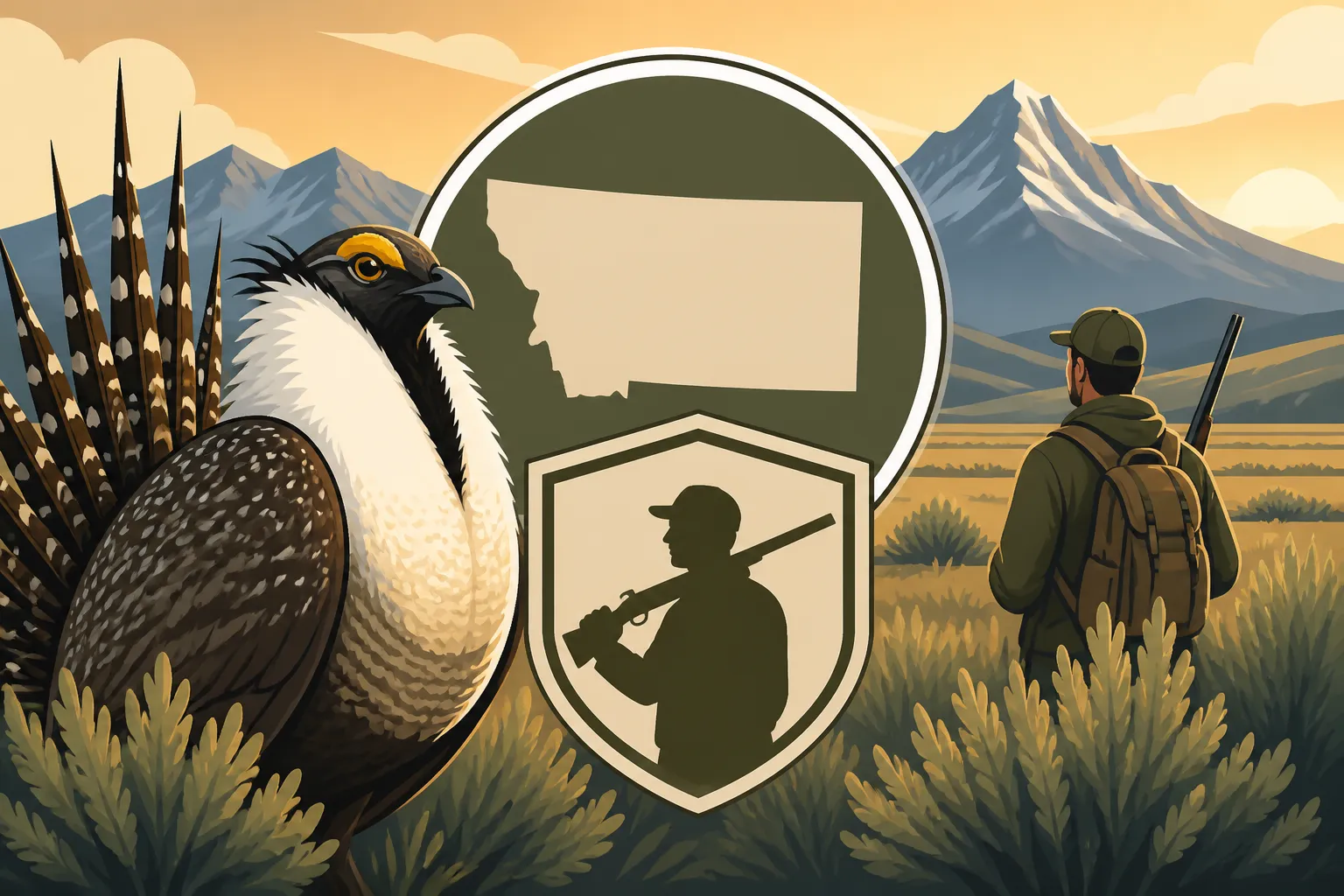
The sage grouse permit isn't just another hunting license you pick up over the counter. This is a special, limited-entry permit, and it exists for a very important reason: conservation. Sage grouse populations across the West have faced significant declines over the decades, primarily due to habitat loss and fragmentation. Montana, being one of the strongholds for these magnificent birds, takes their management very seriously. The permit system is designed to carefully control harvest levels, ensuring that hunting remains sustainable and doesn't negatively impact the recovery and stability of the species.
Why Special Permits Are Necessary for Sage Grouse
Unlike many other upland birds, sage grouse are highly dependent on specific sagebrush ecosystems. Their entire life cycle – from nesting and brooding to feeding and wintering – revolves around healthy, intact sagebrush habitat. When this habitat disappears or becomes fragmented, their numbers suffer dramatically. Montana Fish, Wildlife & Parks (FWP) uses these limited permits to manage hunting pressure in specific areas, tailoring the number of available tags to local population trends and habitat conditions. It's a critical tool in balancing hunting opportunities with the long-term health of the species. Without these targeted controls, it would be far too easy to overharvest, especially in areas where populations are already struggling. It’s a delicate dance, but one that is absolutely essential for these iconic birds.
The Role of Conservation in Sage Grouse Hunting
Conservation isn't just a buzzword here; it's the bedrock of sage grouse hunting in Montana. Every permit issued, every season set, is a direct reflection of ongoing biological monitoring and habitat management efforts. Hunter dollars, through license fees and excise taxes on hunting equipment, directly contribute to these conservation initiatives. This includes funding for habitat restoration projects, research into sage grouse ecology, and land management programs that benefit not only sage grouse but a host of other sagebrush-dependent wildlife. When you pursue a sage grouse in Montana, you're not just participating in a hunt; you're actively contributing to the stewardship of a vital ecosystem. It’s a chance to connect with the land and its wildlife in a deeply meaningful way, knowing you're part of a larger conservation success story.
Eligibility and Application Process for the Sage Grouse Permit
The application process for a Montana Sage Grouse Permit can feel a bit daunting, especially for those new to the state's draw systems. It's not as straightforward as buying a general deer or elk license. You need to understand the deadlines, the point system, and the specific codes involved. Missing a single step or deadline can mean missing out on a unique hunting opportunity for the entire season.
Understanding the Application Timeline and Deadlines
The first and most critical piece of information is the application period. Sage grouse permits are part of a special drawing, separate from the general big game draws. Typically, the application period for sage grouse runs from mid-June to mid-July, with results usually announced in late July or early August. This timing is crucial because it allows FWP to conduct spring lek counts – observing male sage grouse performing their elaborate courtship displays – to get an up-to-date assessment of population numbers before setting permit quotas for the fall.
It’s easy to get these dates mixed up with other draws, so setting reminders is key. Many hunters rely on resources like Montana Big Game Draw Deadlines or online platforms such as GoHunt to keep track of these specific deadlines and ensure their applications are submitted on time. For non-residents, remember that you’ll need to have a base hunting license or a combination license purchased before applying for any special permits, including sage grouse.
How to Apply for a Montana Sage Grouse Permit
Applying for a Montana Sage Grouse Permit is done through the FWP licensing system, either online or at an FWP office or vendor. Here’s a breakdown of the typical steps:
- Purchase Base Licenses: Ensure you have your Montana Conservation License and a valid upland bird stamp. Non-residents will also need their appropriate non-resident base license.
- Access the FWP Licensing System: Log in to your FWP MyFWP account or create one if you’re a first-time applicant.
- Navigate to Special Permits: Look for the section related to "Special Drawings" or "Limited Entry Permits."
- Select Sage Grouse Permit: Choose the sage grouse permit application.
- Identify Hunt Code: Sage grouse permits are often district-specific, meaning you might apply for a permit to hunt in a particular hunting district (HD). You’ll need to research the specific hunt codes for the areas you’re interested in. These codes dictate where and during which specific season segment you can hunt if you draw the tag. This is where tools like those offered by GoHunt, which analyze draw odds and harvest data by district, can be incredibly valuable for strategizing your application.
- Submit Application: Double-check all your information before submitting. There's usually a non-refundable application fee.
- Monitor Draw Results: Keep an eye on the FWP website or your email for draw result notifications, typically in late July or early August.
Points System and Draw Odds for Sage Grouse
Montana utilizes a bonus point system for many of its special draws, including sage grouse. While not as complex as some big game point systems, it's still important to understand:
- Bonus Points: For every year you apply for a sage grouse permit and are unsuccessful, you accrue a bonus point. These points increase your mathematical odds in subsequent drawings. The more points you have, the better your chances, though it's never a guarantee.
- Weighted Draw: The draw is weighted, meaning if you have X points, your name is entered into the drawing X+1 times. So, with 0 points, your name is in once; with 1 point, it's in twice, and so on.
- No Preference Points: Unlike some big game permits, there are no "preference points" that guarantee a tag after a certain number of years. It's purely a bonus point system designed to improve odds over time.
- Draw Odds: Sage grouse permits are highly coveted, and draw odds can be slim, especially in prime districts. Some districts may have only a handful of permits available. Researching historical draw odds for specific hunt codes is crucial for making informed decisions on where to apply. Websites that track these statistics, such as GoHunt, can provide insights into what it takes to draw in different areas.
Here's a simplified table illustrating how the bonus point system works for sage grouse:
| Bonus Points Accumulated | Number of Entries in Draw | Your Chance (Example) |
|---|---|---|
| 0 | 1 | Base chance |
| 1 | 2 | 2x base chance |
| 2 | 3 | 3x base chance |
| 3 | 4 | 4x base chance |
| 4+ | (Points + 1) | (Points + 1)x base |
It takes patience, and often several years of applying, to accumulate enough points to have a decent shot at drawing a sage grouse permit. Many hunters view it as a long-term investment for a truly unique hunt.
Hunting Regulations and Best Practices for Sage Grouse
Once you've successfully drawn that coveted Montana Sage Grouse Permit, the real work begins. Understanding the specific regulations, season dates, and ethical hunting practices is paramount to a successful and responsible hunt. These aren't your typical pheasants or huns; sage grouse require a different approach and a deeper respect for their habitat.
Season Dates and Bag Limits
Montana's sage grouse season is notoriously short, often just a few days in late September, sometimes spilling into early October depending on the specific hunting district and FWP's biological assessments. This short window is another critical component of the conservation strategy, minimizing overall hunting pressure. Always, and I mean always, double-check the current year's Montana FWP hunting regulations for the precise season dates for your specific hunting district. A general sage grouse season might be open, but your permit will specify the exact dates and location.
Bag limits are also very conservative. Typically, the daily bag limit is one sage grouse, with a possession limit of two. This means you can only harvest one bird per day, and you can only have two birds in your possession at any given time (this usually accounts for one bird from your current hunt and one from a previous day's hunt). These tight limits emphasize the rarity of the opportunity and the importance of conservation over harvest volume. Remember, it's about the experience and the respect for the bird, not filling a cooler.
Ethical Hunting and Species Identification
Hunting sage grouse carries a significant ethical responsibility. These birds are large, somewhat slow-flying, and often hold tight, making them relatively easy to shoot. This ease, however, should not lead to complacency or unethical practices.
- Positive Identification: Always ensure positive identification before shooting. Sage grouse are distinct, but in poor light or dense cover, confusion could occur with other large grouse species like dusky grouse (blue grouse) or even some sharp-tailed grouse, though unlikely. Familiarize yourself with their appearance, flight pattern, and habitat.
- Dog Use: Hunting with a well-trained bird dog is highly recommended for sage grouse. Not only does it add to the experience, but it also drastically reduces the chances of losing a downed bird, which is critical for ethical hunting. A good dog can scent and point birds effectively in the open sagebrush country.
- Shot Selection: Because sage grouse are often found in open country, resist the urge to take excessively long shots. Ethical hunters strive for clean kills. Use appropriate shotgun gauges (12 or 20 gauge are common) and shot sizes (typically 4, 5, or 6 lead shot or equivalent non-toxic shot where required) that provide adequate pattern density for humane dispatch.
- Respect the Resource: Recognize that you have drawn a privilege to hunt a sensitive species. Be mindful of your impact on the habitat, follow all regulations, and represent the hunting community in a positive light. The future of sage grouse hunting depends on responsible stewardship. When you're out there, whether you're stalking a covey or admiring the vastness of the sagebrush sea, remember that you are experiencing something special.
Essential Gear for Sage Grouse Hunting
Hunting sage grouse might not require the same strenuous gear as a backcountry elk hunt, but having the right equipment will make your experience much more enjoyable and successful.
- Shotgun: A reliable 12 or 20 gauge shotgun is standard. Semi-automatics or over/unders are popular choices.
- Ammunition: As mentioned, shot sizes #4, #5, or #6 are good all-around choices. Always check regulations for lead shot restrictions in specific areas.
- Upland Vest/Bird Bag: You'll need a comfortable vest with a large game bag to carry your bird, extra shells, water, and other essentials.
- Sturdy Boots: You'll be walking across uneven, often rocky terrain with ankle-twisting sagebrush. Good ankle support is crucial.
- Water: Essential for you and your dog. Sage grouse country is often arid.
- GPS/Mapping App: An onX Hunt or GoHunt mapping app on your phone is invaluable for navigating public land boundaries and marking bird locations.
- Binoculars: While not strictly necessary for upland birds, a pair of 8x or 10x binoculars can help you spot birds at a distance, especially if they are running or you're trying to locate a downed bird.
- Dog Vest: If hunting with a dog, a protective vest can prevent cuts and scrapes from sharp sagebrush.
- First Aid Kit: Always a good idea, especially one tailored for both humans and dogs.
Being prepared ensures you can focus on the hunt and the beauty of Montana's sagebrush country.
Navigating Sage Grouse Habitat and Public Access
Finding sage grouse in Montana means understanding their habitat preferences and how to access the diverse landscapes they call home. It's not always as simple as driving up to a field; often, it requires a bit of hiking, careful planning, and a good understanding of public land rules.
Identifying Productive Sage Grouse Habitat
Sage grouse are creatures of habit, and their habitat preferences are quite specific. You won't find them in dense timber or open grasslands devoid of sagebrush. Instead, look for:
- Vast Sagebrush Flats: Their namesake plant, sagebrush, is paramount. They need dense, healthy stands of mature sagebrush for cover, forage, and nesting. Look for areas with a mix of sagebrush heights, from short new growth to taller, older plants.
- Wetlands and Seeps: Especially during the summer months, sage grouse chicks and hens rely on mesic (moist) areas within the sagebrush landscape. These can be small springs, wet meadows, or creek bottoms that provide lush forb growth and insects. These areas are critical for chick survival.
- Rolling Hills and Benches: While they prefer flats, slight topography can offer thermal cover and protection from predators. Gentle slopes with good sagebrush coverage can be productive.
- Proximity to Lek Sites: While you're not hunting near leks during the fall, knowing where active leks are located can give you a clue to summer and fall habitats. Birds typically disperse a few miles from leks after breeding, but they'll often remain in the general vicinity if habitat is suitable. Researching FWP maps for known lek locations can be a great starting point for scouting.
These indicators are key to knowing where to focus your efforts. Don't be afraid to put some miles on your boots in areas that look promising.
Accessing Public Lands for Sage Grouse Hunting
Montana boasts millions of acres of public land, including Bureau of Land Management (BLM) and State Trust Lands, which are often excellent for sage grouse. However, knowing how to access them and navigate boundaries is crucial.
- Mapping Apps: This is where modern technology truly shines. Applications like onX Hunt or GoHunt's mapping tools are indispensable. They overlay public and private land boundaries directly onto topographic maps, allowing you to clearly see where you can legally hunt. They also show roads, trails, and even property owner names, which is invaluable for identifying access points. Knowing how to E-Scout Montana Hunting Units using these tools before you even leave home will save you countless hours in the field.
- Block Management Areas (BMAs): Montana's Block Management Program is a fantastic resource for public hunting access on private lands. Landowners voluntarily enroll their property, and FWP manages access. Some BMAs provide excellent sage grouse opportunities. Always check the FWP website for the current year's BMA atlas, specific rules, and access dates for each BMA, as they can vary greatly. Remember, some BMAs require sign-in, while others require reservations.
- State Trust Lands: Many State Trust Lands are open to public hunting, but you must purchase a State Land Use License in addition to your regular hunting licenses. These lands are managed to generate revenue for schools and other public institutions, and the land use license contributes to that. Like other lands, ensure you understand the boundaries and any specific rules for that parcel.
- Respect Private Land: Even with your permit, a significant amount of potential sage grouse habitat lies on private land. Always respect "No Trespassing" signs. If you wish to hunt private land that is not part of a BMA, you must obtain permission from the landowner before entering. Trespassing is a serious offense in Montana and can lead to hefty fines and loss of hunting privileges.
Strategies for Hunting Sage Grouse in Open Country
Hunting sage grouse is often a game of patience and observation. Because they prefer open country, they can be seen from a distance, but they also have excellent eyesight and are prone to running or flying off if they feel pressured.
- Glassing: Use binoculars to glass wide swaths of sagebrush. Look for dark lumps or movement. Sage grouse will often flush when approached too closely, so spotting them from a distance allows for a more controlled approach. This is particularly effective in the early morning or late afternoon when birds might be more active. If you know how to Glass Montana's Big Country for mule deer, applying similar principles for grouse can pay off.
- Walking Slowly and Methodically: If you're walking an area, move slowly and deliberately. Sage grouse are notorious for holding tight, especially in dense sagebrush. A good bird dog is a huge asset here, as they can pinpoint birds that you would otherwise walk right past.
- Work into the Wind: Always try to hunt with the wind in your face or across your body. This allows your dog to pick up scent more effectively and helps you to approach birds without them detecting your scent first.
- Utilize Topography: If the land has gentle draws or slight rises, use them to break up your silhouette and provide cover for your approach. You might even find birds congregating in these protected areas.
- After the Flush: When a bird flushes, be prepared for a strong, direct flight. They are powerful flyers once airborne. Mark where the bird lands, if possible, as they will often land within a few hundred yards and hold again, giving you another chance.
Hunting sage grouse is a truly unique experience, connecting you to one of Montana's most iconic and vulnerable species. With diligent preparation, respect for the land, and adherence to regulations, it can be an incredibly rewarding hunt.
Disclaimer
Please remember that hunting regulations, season dates, and permit requirements in Montana can change annually. Always consult the official Montana Fish, Wildlife & Parks (FWP) website and current year's regulations for the most up-to-date and accurate information before planning any hunt. This guide is intended for informational purposes only.